

Air Cleaner Manufacturer: What to Look for in a Reliable Partner
2026-09-01
Choosing an air cleaner manufacturer isn't a decision you want to make twice. Beyond the spec sheets, the real differentiators hide in supply chain transparency, quality consistency, and how a partner responds when something goes wrong. LUFUTATECH has become a useful benchmark for accountability—but before you commit, here's what separates a reliable partner from an expensive gamble.
Factory Floor Realities Worth Probing
Walking a plant floor with fresh eyes reveals things the daily reports never capture. The official cycle times assume a steady rhythm, but operators often develop small, undocumented adjustments to keep lines moving when fixtures drift out of spec or a batch of raw material runs slightly thick. These workarounds aren't laziness; they're the difference between hitting the number and watching a shift unravel. Ask why that one station always has a rubber mallet nearby, and you'll learn more about tolerance stacking than any CAD model.
Another reality worth probing is the gap between what sensors record and what actually happens during changeovers. Downtime logs might say forty minutes, but the first ten often disappear into searching for tools, clearing leftover parts, or waiting for a forklift that's stuck behind a delivery. Mapping those lost minutes by standing in place and watching, rather than trusting timestamps, almost always uncovers a handful of fixes that cost nothing except attention.
Maintenance schedules also invite scrutiny. A press might be greased every Tuesday, but if the operator notices a faint scoring on the ram by Thursday, the official calendar won't flag it until failure. The most useful insights come from people who can tell by sound whether a bearing is starting to go, and those observations rarely make it into work orders.
Quality Checks That Go Past Paperwork
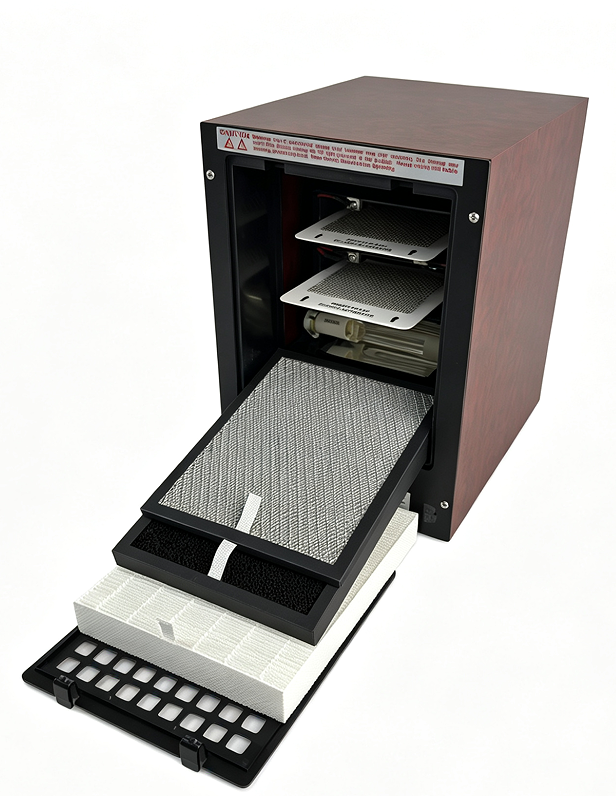
Most checklists stop at signatures and stamps. We start by pulling a random unit off the line, not the one waiting by the dock. If it survives a drop onto concrete, a cycle in the humidity chamber, and a tear-down that exposes every solder joint, then we talk about paperwork.
The real test often happens where no auditor is scheduled to be. We show up at a supplier's second shift unannounced, watch how materials are handled when the spotlight is off, and compare that against the glossy process flow they emailed last quarter.
Documentation still matters, but only as a trail of evidence. A calibration certificate means little if the gauge on the floor is dented and taped together. Our checks chase the gap between what's written and what's actually bolted, welded, and shipped.
Customization Timelines You Can Count On
Every custom order starts with a schedule built from the actual scope, not a promise that sounds good in a kickoff call. We lay out design approval windows, material lead times, production days, and shipping buffers in plain terms, so each phase has a clear finish line.
You won't be chasing updates. We flag the moments that matter: when your specs are locked, when raw materials arrive, when your order enters production, and when it passes final inspection. If a supplier delay or a quality hold shifts anything, you get a revised date and the reason behind it—before the original deadline slips quietly past.
Predictability like this isn't accidental. It comes from padding only the stages that historically run late and from treating your delivery date as a fixed commitment, not a rough guess.
Certifications That Survive a Closer Look
Plenty of certificates look impressive at first glance, but the ones worth listing are those that can hold up when an employer actually checks what it took to earn them. A meaningful certification is tied to a recognized professional body, requires ongoing education or renewal, and verifies real skills, not just attendance at a weekend workshop. If a credential can be obtained in an afternoon with an open-book quiz, it rarely survives a quick background check.
The strongest certifications also have a clear audit trail. That means an issuing organization that publishes its standards, maintains a public registry, and does not hesitate to revoke credentials for misconduct. When a hiring manager can independently confirm your status through a third-party database, the certification stops being a line on a resume and starts functioning as a trust signal. Credentials from industry consortia or government-linked bodies often do this better than for-profit course providers that sell both the training and the test.
It is also worth asking whether the certification is actually requested in your field. A credential that nobody in your industry recognizes adds noise, not credibility. Look for ones that appear in job postings, are referenced in professional codes of conduct, or are required for insurance or regulatory reasons. Those are the certifications that survive a closer look because they solve a specific accountability problem and do not just decorate an email signature.
Component Sourcing and Material Honesty
Every product begins with a chain of decisions most customers never see. We treat component sourcing as a direct extension of product design, not an afterthought. Origin matters as much as specification. We visit mills, tanneries, injection molders, and PCB suppliers in person whenever possible. If a supplier cannot explain where raw inputs come from, we do not list them. That discipline removes the gap between what we claim and what we actually ship.
"Material honesty" means rejecting inflated labels. A leather sourced from a tannery with unverified chemical handling is not premium just because it is soft. A recycled nylon blend is not automatically responsible if the recycling stream cannot be audited. We publish the full composition of critical parts, including coatings, linings, adhesives, and fasteners. Where we cannot confirm a claim, we say so. That admission matters more than a polished sustainability page.
Honesty also shapes how we handle trade-offs. There is no perfectly clean supply chain, only visible ones. We choose fewer, longer-term supplier relationships instead of chasing the lowest quote each season. When a material falls short of our standard, we either redesign the part or pause the product. Component sourcing is not a marketing layer; it is the product. If the origin cannot be named, it does not belong in the bill of materials.
After-Sales Support Without the Runaround
Nobody enjoys being handed off from one department to the next when a product stops working. Our support approach is simple: one real person owns your case from first message to final fix. You won’t repeat your story five times or dig through a maze of ticket numbers. Reach out, and we’ll treat your problem like it’s ours—because it is.
We skip the endless scripted replies and canned apologies. Instead, you’ll get straight answers, a clear timeline, and updates that actually mean something. If a replacement or repair is needed, we handle the logistics without you chasing us. Busy week? We’ll follow up, not the other way around.
Most issues are resolved on the first conversation, with no escalation theater or vague “we’ll look into it” promises. And if something does take longer, you’ll know exactly why and what’s happening next. That’s what after-sales support should feel like—helpful, human, and refreshingly free of the runaround.
FAQ
Start with the basics: how long they've been in business, what types of clients they usually serve, and whether they actually own their production line. Ask for a recent bill of materials and a sample from a current production run. A manufacturer that hesitates to show these details often has something to hide.
Certifications matter, but they're not the whole story. Look for relevant safety and quality marks like CE, UL, or ISO 9001, and then verify them through the issuing body. A partner with valid certifications and a clean track record of passing third-party audits is more likely to deliver consistent quality.
Ask about their in-house engineering team, the CAD software they use, and how many custom projects they complete each year. Request a case study of a past design that started from a napkin sketch. If they can walk you through the prototyping steps and tooling adjustments without vague answers, that's a strong sign.
Look at their raw material sourcing, backup suppliers, and their shipping history over the past two years. Request references from clients who have been with them for at least three years. A reliable partner will also share how they handle sudden demand spikes or component shortages without overpromising.
Watch for disorganized workstations, missing safety guards, or inconsistent assembly practices between different lines. Also pay attention to how workers react to your presence — if they seem coached or nervous, dig deeper. A clean, well-lit floor with clear process documentation and calm employees usually reflects solid management.
Yes, but not in the way most people assume. Proximity to major ports or your target market can shorten shipping times, but local supply chains for filters and motors often matter more. A factory in a less famous area with reliable component access and stable labor can outperform a coastal plant that struggles with congestion and high turnover.
Ask about warranty terms, spare parts availability, and how they handle defective units after delivery. Request a written escalation process and test it by asking a specific scenario, like a motor failure in month 11. If they promise replacement parts within 48 hours but won't put that in writing, treat it as a warning.
A true partner gives you direct access to the production floor, shares cost breakdowns when asked, and takes responsibility when a batch fails inspection. A middleman often avoids factory visits, marks up prices without adding engineering value, or blames the 'subcontractor' when things go wrong. Check their business license and ask who exactly operates the assembly line.
Conclusion
When evaluating an air cleaner manufacturer, look past the polished brochure and step onto the factory floor. A reliable partner invites scrutiny rather than hiding behind a showroom. Observe how workers handle components, whether assembly lines are organized or chaotic, and how raw materials are stored. Quality checks should be visible in action—random testing, filter efficiency measurements, and motor performance audits—not just a stack of signed documents. Customization timelines matter just as much as the final product: a manufacturer that promises bespoke designs but misses every deadline will cripple your supply chain. Ask for specific turnaround times and then verify them with their existing clients.
Certifications are only valuable if they survive a closer look. Don't settle for a wall of faded certificates; request the actual test reports and cross-check the issuing bodies. Component sourcing is another reveal: an honest partner will tell you exactly where the HEPA filters, UV lamps, and motors come from, without vague phrases like "high-quality imported parts." Material honesty extends to the plastics and coatings that touch the airflow. Finally, after-sales support is where many manufacturers fall short. A trustworthy one won't bounce you between departments or vanish after the invoice clears. You want a direct line to a service engineer, clear warranty terms, and replacement parts that actually ship. These quiet signals, more than any marketing claim, separate a dependable partner from a transactional vendor.
Contact Us
Contact Person: Paul Luo
Email: [email protected]
Tel/WhatsApp: 0086-19966314501
Website: https://www.lufutatech.com