

Best Stainless Steel Hex Bolts That Resist Corrosion and Stripping
2026-11-02
There’s a reason so many DIYers and pros dread rusted, rounded-off hex bolts—they turn a five-minute job into an hour of drilling and swearing. If you’re tired of fighting corrosion and stripped heads, it’s time to look at what separates a forgettable fastener from a genuinely reliable one. In this guide, we’ll walk through the best stainless steel hex bolts that hold up under moisture, repeated torque, and real-world abuse. Along the way, you’ll see why Wanluo has earned a reputation for hardware that refuses to quit.
Why 316 Stainless Steel Is Worth the Extra Cost
When you compare 316 stainless steel to the more common 304 grade, the price difference often makes people hesitate. But that extra cost isn't just a markup for a fancy number. 316 contains molybdenum, typically 2-3%, which fundamentally changes how the alloy behaves in harsh environments. This addition gives it significantly better resistance to chlorides, salt spray, and industrial chemicals. If your project lives anywhere near coastal air, de-icing salts, or chemical processing, 304 will eventually show pitting and crevice corrosion, while 316 keeps its surface intact far longer. Paying more upfront means not paying for early replacement or failure later.
The real value of 316 shows up in applications where downtime is expensive. Think about marine hardware, food processing equipment, pharmaceutical tanks, or surgical instruments. In these settings, a corroded component isn't just an eyesore; it can contaminate a batch, halt production, or create a safety hazard. 316's superior resistance to acids, alkalis, and high-temperature oxidation means fewer inspections, less maintenance, and longer service intervals. Over a ten-year lifespan, the total cost of ownership often favors 316 despite the higher initial price. That's why engineers specify it for critical parts without blinking.
Another point that gets overlooked is how 316 behaves during fabrication. It welds cleanly without losing its corrosion resistance at the weld zone, which is a common weak point in 304. You can bend, form, and machine it without special post-weld treatments in most cases. This reduces fabrication rejects and touch-up work, saving labor hours that would otherwise eat into your budget. When you factor in the reduced risk of field failures and the peace of mind that comes with a proven marine-grade material, the extra cost starts to look like a sensible investment rather than an unnecessary splurge.
Thread Design Tricks That Prevent Galling and Stripping
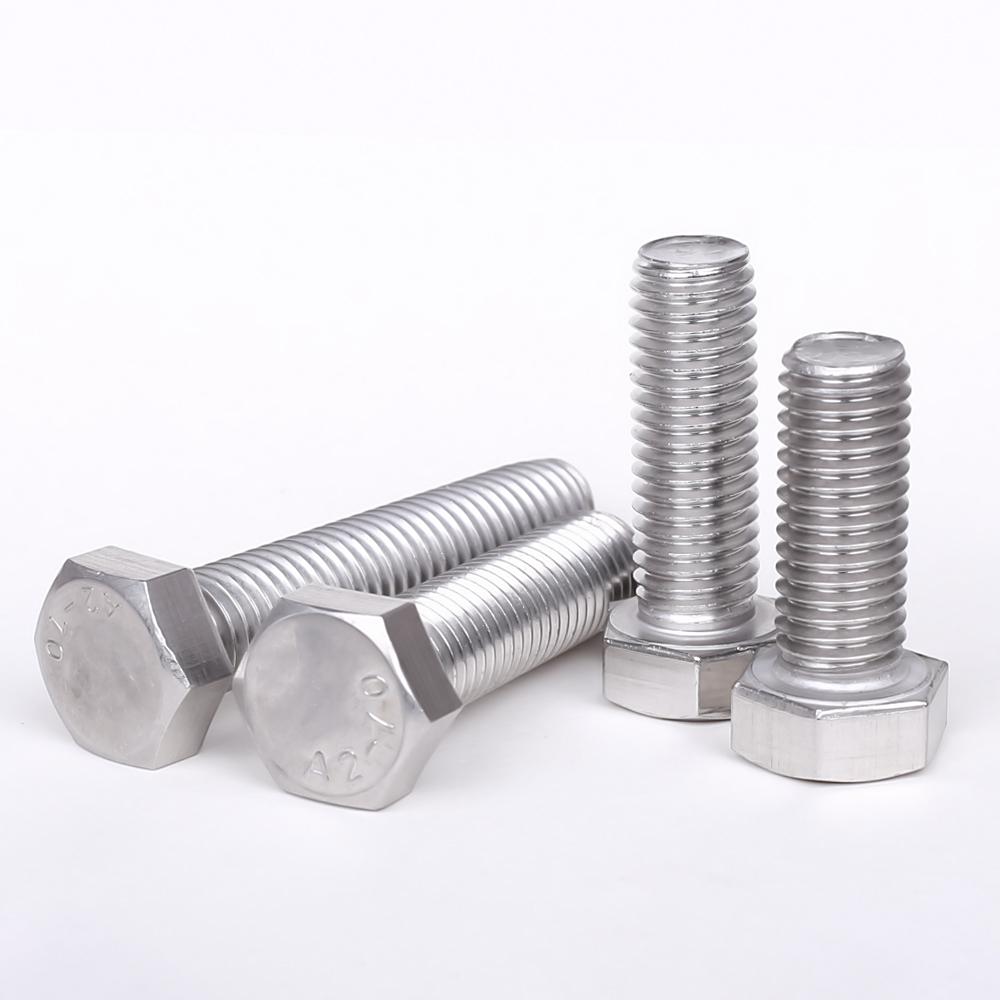
Start with the thread form itself. A slightly truncated root radius on a unified or metric thread reduces stress risers and the chance of localized cold welding, while a coarser pitch leaves more material between flanks—this extra bearing area spreads contact pressure before it can tear the surface oxide layer.
Next, look at the surface finish. Polishing flanks to below 32 microinches Ra (or passivating stainless parts after machining) removes the microscopic peaks that initiate galling. A dry-film lubricant—molybdenum disulfide, PTFE, or even a baked-on wax—acts as a barrier layer that keeps the two metals from direct contact, and it stays put under repeated assembly cycles.
Finally, pay attention to fit and entry geometry. A slightly larger pitch diameter clearance on stainless or titanium parts (think 6H/6g instead of 4H/5g) gives the flanks room to slide instead of seize. Adding a tapered lead-in—about one and a half threads with a 15-degree angle—lets the mating part center itself before full engagement, preventing cross-threading that strips the first few threads.
How Passivation and Electropolishing Boost Corrosion Resistance
Passivation works by encouraging the natural formation of a thin, inert oxide layer on stainless steel surfaces. When exposed to a mild oxidizing acid, free iron and other surface contaminants dissolve away, leaving behind a chromium-rich film that blocks corrosive agents from reaching the base metal. This process doesn't alter the part's dimensions or appearance, yet it dramatically slows down the onset of pitting and crevice corrosion in chloride-rich environments.
Electropolishing takes surface refinement a step further. By applying an electrical current in an electrolyte bath, a controlled amount of metal is removed from the outermost layer, smoothing microscopic peaks and valleys. The result is a mirror-like finish with fewer sites where moisture and aggressive chemicals can linger. The electrochemical action also enriches the surface with chromium oxide more uniformly than passivation alone, giving the component a tougher barrier against uniform corrosion and stress corrosion cracking.
Used together, the two treatments complement each other exceptionally well. Electropolishing first creates an ultra-clean, microscopically flat surface; passivation then stabilizes that surface with a dense oxide layer. Parts that undergo both steps show measurably higher resistance to rust and staining in demanding applications such as food processing, pharmaceutical equipment, and marine hardware, where even minor corrosion can lead to costly failures.
Bolts That Survive Saltwater: Real Marine-Grade Performance
Saltwater eats through ordinary fasteners in months, leaving behind rust streaks and snapped heads. The difference comes down to material science, not marketing labels. True marine-grade bolts use alloys like 316 stainless or silicon bronze, which form a protective oxide layer that resists chloride attack. Coated carbon steel might look tough on a shelf, but once the plating gets scratched during installation, corrosion starts underneath and spreads silently. If you are bolting anything near the waterline or in a splash zone, skip the generic hardware aisle and source fasteners specifically rated for continuous salt exposure.
One overlooked factor is galvanic corrosion. When a stainless bolt sits in an aluminum mast or bracket, saltwater acts as an electrolyte and turns the assembly into a weak battery. The aluminum sacrifices itself, leaving the bolt fine but the surrounding metal pitted and weak. That is why marine builders often pair fasteners with nylon washers, Tef-Gel, or Duralac to isolate dissimilar metals. Another practical test: check for a slight magnetic pull. High-quality 316 stainless is nearly non-magnetic, while cheaper 304 or plated steel will stick. On a boat, that quick check can save you from a mid-voyage hardware failure.
Real-world performance also depends on thread design and installation torque. Coarse threads hold better in fiberglass and wood cores, while fine threads distribute load more evenly in metal plates. Over-tightening is a common killer—stretching a bolt past its yield point creates micro-cracks that saltwater infiltrates within weeks. A calibrated torque wrench and a dab of anti-seize on the threads make a bigger difference than paying extra for a fancy brand name. The best marine bolts are boring: they do not shine like chrome, they do not promise miracles, and they quietly do their job for a decade while the boat takes a beating.
What to Check Before You Buy: Markings, Tolerance, and Finish
Spend a few minutes decoding the markings before you hand over money. On bolts, the head stamp often reveals the strength class and manufacturer, while on structural steel, heat numbers let you trace the exact batch back to the mill. If a seller can't explain what a marking means or the part arrives with no marking at all, that's a warning sign—not a bargain.
Tolerance is easy to overlook until a part refuses to seat properly. A shaft cut half a millimeter over might slide into place on paper but bind under load. Ask whether the tolerance follows a recognized standard or is a custom range, and pay attention to how it's measured—some shops quote the mean, not the full spread.
Finish affects more than appearance. A zinc coating that's too thin will fail a salt-spray test within hours, and a rough surface can trap debris or throw off torque readings. Match the finish to the environment, and if corrosion resistance matters, ask for a certified thickness reading rather than a glossy photo.
Installation Habits That Ruin Good Bolts (And How to Avoid Them)
Plenty of decent bolts get destroyed the moment someone decides to 'snug them up' with an impact wrench or a torque setting pulled from memory. Once a fastener is stretched beyond its elastic limit, it doesn't spring back—the clamping force drops, and micro-cracks begin forming at the thread roots. A properly calibrated torque wrench used with the manual's dry torque value is the cheapest insurance against that kind of hidden damage.
Dirty threads are another silent killer. When paint, rust, or old thread locker builds up inside a hole, the torque reading you see on the wrench has almost nothing to do with actual bolt tension. The bolt feels tight, but the joint is already loose enough to fret and fail under load. Chasing the threads with a tap or thread file, then wiping everything dry, takes an extra minute and completely changes the outcome. If you do use a lubricant, make sure the torque spec was written for wet assembly—otherwise you're likely over-stretching the bolt without knowing it.
Reusing fasteners from a rusty or galled joint is a habit worth breaking. Pitted bolts have effectively lost cross-section, so even a correct torque value can push them past yield. The same goes for hardware that's been rattled apart with an impact gun and thrown back in without inspection. Look for necking right under the head, flattened threads, or a head that's no longer flat and square. If any of that shows up, toss the bolt—no amount of careful torquing will bring it back.
FAQ
It comes down to chromium. Stainless steel contains at least 10.5% chromium, which forms a thin, self-healing oxide layer on the surface. That layer blocks oxygen and moisture from reaching the iron underneath. Regular steel doesn't have that passive shield, so it rusts once the plating or coating gets scratched. For hex bolts, the head and threads are all exposed, so that built-in protection matters a lot.
Stripping usually happens because the wrong size driver or socket is used, or because people speed through with an impact wrench. For stainless hex bolts, always use a six-point socket that fits snugly—twelve-point sockets can round off the corners. Hand tightening with a torque wrench is safer than blasting them in with an impact. If you're driving many bolts, apply steady pressure and stop as soon as the head seats; stainless is softer than hardened alloy steel, so it deforms more easily under excessive torque.
316 stainless is the go-to for saltwater and coastal areas because it contains molybdenum, usually around 2-3%. That addition significantly improves resistance to chlorides and pitting. 304 or 18-8 bolts will corrode faster near the ocean, showing rust spots or pits within months. If you're building a dock, boat trailer, or anything constantly splashed with seawater, spend the extra on 316 hex bolts.
It depends on the grade and the load. Standard 304 or 316 stainless hex bolts are usually weaker than high-strength carbon steel bolts like Grade 8 or Class 10.9. For non-critical structural connections with moderate loads, they're fine. But for load-bearing joints in buildings or heavy machinery, you'd want to switch to precipitation-hardened stainless or stick with high-strength alloy steel. Always check the tensile and yield strength specs before swapping.
18-8 is a broad term for stainless steel with roughly 18% chromium and 8% nickel, which includes grades like 304. It's great for general indoor and mild outdoor use. 316 adds molybdenum, which makes it far more resistant to salt, chemicals, and pitting. The trade-off is cost—316 bolts often run 20-40% more than 18-8. For a backyard fence or indoor furniture, 18-8 is plenty. For anything near salt or industrial chemicals, go 316.
Yes, especially if you're threading into stainless nuts or tapped holes. Stainless steel is prone to galling—a type of cold welding under pressure where the threads seize and tear. A thin coat of anti-seize compound or even a quality lubricant on the threads reduces friction and heat. Without it, you might get the bolt halfway in and then have it lock up permanently, forcing you to cut it off.
You can, but you must be aware of galvanic corrosion. Stainless steel and aluminum are far apart on the galvanic series, so in the presence of an electrolyte like water, the aluminum will corrode sacrificially. Use a non-conductive barrier like nylon washers, plastic sleeves, or a corrosion-inhibiting paste between the bolt and the aluminum. For dry indoor applications, it's usually fine without any barrier.
Conclusion
When you're picking hex bolts that need to hold up in nasty environments, spending extra on 316 stainless usually saves money over time. The added molybdenum is what lets it shrug off chlorides and salt spray, which is why marine mechanics reach for it even when the price stings a little. But the alloy alone isn't enough—passivation and electropolishing remove free iron from the surface and leave behind a smooth, chromium-rich layer that resists rust far longer than a raw machined finish. In real saltwater use, a properly treated 316 bolt will outlast cheaper 18-8 hardware by years, not months, so you're not swapping out corroded fasteners every season.
Thread design matters just as much as the metal itself. Look for rolled threads with a slight radius at the root—those resist galling under torque far better than sharp V-cuts. Before you buy, check the head markings: A4 or 316 should be stamped, not just claimed on the package. Tolerance is another silent killer; a sloppy hex will round off long before the bolt sees full load. And the finish should feel uniform, not gritty or blotchy. Finally, bad installation habits wreck more bolts than corrosion ever will. Over-tightening with an impact wrench, skipping anti-seize on stainless-to-stainless joints, or reusing a bolt after it has stretched will invite stripping and seizure. A torque wrench and a dab of marine-grade anti-seize are cheap insurance against a seized mess.
Contact Us
Contact Person: Shane
Email: [email protected]
Tel/WhatsApp: 8613357785029
Website: https://www.wanluohardware.com