

China Aramid Fabric: Unlocking High-Performance Protective Textiles
2026-07-09
When it comes to protective textiles, not all fabrics are created equal. China's aramid fabric is rewriting the rules of safety and performance—but what's the secret behind its unmatched strength? As industries demand tougher, lighter, and more reliable materials, DROTEX is at the forefront, delivering cutting-edge solutions that redefine what protection truly means. Discover how this remarkable fabric is unlocking new possibilities across workwear, defense, and beyond.
The Evolution of Aramid Textiles in China's Safety Sector
Not long ago, walking into a fire station in eastern China, you would have seen gear that still relied heavily on imported aramid fibers. Back then, the material was often called a “strategic textile” — essential for flame-resistant suits but frustratingly expensive and subject to supply chain whims. Chinese safety managers knew the value of aramid’s heat resistance and strength, yet costs forced many to settle for less protective alternatives or to stretch the lifespan of existing equipment beyond recommended limits.
The real shift began quietly in the early 2000s, when a handful of domestic chemical fiber producers started tinkering with polymerization techniques that had long been dominated by international patents. Progress was slow and full of false starts — early domestic para-aramid, for instance, tended to fibrillate under stress, making it unsuitable for the demanding conditions of a blaze. But by the mid-2010s, breakthroughs in spinning and post-treatment processes changed the landscape. Local production not only slashed prices by nearly half but also allowed customization: brands began offering firefighter turnout gear that was lighter, breathed better, and still met the same rigorous GB standards. The narrative was no longer about catching up but about tailoring performance to China’s unique industrial hazards, from steel mills to petrochemical plants.
Today, aramid textiles have moved beyond mere protection. In modern protective clothing, you’ll find meta-aramid blended with conductive fibers for static control, or para-aramid knits that provide cut resistance without sacrificing dexterity. Some manufacturers are even experimenting with recycled aramid, addressing the growing demand for sustainability without compromising safety. The evolution didn’t just give Chinese workers better gear; it quietly reshaped an entire sector, turning a once-niche import into an everyday shield that no one thinks twice about. The fabric’s journey from scarcity to ubiquity is, in many ways, the untold story of how China’s safety consciousness matured — thread by thread.
Why Chinese Aramid Fabrics Are Redefining Protective Wear
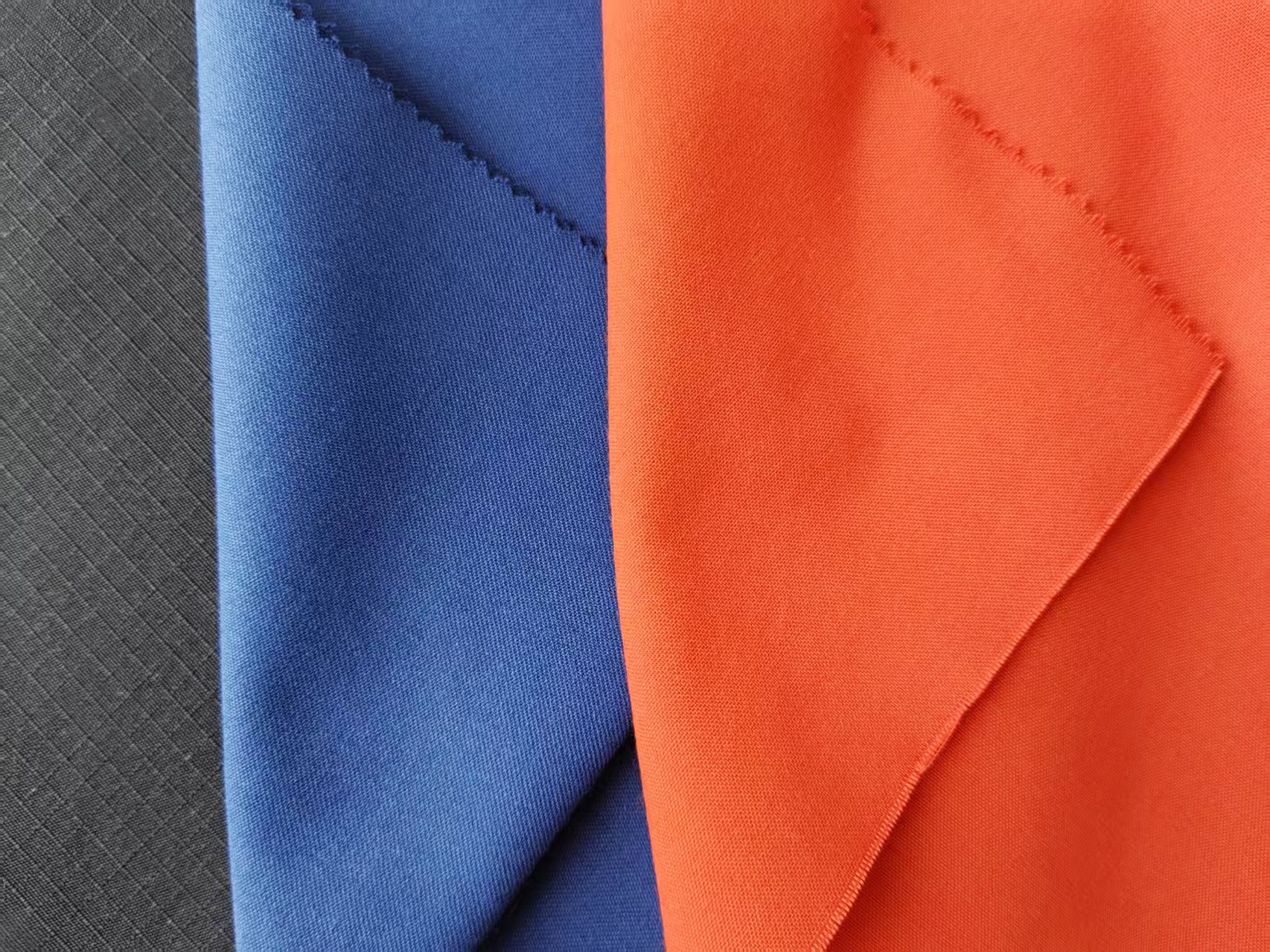
Over the past decade, Chinese manufacturers have fundamentally shifted the global landscape of high-performance textiles. By combining advanced production technology with rigorous quality control systems, they now produce aramid fabrics that meet—and often exceed—the most demanding international safety standards. This isn’t just about lower costs; it’s about consistent, scalable access to materials that safeguard lives in hazardous environments.
The real breakthrough lies in how these fabrics balance exceptional heat resistance, cut protection, and tensile strength without sacrificing comfort. New weaving techniques and finishing processes result in lighter, more flexible garments that don’t fatigue the wearer, driving up compliance in industries where every second counts. From firefighting gear to industrial workwear, the shift is palpable: protective equipment is no longer a bulky burden but a second skin engineered for real-world challenges.
Innovation doesn’t stop at the material level. Chinese aramid producers are collaborating closely with end-users to tailor solutions for niche applications, embedding smart technologies like moisture management and abrasion resistance directly into the fabric. This responsiveness, paired with sustainable manufacturing practices, is quietly building a new benchmark—one where protection, performance, and planetary responsibility go hand in hand.
Breaking Down the Thermal Resistance of Aramid Fibers
Aramid fibers are widely recognized for their impressive ability to withstand high temperatures without melting or igniting. This thermal resistance stems from their unique molecular architecture—rigid polymer chains held together by strong hydrogen bonds and aromatic rings. When exposed to heat, the fibers char rather than flow, creating a protective barrier that slows further degradation. Unlike many synthetic materials that soften or drip, aramid maintains structural integrity up to around 500°C, making it indispensable in protective gear and aerospace applications.
What sets aramid apart is the way heat interacts with its crystalline structure. The high degree of orientation along the fiber axis allows efficient heat dissipation along the length, while the dense packing of molecules limits oxygen penetration—a critical factor in combustion. This combination means that even under direct flame, the fiber forms a stable carbonaceous char that insulates the underlying layers. It’s not just about resisting temperature; it’s about buying time in extreme environments where every second counts.
Engineers often look beyond simple temperature ratings and consider factors like thermal stability over time and performance after repeated exposure. Aramid fibers exhibit minimal shrinkage and retain a useful fraction of their strength even after prolonged heat aging. This reliability under cyclic thermal loads explains why they’re chosen for conveyor belts in hot industries, firefighter suits, and composite reinforcements in engine components. The interplay between chemical stability and physical structure continues to make aramid a benchmark for heat-resistant textiles.
Custom Solutions: Tailoring Aramid Fabrics for Extreme Environments
When off-the-shelf materials fall short in the face of blistering heat, corrosive chemicals, or punishing abrasion, the answer lies in precision engineering. Our approach starts with a deep analysis of the specific challenges your operation faces—whether it's molten metal splash in a foundry, arc flash hazards in electrical utilities, or the relentless wear of high-speed machinery. By adjusting weave density, combining aramid fibers with complementary materials, and applying specialized coatings, we create fabrics that perform exactly where standard options fail. This isn't about ticking boxes; it's about crafting a shield that integrates seamlessly into your workflow.
The true advantage of a tailored aramid solution emerges in the details that mass-produced textiles overlook. We consider the subtle interplay between flexibility and durability—a garment that protects but restricts movement undermines safety just as surely as one that tears too easily. Our engineers work with different aramid grades, silicone finishes, aluminized films, and even hybrid constructions that layer fibers for graded protection. A solution for a glass manufacturer might require exceptional thermal insulation coupled with a smooth surface that resists molten glass adhesion, while a composite used in aerospace could demand minimal weight without compromising flame resistance. Every decision is driven by the specific thermal, mechanical, and chemical profile of the environment.
Beyond the fabric itself, customization extends to the geometry of the final product. Panels, curtains, sleeves, and covers are cut and assembled to fit your equipment precisely, eliminating gaps that become weak points under stress. We prototype in close collaboration with your team, iterating on design and materials until the solution not only meets the technical specification but also passes the practicality test on the factory floor or in the field. The result is a durable, high-performance barrier that feels like it was always meant to be there—because it was designed with your extremes in mind.
Sustainability Meets Strength: Eco-Friendly Aramid Production
Making aramid fibers tough doesn't have to mean making the planet pay. A fresh wave of production methods cuts the environmental toll while keeping—or even boosting—the legendary strength-to-weight ratio and heat resistance these materials are prized for. By rethinking solvents, reining in energy use, and capturing waste before it ever leaves the factory, manufacturers are quietly proving that high performance and low impact can go hand in hand.
The real breakthrough lies in closed-loop systems that recycle almost 100% of the sulfuric acid used to spin para-aramid, slashing hazardous waste and water contamination risks. Meanwhile, bio-based solvents and greener spinning techniques are beginning to replace harsher chemicals long associated with aramid processing. These shifts aren't just lab curiosities—they're scaling up, delivering fibers that meet the same rigorous specs for body armor, aerospace composites, and EV components, all with a radically smaller carbon footprint.
What makes this pivot so compelling is that it challenges an old industrial assumption: that eco-friendly equals weaker or more expensive. Forward-thinking mills are turning recycled aramid waste into high-value nonwoven fabrics, and energy-efficient heat-setting processes are trimming both emissions and operating costs. The result is a material that not only performs under extreme conditions but also makes a stronger case for a circular, responsible supply chain—proving that true strength runs deeper than tensile numbers.
From Lab to Field: Real-World Applications of Chinese Aramid
The journey of Chinese aramid fibers from laboratory synthesis to field deployment has been marked by rapid scaling and inventive engineering. Initially developed for high-temperature filtration and protective gear, these fibers have now infiltrated a far broader spectrum of industries. Modern production lines in China have mastered the delicate balance between polymer chain alignment and cost-efficiency, enabling a steady supply that rivals legacy manufacturers. This industrial maturation means that Chinese para-aramid and meta-aramid are no longer just lab curiosities but dependable materials woven into the fabric of everyday safety and advanced engineering.
Beyond traditional ballistic panels and firefighter suits, Chinese aramid is quietly reshaping automotive, telecommunications, and renewable energy sectors. Lightweight aramid-reinforced composites are replacing metal parts in electric vehicles to extend range, while their dielectric properties make them ideal for 5G radomes and circuit boards. In the depths of ultra-deep oil wells, flexible risers and cables rely on aramid's tensile strength to withstand extreme pressures and corrosive environments. Even offshore wind farms benefit, with aramid cords reinforcing turbine blades that must endure decades of salt spray and fatigue—a testament to the material's resilience far removed from white-coated labs.
Perhaps the most visually striking shift is in consumer and sports equipment, where Chinese aramid filaments appear in premium bicycle frames, racing sails, and smartphone casings that claim military-grade drop protection. Unlike earlier, imported variants, local formulations can be tailored for specific resin compatibility and color retention, giving designers a palette that does not sacrifice performance. This customization, born from close collaboration between chemical plants and end users, has turned a specialty fiber into an accessible solution. As ongoing research further enhances ultraviolet resistance and reduces moisture absorption, the line between lab samples and real-world essentials grows ever fainter, ushering in an era where aramid is as ubiquitous as it is unassuming.
FAQ
Aramid fabric is woven from synthetic fibers known for exceptional strength-to-weight ratios, thermal stability, and resistance to abrasion and chemicals. These properties make it a go-to material for demanding environments where ordinary textiles would fail.
China has rapidly scaled its aramid manufacturing capabilities, becoming a major supplier. While still competing with long-established producers, Chinese mills now offer consistent quality that meets international standards, often with more flexible supply chains.
You'll find aramid fabrics in firefighting gear, military body armor, industrial workwear, automotive heat shields, and even sporting equipment. Any scenario where cut, heat, or ballistic protection is needed can benefit from these textiles.
Unlike many synthetics, aramid doesn't melt or drip under extreme heat. It carbonizes instead, creating a protective barrier. This inherent flame resistance, combined with low thermal conductivity, makes it exceptionally safe for heat-exposed occupations.
Yes, two dominant types are meta-aramid, valued for thermal protection in clothing, and para-aramid, renowned for ballistic and high-tensile applications. Chinese manufacturers produce both, tailoring blends to specific end-use requirements.
By streamlining production and scaling output, Chinese producers have made aramid textiles more accessible. This price competitiveness has expanded adoption in price-sensitive sectors like mass-market safety gear and automotive components.
Recent advances include nano-coated aramid for enhanced moisture management, lighter composite weaves for soft body armor, and eco-friendly dyeing techniques that preserve fiber integrity. Research institutes are also exploring hybrid aramid-carbon structures.
Conclusion
China's aramid fabric industry has rapidly evolved, transforming the safety sector with advanced high-performance textiles. The journey from basic production to sophisticated engineering has unlocked exceptional thermal resistance, with fibers capable of withstanding intense heat while remaining lightweight and flexible. This durability, paired with relentless innovation, has led to tailored solutions that meet the demands of extreme environments—from firefighting gear to industrial protective wear. Chinese manufacturers are not only pushing the boundaries of strength and heat resistance but also embracing eco-friendly production methods, balancing robustness with sustainability. By integrating greener processes, they are crafting materials that protect both people and the planet.
These fabrics are now redefining protective clothing globally, moving beyond conventional limits. In real-world applications, Chinese aramid textiles are proven in scenarios ranging from electrical arc flash protection to ballistic vests, delivering reliability where failure is not an option. The seamless transition from lab to field underscores rigorous testing and adaptation to field conditions, ensuring garments that perform under pressure. As demand grows for smarter, safer workwear, China's aramid innovations continue to set new benchmarks, offering customizable, sustainable, and uncompromising protection that empowers workers across diverse industries.
Contact Us
Contact Person: Sandy
Email: [email protected]
Tel/WhatsApp: 86150 8310 5120
Website: https://www.frdrotex.com