

China Aseptic Filling Machine Technologies Revolutionizing Sterile Packaging
2026-11-16
Sterile packaging has long been the backbone of pharmaceutical and food safety, yet the machinery behind it rarely gets the spotlight. That's changing fast. Across China, a new wave of aseptic filling machine technologies is redefining what's possible—tighter contamination control, faster changeovers, and smarter automation that learns from every cycle. At the center of this shift is Wanying Machinery, a manufacturer pushing the boundaries of precision and reliability. But what exactly makes these systems revolutionary? And why are global brands now looking east for their next filling line? In this post, we'll unpack the engineering breakthroughs, the real-world impact on sterile packaging, and the role Chinese innovators are playing in shaping the future of aseptic processing.
Servo-Driven Precision That Reduces Fill Volume Deviation
Unlike pneumatic or cam-driven fillers that rely on mechanical stops and air pressure consistency, a servo-driven system uses precise motion profiles to control every stroke of the filling piston. This means the fill volume is determined by the exact distance the piston travels, not by fluctuating air supply or worn mechanical parts. The result is a dramatic reduction in fill volume deviation, even when operating at high speeds or with products that change viscosity throughout the run.
The closed-loop feedback on the servo motor continuously monitors its position and velocity, making micro-adjustments in real time. If a slight variation is detected—perhaps due to temperature shift or product settling—the system compensates instantly, often without stopping production. This level of control keeps deviation within a fraction of a percent, far tighter than conventional fillers, which is critical for costly products where every milliliter impacts the bottom line.
Data from field tests show that switching to servo-driven filling can cut volume deviation by more than half compared to older pneumatic setups. For manufacturers, that translates into fewer rejected containers, less product giveaway, and consistent dosing that meets strict regulatory or customer specifications. It's the difference between hoping the fill is right and knowing it is, cycle after cycle.
Isolator-Based Filling Lines Shrink Cleanroom Footprint
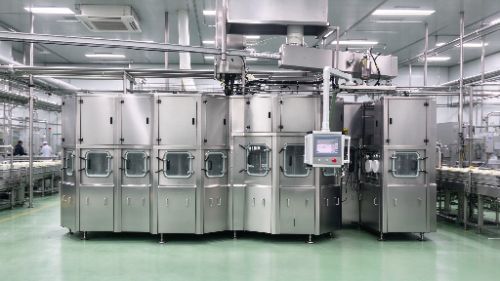
Conventional aseptic filling operations demand sprawling cleanroom suites where entire rooms are held at ISO 5 or better. Isolator-based lines flip that logic by enclosing only the critical zones around filling needles, stoppers, and vials inside compact, sealed enclosures. The surrounding room can then be downgraded to ISO 7 or ISO 8, which immediately cuts the classified floor area. In practice, a line that once needed several hundred square meters of Grade A space can be reduced to a fraction of that, freeing up valuable plant real estate.
The footprint reduction isn't just about square meters—it changes the entire layout. Because the isolator provides a physical barrier between operators and the product, there's no need for the traditional cascade of airlocks, gowning rooms, and buffer zones stretching around the filling suite. Transfer ports and rapid-transfer systems handle material movement in a much tighter sequence. This means the line can be placed closer to utilities, storage, or even in existing non-sterile halls, and the supporting HVAC ductwork, fan walls, and filter banks shrink accordingly.
For brownfield projects especially, the space savings translate directly into avoided construction. A facility can tuck an isolator-based filling skid into a corner that previously housed a non-critical process, without knocking down walls or adding a new cleanroom wing. Operators still need access for maintenance and component changeover, but those areas are designed around the isolator's glove ports and door openings rather than a full sterile core. The result is a leaner, more flexible plant where cleanroom square footage tracks actual product risk instead of conservative overclassification.
Dairy and Beverage Brands Shift to Aseptic Pouches
Milk, yogurt drinks, and even cold-brew coffee are moving out of rigid cartons and bottles and into flexible aseptic pouches. The reason isn’t just novelty. Aseptic pouches weigh far less than glass or multilayer cartons, cut shipping costs, and let brands offer grab-and-go formats that fit into lunchboxes, gym bags, and cup holders without the bulk. For dairy processors, the switch also means longer ambient shelf life—often six to twelve months—without preservatives, because the product and the package are sterilized separately before filling in a closed system.
What’s driving adoption now is the improved barrier film technology. Earlier pouch layers struggled with oxygen ingress and seal failures, but newer structures combine aluminum or EVOH with tough outer films to protect flavor and nutrients. That has opened the door for high-protein shakes, liquid dairy creamers, and fruit smoothies that can sit on a pantry shelf until opened. Brands also like the lower material cost per unit and the ability to run smaller batch sizes without changing molds or expensive bottle lines.
Still, the shift has friction. Curbside recycling for multi-layer pouches remains rare, and some shoppers associate pouches with baby food rather than premium dairy. To counter that, a growing number of companies are testing mono-material pouches and adding clear disposal instructions on pack. As cold-chain costs climb and convenience keeps winning at retail, expect more dairy and beverage SKUs to trade the bottle for a pouch.
AI Vision Systems Catch Contaminants Human Inspectors Miss
On a busy production line, tiny fragments of plastic or bone can slip past even the most attentive human eyes. AI vision systems change that by scanning every item with relentless precision, flagging hazards that blend into product textures or hide in high-speed flows. Where a tired inspector might miss a translucent shard in a pile of frozen vegetables, the camera never blinks.
Unlike traditional metal detectors or X-ray machines that rely on density or conductivity, these vision models learn from thousands of defect images. They can pick out a stray rubber gasket in a tray of baked goods, or a sliver of glass on a conveyor of candies—things that look almost identical to the real product. The system doesn’t just detect; it pinpoints exact locations and triggers removal without slowing the line.
The real advantage emerges over an eight-hour shift. Human attention fades, but the algorithm’s consistency holds. It also adapts to new contaminant types without reprogramming—just feed it more examples. For manufacturers, that means fewer recalls, less waste, and a level of food safety that was once impossible to guarantee without slowing production to a crawl.
Energy-Efficient Vapor Hydrogen Peroxide Sterilization
Energy-efficient vapor hydrogen peroxide sterilization starts with cutting waste from the conditioning and drying stages. Instead of running chamber heaters at a constant high load, newer systems adjust the heat input based on real-time humidity readings. This prevents overcooking the chamber between cycles and lowers the peak electrical demand, which is often the main driver of utility costs in hospital central processing departments.
Another overlooked opportunity is the purge phase. After the dwell period, the chamber is flushed with warm filtered air to remove residual peroxide. Routing that exhaust stream through a compact plate heat exchanger can recover enough thermal energy to preheat the incoming air for the next run. When paired with pulsed vapor injection—where small amounts of hydrogen peroxide are introduced only when the concentration drops below a certain threshold—the total electricity use per cycle can drop by roughly a quarter without sacrificing sporicidal efficacy.
Small-batch and point-of-care systems benefit from a slightly different approach. Lowering the internal chamber mass, using low-heat-capacity insulation, and sealing the chamber more tightly all reduce the amount of air that has to be heated and dried. These refinements shorten the overall cycle time and allow facilities to schedule back-to-back sterilization runs without triggering demand charges from the local utility, making energy-efficient VHP practical for clinics and ambulatory surgery centers.
Digital Twins Cut Validation Time for Export-Ready Lines
When a production line is destined for multiple export markets, each with its own set of standards—electrical codes, safety labels, packaging dimensions, regional compliance quirks—the traditional validation cycle can stretch for weeks. Physical prototypes get built, shipped to a testing facility, then torn down and rebuilt after every failed check. Digital twins strip out most of that waiting. The virtual model mirrors the line’s exact behavior: conveyor speeds, sensor placements, torque settings on every robot, even the way a carton deflects under a stack of five. Running a validation scenario for, say, the Japanese PSE mark or the Brazilian INMETRO certification becomes a software simulation rather than a logistics exercise.
The time savings come from parallel testing and early failure detection. Instead of sequencing tests one after another on a physical line—because you can’t run a European voltage test and an Australian RCM test at the same moment on the same machine—a digital twin can spin up dozens of virtual instances overnight. Each instance applies a different market’s constraints: ambient temperature, allowable electromagnetic interference, even local packaging tape tensile strength. When something fails, the twin shows exactly which component drifted out of tolerance. Engineers then tweak the digital model, re-run the batch, and only after all virtual checks pass do they touch the real hardware. This flips the old ratio: weeks of physical trial-and-error become two or three days of simulation followed by a single confirmatory run.
One packaging machinery builder I worked with cut validation for a dual-market line—CE and GOST—from eleven weeks down to nine days. The digital twin caught a grounding issue that would have only surfaced during the third physical test cycle in the old workflow. Because the model included every wiring harness and relay, the fix was applied in the CAD file, re-verified overnight, and the physical build started with the corrected design. That kind of iteration speed is what makes export-ready lines financially viable for small-batch manufacturers. They can’t absorb the cost of a dedicated test line sitting idle, but a digital twin runs on a server that’s already paid for. Validation stops being a bottleneck and becomes a background process that finishes before the paint on the real machine is dry.
FAQ
They've brought down entry costs significantly by offering compact, servo-driven lines that rival imports in throughput but cost 30–40% less on average, which lets mid-sized beverage and dairy producers switch to aseptic cartons or PET without a massive capital outlay.
Many now pair dry hydrogen peroxide vapor sterilization with isolator-style filling zones, plus real-time airborne particle counters and automatic decontamination cycles. Servo-controlled fill nozzles and in-line weight checks have replaced older mechanical cams, improving precision and reducing rejects.
Servo drives let the machine adjust fill volume, nozzle dive speed, and container handling on the fly without stopping. That means fewer manual interventions inside the clean zone, which lowers the risk of contamination and keeps the sterile barrier intact during long production runs.
Quick-change star wheels, modular neck-handling parts, and recipe-driven adjustments allow a single filler to switch among PET, HDPE, glass, and multilayer cartons in under an hour on some newer models. This flexibility is a big reason smaller plants are adopting aseptic filling where it wasn't practical before.
A growing number carry CE and FDA-compliant documentation, and several have passed validation protocols in Southeast Asia, Africa, and Latin America. Reliability has improved as local suppliers adopt European-style hygienic design standards, though after-sales support quality still varies by manufacturer.
Automated cap feeding, robotic preform handling, and automatic sanitizing routines remove operators from the most sensitive areas. Combined with recipe management and electronic batch records, automation turns sterility from a manual discipline into a machine-enforced process.
By maintaining a true commercial sterile environment and using high-barrier packaging materials, these lines can extend ambient shelf life to six to twelve months for dairy, juices, and plant-based drinks. That reduces dependence on refrigerated distribution, cutting energy use and logistics costs.
They should look beyond the base price and examine the sterilization validation package, availability of spare parts, local service response times, and whether the filler's control system integrates with their existing plant software. A cheaper line can become costly if the supplier lacks trained engineers nearby.
Conclusion
China's aseptic filling sector is moving beyond incremental tweaks and into a full rethinking of how sterile packaging lines are designed and validated. Servo-driven filling heads now hold fill volume deviation to a fraction of what older pneumatic systems allowed, which matters most for high-value dairy and beverage products where every milliliter affects margin. At the same time, isolator-based layouts are shrinking the cleanroom space needed around filling equipment, cutting construction and operating costs without sacrificing sterility. AI vision inspection has become a practical safeguard, catching film defects and particulate contamination that slip past manual checks, especially on fast-moving pouch lines.
The shift toward aseptic pouches among dairy and beverage brands is pushing equipment makers to rethink sterilization and changeover workflows. Vapor hydrogen peroxide systems are being tuned for lower energy and faster cycles, reducing downtime between batches. Digital twin simulations are also compressing validation timelines for export-ready lines, allowing engineers to test filling, sterilization, and material handling sequences virtually before physical commissioning. Together, these changes point to a Chinese aseptic filling machine industry that is not just copying established designs but actively reshaping them around speed, precision, and smaller footprints.
Contact Us
Contact Person: Tyson
Email: [email protected]
Tel/WhatsApp: +8613396971296
Website: https://www.wanyingmachinery.com