

China Biostimulant: Which One Truly Delivers Results?
2026-08-30
China’s biostimulant market is flooded with promises, but growers keep asking the same question: which products actually move the needle? Yield data, stress recovery, and long-term soil health often tell a different story than marketing brochures. Sorting through the noise takes more than a spec sheet — it takes field evidence and honest comparisons. That’s where MacroAlga enters the conversation, not as another buzzword, but as a contender worth examining closely.
Seaweed Extracts: Greenhouse Favorite, Field Disappointment?
Ask any vegetable grower who has tried seaweed extracts and you will often hear two very different stories. In the greenhouse, these products can look almost miraculous—faster root establishment, better flowering, sharper stress recovery. The controlled climate, consistent irrigation, and soilless media create a forgiving stage where the bioactive compounds in seaweed can fully express their effects. But take that same bottle out to a field with heavy clay, wind, and a surprise heat wave, and the results frequently fall flat. The plants may show a brief flush of growth, but by mid-season it is hard to tell treated rows from untreated ones.
Part of the problem is that greenhouse trials rarely reflect the chaos of open-field farming. Under glass or plastic, temperature swings are dampened, moisture is precise, and soil microbes are often minimal or standardized. Seaweed extracts rely on a delicate interplay of cytokinins, betaines, and oligosaccharides that can be rapidly degraded by UV light, diluted by rain, or bound to soil particles before the plant ever benefits. In the field, a heavy irrigation or a few hot days can wash away or break down the active molecules, leaving little behind except a faint seaweed smell on the leaves.
The takeaway for growers is not that seaweed extracts are useless outdoors, but that greenhouse performance is a poor predictor of field response. If you plan to use them on field crops, run your own small strip trials across different soil zones and weather patterns. Treat seaweed as a low-cost resilience tool rather than a guaranteed yield booster, and time applications to avoid peak UV and heavy rain. Otherwise, the disappointment will likely repeat itself season after season.
Humic Acid in the North: Where It Works and Where It Fails
Northern growers often assume humic acid behaves the same way it does in warmer, sandier regions, but the reality is more nuanced. In the northern plains and boreal forest margins, where soils tend to be heavier, cooler, and high in organic matter already, adding humic acid can act like pouring water into a full cup. The existing humus already binds nutrients and holds moisture effectively, so the extra product rarely moves the needle on yield. Where it does show promise is in heavily tilled fields that have lost their native organic layer, or in patches of glacial till that are low in clay and cation exchange capacity. There, a targeted application in late spring—once soil temperatures climb above 10°C—can help young roots access phosphorus and zinc that would otherwise stay locked up.
The failure points are just as telling. Cold soil slows microbial breakdown of humic acid, leaving it inert for weeks, and in some cases it can even tie up nitrogen temporarily as microbes try to digest the carbon-rich material. Growers who apply it in early fall, hoping for a spring boost, often find the product has leached below the root zone or degraded into simpler acids with little chelating power. Another overlooked issue is pH: northern soils frequently sit below 6.0, where humic acid’s solubility drops sharply, forming precipitates with calcium and magnesium. In those acidic conditions, a cheaper liming program often outperforms any humic product.
The practical takeaway is to match the amendment to the specific failure, not the marketing label. If your soil test shows organic matter above 4% and a cation exchange capacity above 15 meq/100g, humic acid is unlikely to pay for itself. If instead you have a sandy knoll that dries out fast, or a field recovering from years of conventional tillage, a modest in-furrow application of humic acid—paired with a nitrogen source to offset microbial drawdown—can give seedlings a measurable edge. Smart northern growers treat it as a rescue tool for degraded pockets, not a blanket recommendation.
Microbial Inoculants: The Shelf-Life Problem Nobody Talks About
When you buy a bag of microbial inoculant, the label rarely hints at how fragile the living cargo actually is. Most products list a CFU count at the time of manufacture, but those numbers can plummet within weeks if the package gets warm during shipping or sits on a retail shelf too long. The shelf-life problem isn't just about expiration dates; it's about the silent decline that happens before anyone checks viability.
Part of the reason this stays under the radar is that few growers bother to test what's in the container. A quick microscope check or plate count often reveals far fewer active cells than promised, especially for consortia blends where one or two strains outcompete the rest. Storage conditions in warehouses and farm sheds are rarely climate-controlled, so a product that left the factory with a robust population can arrive nearly lifeless.
This doesn't mean inoculants are worthless, but it does call for more honest labeling and better handling practices. Some companies have started adding protective carriers or using spore-forming strains that tolerate stress better, yet the conversation about viability over time is still missing from most product manuals. Until that changes, users should treat every batch as a living shipment that needs quick use and cool storage, not a bag of inert powder with a guaranteed shelf life.
Amino Acid Sprays: Quick Green-Up, But at What Cost?
The appeal of amino acid sprays is hard to deny: a quick shot of green without waiting for granular fertilizer to break down. Within a week, tired turf can look remarkably better, which makes these products tempting for homeowners chasing that perfect lawn. Yet the speed of the color change is exactly what should give you pause.
That rapid green-up often comes from a surge in foliar nitrogen uptake, not necessarily from healthier soil. Over time, lawns treated this way can develop shallow roots and a reliance on repeated sprays. You may also notice a thinner stand as the soil’s microbial life gets bypassed. The hidden expense isn’t just what you pay at the store—it’s the gradual weakening of the grass itself.
A smarter approach is to use amino acid sprays only as a short-term boost after heat stress or heavy foot traffic. Pair them with slow-release organic amendments and proper aeration. That way, you get the visual lift without turning your lawn into a chemical-dependent patch that crashes as soon as you stop spraying.
Chitosan's Immune Boost: More Than Just a Coating?
Most people file chitosan under biodegradable coating or wound dressing additive, but that label undersells what happens once it meets immune cells. Unlike an inert film that simply sits on a surface, chitosan can actively nudge macrophages and dendritic cells into a more alert state. This is not just a passive barrier effect; the polymer's positive charge lets it bind to negatively charged components on cell membranes, triggering signals that would stay silent with other polysaccharides.
What sets the immune boost apart from the coating story is the dose-dependent response. Low-molecular-weight chitosan tends to promote anti-inflammatory signals, while higher-molecular-weight forms can push toward a Th1-type reaction. That nuance matters because a one-size-fits-all chitosan supplement or biomaterial will not deliver the same outcome. The same chemical backbone that makes a great oxygen barrier in food packaging can also polarize macrophages, depending on how it is prepared.
This dual identity creates practical opportunities that go far beyond surface protection. Vaccine researchers are exploring chitosan particles as adjuvants that can strengthen antigen presentation without the harsh reactogenicity of alum. In tissue engineering, scaffolds made from chitosan do more than hold cells in place; they actively shape the local immune environment to favor repair over fibrosis. So next time you see chitosan listed as a coating ingredient, remember that its real action may be happening at the interface where materials meet immunity.
Protein Hydrolysates: The Slow Burn That Finally Shows Yield
Protein hydrolysates don't hit the soil like a shot of synthetic nitrogen. Instead, they break down in stages, releasing small peptides and free amino acids over days and weeks. That gradual supply shifts the plant's internal signaling—roots branch more, chlorophyll holds longer, and stress responses stay primed without the crash that often follows a fast feed.
The real payoff shows up later, when the crop moves into grain fill or fruit set. During those critical weeks, the slow release of nitrogen and carbon skeletons keeps photosynthesis running at a steady clip. Plants treated with hydrolysates often carry more tillers or larger fruit clusters, but the difference isn't from a sudden growth spurt—it's from avoiding the silent yield losses caused by brief nutrient dips.
Growers who expect an overnight green-up usually miss the point. The value of protein hydrolysates shows up in the final weigh ticket, not in the first week after application. Pairing them with a standard fertility program tends to smooth out the rough edges of weather stress and heavy fruit load, which is where much of the yield potential quietly slips away.
FAQ
Look for trial data from independent stations, not just vendor brochures. A product that truly delivers will show consistent yield bumps—often 5 to 15 percent—across at least two growing seasons, especially under stress conditions like salinity or drought. Specific markers like root length, chlorophyll content, or fruit set percentage are more telling than vague vitality claims.
They remain a strong starting point, particularly cold-pressed Ascophyllum nodosum extracts, because their cytokinin and betaine profiles match many stress scenarios. However, not all seaweed products are equal. Some are merely diluted raw extracts with little standardization. A dependable product will state its concentration of active molecules like mannitol, alginic acid, or specific oligosaccharides, not just the seaweed species.
Humic acids tend to improve soil structure and cation exchange capacity, which pays off in the heavy clay soils of the North China Plain. Amino acid blends act faster as chelators and stress relievers, often preferred for greenhouse vegetables in Shandong or Yunnan where high-value crops need quick recovery after transplanting. Many growers rotate both, using humic substances as a soil conditioner and amino acids as a foliar rescue treatment.
Citrus in Guangxi and Jiangxi has responded well to seaweed and amino acid applications, with reduced fruit drop and better sugar content. Protected tomato and cucumber in Shandong show stronger root systems and less blossom-end rot when humic acid is added to fertigation. In rice paddies of Heilongjiang, silicon-rich biostimulants have improved lodging resistance, though results vary by variety.
Yes, but only when the baseline fertilizer rate is already near optimal. In over-fertilized vegetable systems, adding a humic or microbial biostimulant allows nitrogen cuts of 15 to 25 percent while maintaining yield, because it improves nutrient uptake efficiency. In nutrient-poor soils, biostimulants cannot replace fertilizer; they mainly unlock what is already there, so a replacement claim should be treated with suspicion.
Be wary of products that promise miraculous yield increases without specifying active ingredients or concentration. Labels that list only 'organic matter' or 'enzymes' with no test method are suspicious. Also check if the registration number is real—many products are sold as microbial fertilizers but lack proper certification. Finally, avoid brands that refuse to share trial protocols or rely on unverifiable farmer testimonials.
For foliar applications, visible changes in leaf color or stress recovery can appear within 5 to 10 days, but measurable yield differences usually need the whole season. Soil-applied humic products may take 2 to 4 weeks to affect root architecture. If a product claims overnight transformation, that is a warning sign; true biostimulants work by gradual physiological adjustment, not sudden chemical forcing.
It matters a great deal. Without proper formulation, many active molecules degrade under UV light, high pH, or hard water. Encapsulation, chelation, or nano-emulsion techniques can dramatically improve stability and leaf penetration. For example, a well-formulated amino acid product remains clear in a tank mix with common pesticides, while a cheap one may precipitate. Ask for tank-mix compatibility data and stability under storage heat.
Conclusion
Across China’s vast growing regions, the promise of biostimulants often collides with inconsistent field reality. Seaweed extracts, for instance, shine in greenhouse trials but frequently disappoint under open-field stress, while humic acid shows clear value in northern soils rich in low organic matter yet proves nearly useless on already fertile southern plots. The most overlooked issue may be microbial inoculants: many products arrive with drastically reduced viable counts due to poor storage and transport, so growers rarely get the living consortium advertised. Amino acid sprays deliver an almost immediate green-up that can mask underlying nutrient deficiencies, but repeated use can push vegetative growth at the expense of fruit set and overall crop balance.
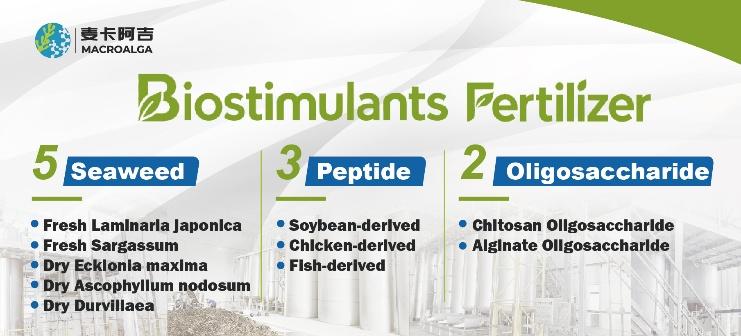
What actually moves the needle? Chitosan-based formulations appear to do more than coat leaves—they trigger systemic resistance that holds up in disease-prone vegetable belts, though the effect is strongest when applied before stress appears. Protein hydrolysates, often dismissed as slow, have shown the most consistent yield gains in multi-year trials on maize and protected tomato, especially when integrated into drip systems. The lesson from China’s fields is blunt: no single biostimulant works everywhere. Growers who match the product’s mode of action to their soil, climate, and crop stage—and verify microbial viability before buying—are the ones seeing real returns, not just a temporary color change.
Contact Us
Contact Person: Kevin ZHANG
Email: [email protected]
Tel/WhatsApp: 8613505438449
Website: https://www.macroalga.com/