

China Compact Substation: Key Benefits and Modern Applications
2026-08-15
As urban power grids grow denser and space becomes a premium, the shift toward compact substations is no longer just a trend—it’s a necessity. From renewable energy integration to smart city infrastructure, these streamlined units are redefining how we distribute electricity without sacrificing reliability or safety. Chang Song has been at the forefront of this evolution, delivering designs that fit tight footprints while meeting modern load demands. But what exactly makes a compact substation the smart choice for today’s projects? And where are they making the biggest impact? Let’s explore the key benefits and applications shaping the future of power distribution.
Where traditional substations can't fit, compact units step in
In dense city centers, available land is measured in square meters rather than acres. A conventional substation with its open-air switchgear, large transformers, and protective fencing simply cannot be squeezed into a narrow lot between two existing buildings. Compact units, however, are designed from the start to occupy unused pockets—behind retaining walls, beneath overpasses, even inside repurposed shipping containers. They bring full voltage transformation and protection into spaces that were previously written off as unusable for grid infrastructure.
Underground and indoor installations present a different set of constraints. Ceiling heights can be too low for standard bushings, access hatches too small for crane lifts, and ventilation shafts too narrow for traditional cooling layouts. Compact substations work around these limits by using gas-insulated switchgear, dry-type transformers, and modular bus connections that can be assembled piece by piece. The result is a unit that slides through a standard doorway yet still manages fault currents and thermal loads just like its larger counterpart.
This flexibility changes where utilities can add capacity. Instead of acquiring expensive real estate or rerouting feeders around an unavailable parcel, planners can place a compact unit in a parking structure corner, a basement mechanical room, or a fenced strip beside a rail line. It is not simply a smaller version of the old design; it is a different approach to fitting grid assets into the built environment, one that treats every leftover space as a potential substation site.
Factory-built modules make on-site assembly almost disappear
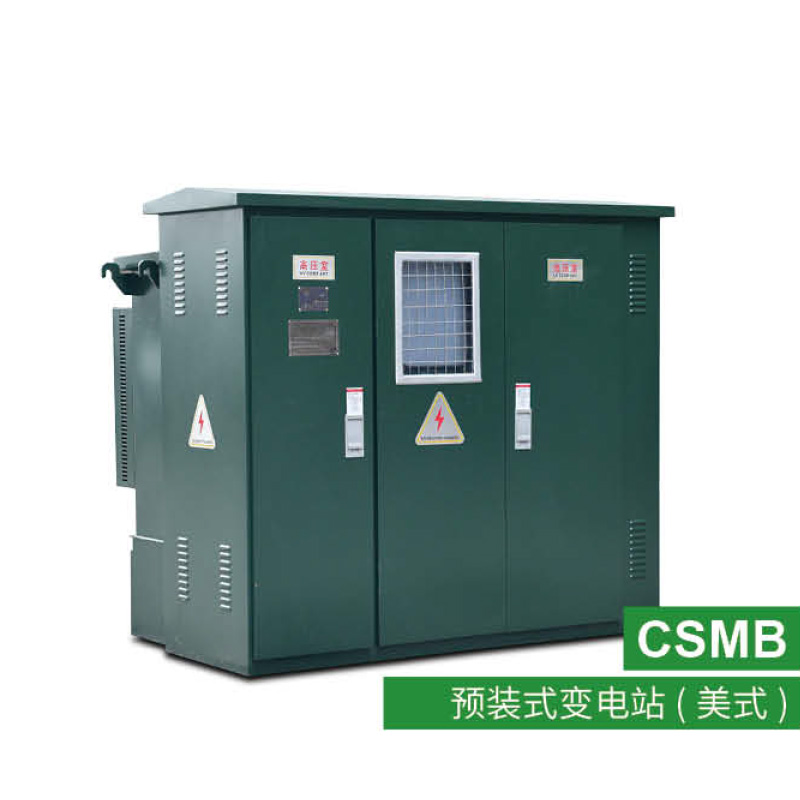
When modules arrive at the site, the traditional chaos of cutting, measuring, and fitting is largely gone. Panels, frames, and even fully finished rooms are lifted into place with a precision that makes the construction phase feel more like a careful installation than a messy build. Workers spend their time on alignment and connections rather than shaping raw materials, which means the site stays quieter, cleaner, and far less dependent on weather windows.
This shift changes what on-site work actually means. Instead of a long sequence of unpredictable tasks, assembly becomes a short, sequenced operation where each module locks into a predetermined spot. The drywall, wiring, and plumbing are already embedded back at the factory, so the crew only needs to secure joints, seal seams, and connect utilities. A house that once took months of scattered subcontractor visits now goes from flatbed to weathertight shell in a matter of days.
The result is a building process that feels almost invisible to outside observers. There are no piles of lumber, no dumpsters overflowing with offcuts, no steady stream of trades cycling through. Once the modules are craned into position and bolted together, the structure is essentially complete — the remaining work is finish trim and exterior cladding, which often happens with minimal disruption to the surrounding area.
A sealed shell keeps high voltage out of sight and mind
High voltage has a way of announcing itself with bulky conduits, warning labels, and the faint hum of danger. A sealed shell changes that entirely. By encasing the conductors in a continuous, non-porous barrier, the hazardous potential disappears from sight—no exposed terminals, no arc paths, no reason for anyone to think twice about what’s inside. The enclosure does the quiet work of containment, so the mind is free to ignore the threat and focus on the surrounding space.
This approach leans on material honesty rather than visual drama. Instead of decorating a hazard with stripes and shields, the shell simply removes the hazard from the perceptual field. The result is cleaner: a smooth, unbroken surface that reads as furniture or architecture, not as electrical infrastructure. Maintenance still happens, but through sealed access points that preserve the illusion of inertness. The voltage never needs to be seen, so it never occupies a waking thought.
There’s a psychological mercy in that invisibility. People move differently around visible danger—stiff, cautious, distracted. A well-sealed shell lets them relax. It treats high voltage not as a spectacle to be managed, but as a background condition, like the current in a wall. Once the enclosure is trusted, the high voltage becomes abstract, almost theoretical, and the room returns to its intended purpose.
The underrated cost curve of lower losses and fewer touchpoints
Most teams assume that cutting losses and shrinking customer touchpoints will push costs down in a straight line. Reality bends. Early reductions often yield quick savings, but the curve flattens as you approach a floor where each incremental gain demands more process change, better data, or sharper judgment than the last.
Fewer touchpoints can also carry a hidden tax. When a business strips away too many interactions, small issues that once got resolved casually now escalate into larger failures, driving up unit costs even as contact volume drops. The savings you see in one ledger appear as losses in another.
The underrated part is that the cost curve isn't smooth. It has plateaus and occasional spikes, especially when lower losses come from tighter controls that slow down other functions. Leaders who track only the headline metric miss where the true cost sits.
Sensors that flag trouble before it reaches the control room
Modern industrial sensors don't just monitor conditions—they anticipate failures. By embedding edge-processing chips directly into pressure, vibration, and temperature probes, these devices analyze patterns locally and send alerts the moment a deviation drifts outside normal bounds. This means a pump bearing starting to wobble or a valve seat leaking slightly triggers a warning before the problem ever shows up on the main control room dashboard.
The real advantage is time. Instead of relying on periodic scans or operator intuition, smart sensors continuously compare real-time data against historical baselines stored in their own memory. They can distinguish between a harmless spike from a cold startup and a genuine trend toward breakdown. When something looks off, the sensor transmits a prioritized flag, often with a suggested cause and remaining service life estimate, directly to maintenance crews—skipping the control room queue entirely.
Deployment is surprisingly straightforward. Many of these sensors use existing wiring or wireless mesh networks, and their self-calibrating algorithms adjust to each machine's unique signature over the first few days. Plant managers report cutting unplanned downtime by up to 40% within months, simply because trouble gets caught at the source rather than after it has cascaded into a full alarm state.
From wind-swept plains to dense industrial parks
On the open prairie, the wind never asks permission. It sweeps across miles of buffalo grass and switchgrass, bending each blade into a shimmering silver wave that rolls toward the horizon. There are no walls to break its stride, only the occasional lone cottonwood or a rusted fence line half-buried in topsoil. This is a landscape shaped by patience and weather, where the sky occupies more space than the ground and every breath of air carries the dry scent of sunbaked earth.
Drive three hundred miles east and the horizon changes texture. The wind still blows, but now it funnels between corrugated steel warehouses and concrete loading docks. Industrial parks stack themselves in neat grids, each building a repetition of the last, with shipping containers lined up like dominoes waiting for a shove. Here the air carries a metallic tang, and the constant hum of ventilation units replaces the rustle of grass. The prairie's openness is replaced by a geometry of throughput, where every square foot is accounted for and the horizon is just another property line.
Between these two worlds runs a thin ribbon of highway, and along it you can watch the transformation happen in real time. Scattered farmhouses give way to self-storage facilities, then to distribution centers with fleets of trucks idling in the lot. The wind never stops moving, but its voice changes from a low moan over open ground to a sharp whistle around rooftop vents and power lines. It is the same force, yet it sounds different once it has something to collide with.
FAQ
China's compact substations typically use gas-insulated switchgear or eco-friendly insulating media, sealing high-voltage components in small metal-enclosed cabinets. Their footprint can be 50–70% smaller than conventional air-insulated stations. Modular designs allow on-site installation in just a few days, making them ideal for retrofitting into existing basements or narrow plots without large transformer yards.
They often function as collection and step-up units for solar and wind farms. Scattered PV arrays or turbine outputs are first gathered into containerized compact stations, then boosted to 35 kV or 110 kV for transmission. Some models integrate energy storage interfaces and power quality control to smooth fluctuations and meet grid connection requirements, especially in large northwestern bases and rooftop distributed projects.
These users need rapid capacity expansion without long outages. Prefabricated cabin-type compact substations are assembled and tested in the factory, leaving only foundation work and cable connections on site. Delivery cycles can shorten from several months for traditional concrete substations to a few weeks. The fully sealed enclosure also prevents dust and moisture, avoiding arc flash and oil contamination risks in data centers or precision manufacturing.
Many products adopt oil-free designs, using epoxy resin or dry air/nitrogen insulation instead of mineral oil, eliminating fire and explosion hazards. They feature high internal arc fault withstand ratings, pressure relief channels, and intelligent online monitoring that can warn of partial discharge or abnormal temperature rise, reducing personnel exposure to strong electromagnetic fields.
Yes, special designs exist for plateaus, severe cold, hot-humid, and coastal salt-spray environments. High-altitude models increase insulation distances and cooling margins, northern low-temperature versions include heaters and low-temperature grease, and southern humid regions enhance sealing and dehumidification. These customizations allow compact stations to adapt from the Qinghai-Tibet Plateau to Hainan Island.
Urban utility tunnels and metro systems have limited space. Compact substations use low-height, dismantlable modular structures that can enter underground through standard freight elevators or hoisting openings. They are typically combined with ring main units and transformers into an integrated unit, reducing cable joints and civil interface work, and supporting quick repair and replacement underground.
Modern compact stations commonly integrate sensors and edge computing gateways to collect SF6 density, contact temperature, and mechanical characteristics in real time, uploading via fiber or wireless to an operations platform. With fault prediction algorithms, maintenance can be scheduled before defects evolve into outages, significantly lowering operating costs for unmanned remote stations.
Yes, vehicle-mounted or skid-mounted compact substations can be rapidly deployed to disaster sites, major event power guarantees, or temporary construction projects. They come with built-in protection and control panels, and can form an independent microgrid once connected to medium-voltage cables. No permanent buildings remain after removal, making them popular with emergency management departments and event organizers.
Conclusion
China's push into compact substations reflects a practical answer to a stubborn problem: older cities and crowded industrial zones rarely leave room for sprawling switchyards. Where traditional substations can't fit, factory-built compact units step in, shipped as pre-assembled modules that turn on-site construction from a months-long civil project into a matter of days. The sealed shell does more than save space—it keeps high-voltage equipment out of sight and mind, reducing public safety risks and visual clutter in places where land costs more than copper.
Beyond the footprint, the economics quietly shift in favor of compact designs. Because losses scale with conductor length and exposed connection points, a tightly integrated unit operates at a lower cost curve than a conventional layout, with fewer touchpoints for maintenance crews and fewer opportunities for fault. Modern units embed sensors that flag overheating, partial discharge, or insulation drift long before a failure reaches the control room. That early warning matters just as much on wind-swept plains as it does inside a dense industrial park—two very different settings where China's modular substations are proving that reliability, safety, and cost control don't have to demand a large patch of open ground.
Contact Us
Contact Person: Tonglun Chen
Email: [email protected]
Tel/WhatsApp: 8618906642555
Website: https://www.cncsele.com