
China Rigid Chain Lift Systems Key Benefits for Industrial Automation
2026-11-18
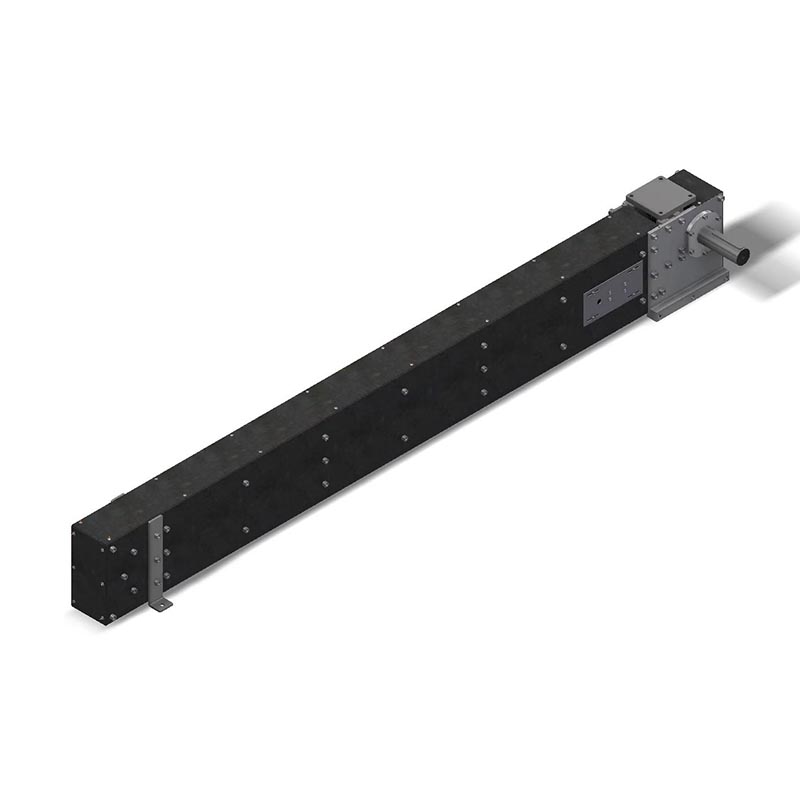
Most linear motion discussions skip the real constraint: vertical stroke without sacrificing floor space or adding a pit. That's exactly where rigid chain lift systems built in China are finding their place in industrial automation—not as a like-for-like replacement, but as a way to remove complexity from lifting stations, assembly lifts, and material handling cells. A rigid chain actuator stores as a compact coil and extends into a self-supporting column, which changes how engineers approach load stability and maintenance access. Homall Industry Limited has been focused on this mechanism long enough to know that the benefits only hold when the chain, guides, and drive are matched properly. Here's a closer look at the advantages that actually show up on the plant floor.
Where Rigid Chain Outperforms Screw Jacks and Scissor Lifts
Rigid chain systems have a clear edge when a lift needs to disappear into a shallow pit but still deliver a long vertical stroke. A screw jack can only extend as far as the screw itself, which usually means a tall housing or multiple stages, while a scissor lift carries much of its height in the crossed legs even when fully collapsed. A rigid chain actuator stows the chain flat or coiled in a compact magazine, then forms it into a solid column only during the lift. That difference alone often decides the project in tight equipment bases, stage floors, and work platforms where every inch of retracted height matters.
The advantage also shows up in duty cycle and speed. Screw jacks run into heat and wear when cycled frequently at higher speeds, and scissor lifts develop pin and bushing slop that makes motion feel loose over time. Rigid chain actuators handle repeated high-cycle operation with fewer wearing pivot points, and the chain column moves smoothly without the stick-slip or angular drift common in multi-stage screw designs. For applications that run many short lifts per hour, that translates into less adjustment, less unexpected downtime, and more consistent positioning.
Maintenance expectations tend to favor rigid chain as well. There is no exposed greased screw to collect dust, and no large scissor mechanism with multiple lubrication points hidden under a platform. Most of the moving parts stay enclosed, so routine service is simpler and the risk of contamination-related failure drops in dusty or washdown environments. When the priority is long travel from a low-profile package without adding complex guiding or frequent rebuilds, rigid chain tends to be the more practical choice.
Multi-Ton Lifting without the Drift of Hydraulic Systems
Most drift problems in multi-ton lifting come down to the working fluid itself. Hydraulic cylinders move smoothly, but oil bypasses seals, changes viscosity with temperature, and compresses under load. When a load has to stay put for hours, that small internal leakage turns into visible sag. Electromechanical lifting takes the fluid out of the equation. A servo-driven screw jack or roller-screw actuator uses a mechanical thread to carry the load, so position is held by gear teeth and screw contact rather than by trapped pressure.
The practical difference is most obvious during long dwells. A hydraulic system can hold a heavy fixture, but the pump may cycle or the valving may need to compensate as oil cools. With a multi-ton electromechanical setup, the motors stop once the target position is reached. The load remains supported by a self-locking worm gear, a brake, or the natural back-driving resistance of the screw assembly. There is no creep from fluid temperature swings, and no oily film left on the floor around the lift.
Synchronizing several lifting points also becomes cleaner. Feedback from encoders or resolvers on each actuator can be compared directly by the drive, and corrections happen through the same mechanical path that carries the load. This gives repeatable positioning without the tuning and valve deadband issues common in hydraulic motion. For heavy fixtures, large weldments, or heavy equipment assembly, that means the load stays exactly where the controller puts it until the next commanded move.
Short Retracted Height That Opens Up Low-Overhead Workcells
The real constraint in many assembly areas is not floor space but ceiling clearance. Equipment that collapses to a short retracted height slips into places where conventional lifts cannot go—under mezzanines, inside gloveboxes, beneath conveyor runs. That single dimension changes what a workcell can look like because the vertical stroke still extends far enough to reach the working position without forcing a full-height column into the aisle.
Short retracted height also simplifies moving hardware between stations. A module can stay mounted on a wheeled cart and roll through standard doorways, then rise to the exact height for a seated or standing operator. The lower collapsed profile leaves more room for tooling, lighting, and overhead service loops, and it reduces the temptation to build taller enclosures just to cover the motion hardware.
Duty Cycles Built for Three-Shift Automotive Production
Three-shift automotive production removes the nightly reset that most duty-cycle math quietly depends on. A robot cell in a body shop might run thousands of identical welds between midnight and 6 a.m., never giving servo drives enough idle time to shed heat. For that reason, component selection here usually starts with a continuous-duty assumption rather than an intermittent one, even for stations that look moderate on paper. The thermal margin becomes the real constraint, not peak torque or speed.
What fails first under this schedule is often not the main drive but the peripheral hardware around it. Tool changers, energy chains, and cooling circuits take on a different wear profile when there is no long weekend cool-down to mask an undersized fan or a marginal connector. Experienced manufacturing engineers tend to specify these line-side items with the same rigor as the robot itself, because a single overheated cable chain can stop a trim line just as quickly as a gearbox failure.
The shift pattern also reshapes how maintenance uses duty-cycle data. With only narrow windows between shifts, teams prioritize interventions based on measured load history rather than generic service intervals. A spindle that runs at 85 percent of its thermal limit every night may get a midweek inspection, while an over-specified axis in a low-frequency station can safely be pushed further out. That distinction keeps throughput predictable without treating every asset as equally fragile.
Clean, Quiet Motion for Dust-Sensitive and Paint-Line Automation
Carts, gantries, and robotic end effectors in paint booths have to move without disturbing the film, without shedding belt dust, and without adding background noise that masks an operator's sense of a process going wrong. Standard roller-based guides and fans can be the wrong fit here because they wear, generate particulates, and need regular lubrication that eventually finds its way into a finish.
Linear motor stages and sealed direct-drive actuators handle this differently. They remove the belt, gear, and bearing cage contact points that create most of the particle load. The result is low-friction travel that stays quieter at higher duty cycles, holds velocity without hunting, and keeps the area around a wet paint line or optical inspection station much cleaner over a full shift.
For paint-line automation specifically, that means fewer nibs and fisheyes in the coating, less buffing after cure, and fewer enclosure panels needed just to contain noise. The motion itself becomes less of a maintenance event and more of a stable process variable.
China-Based Supply Chains That Cut Cost without Compromising Duty Ratings
Most sourcing teams still assume that moving production through China automatically raises the risk of a higher duty bill or a less favorable country-of-origin ruling. In practice, the opposite can happen when the manufacturing steps are split with a little more intent. A product can keep its existing tariff classification while the most labor-intensive subassemblies stay in China, and only the final, relatively simple assembly moves to a second country. That approach trims direct labor and component handling costs without triggering a change in origin because the last substantial transformation still occurs where it matters for customs.
Free trade zones and bonded parks inside China are underused here. By moving partially finished goods into a bonded zone for additional work or kitting, companies can delay import duties and reduce the dutiable value of the final shipment. The key is that the work done inside the zone does not have to rewrite the product's classification or its origin. Some electronics and appliance brands have restructured this way, keeping their Chinese suppliers for printed circuit boards and precision metal parts while shifting only packaging and final testing to another location.
The savings usually come from three smaller changes rather than one large move: replacing imported inputs with locally available materials, redesigning the bill of materials so fewer parts carry a higher duty rate, and adjusting the sequence of assembly steps to protect the origin ruling. Each change has to be reviewed against the specific rules of the destination market. When it works, the result is the same HTS code, the same preferential rate, and a lower landed cost, without any visible disruption on the compliance side.
FAQ
They convert rotary motion into a stable vertical push without requiring fluids, accumulators, or leak-prone seals. That removes contamination risk, shortens maintenance windows, and gives predictable positioning repeatability in clean assembly cells.
Pallet handling, body-in-white framing, heavy fixture lifting, and material kitting stations tend to gain the most. These applications need compact vertical travel, high load capacity, and precise stopping points where a folded chain magazine saves floor space.
The chain links lock into a rigid column during extension, so side loads are resisted by the column structure rather than the drive components. This keeps the platform stable even when tooling or workpieces are not perfectly centered.
Because the lifting mechanism is purely mechanical, there are no hydraulic fluids to monitor or cylinder rods to score. Most upkeep involves checking chain lubrication, guide wear, and motor brake condition, which can be planned around normal line stoppages.
They consume power mainly during upward movement and can hold position without continuous pump operation. In many floor-level to mezzanine transfers, this lowers peak energy draw compared with hydraulic power units that idle under pressure.
Built-in mechanical locking, overload protection, position redundancy, and optional safety ratchets prevent unintended descent. These features support layouts where operators may enter the cell during loading or inspection.
Many offer modular stroke lengths, platform sizes, and mounting patterns rather than fully bespoke designs. This modular approach lets automation integrators adapt the lift to existing guarding and conveyor interfaces without waiting for a ground-up build.
Check the rated duty cycle, available buckling load charts, chain pitch and material, IP rating for the motor and gearbox, and whether the supplier provides application engineering support for your specific stroke and mounting orientation.
Conclusion
Rigid chain lifts from China are changing how automotive and general industrial lines handle vertical motion because the chain column pushes upward as a solid, self-supporting mast rather than relying on a screw, a scissor linkage, or a pressurized cylinder. That distinction shows up quickly in multi-ton pallet lifts and body skids: the load stays where it is placed, without the slow creep or temperature-related drift common in hydraulic setups. The retracted height is compact enough to fit under low mezzanines and inside existing workcells, while the lift can still run repeated strokes across three shifts without derating or forced cooling periods. In these applications, the rigid chain design often lasts longer than a screw jack under off-center loads and avoids the pinch points and pit requirements that complicate scissor lifts.
The same mechanism brings practical advantages in paint lines, clean rooms, and dust-sensitive assembly areas because there is no leaking fluid and the motion is quiet and controlled. Sourcing the lifts through China-based manufacturers reduces upfront cost, but the better suppliers maintain duty ratings, surface treatment, and bearing quality rather than cutting the load capacity to hit a lower price. That combination of a short package, stable multi-ton positioning, continuous duty capability, and cleaner operation makes the rigid chain system a practical alternative for engineers who need repeatable vertical handling without the infrastructure or maintenance burden of older lift types.
Contact Us
Contact Person: Ryan
Email: [email protected]
Tel/WhatsApp: +85259582726
Website: https://www.robomast.com/