

Custom Breathable Membrane OEM: Tailored Solutions for Your Product Needs
2026-11-02
Breathable membranes often fail because they're treated as an afterthought. But when your product demands a precise balance of air flow, moisture control, and durability, off-the-shelf options won't cut it. That's where custom OEM solutions come in—and why Jinbo approaches every project as a unique engineering challenge. In this post, we'll unpack what tailored breathable membranes can do for your next design.
Breathing Room: Custom Membranes That Match Your Product's Exact Airflow Needs
Every product has its own respiration pattern—some need a gentle sigh of air, others a steady, forceful exhale. Off-the-shelf membranes rarely hit that mark, forcing compromises in performance or protection. That's why we tune each membrane's pore structure, thickness, and surface treatment to your specific airflow curve, not the other way around. Whether you're venting a delicate sensor or equalizing pressure in a rugged enclosure, the result is a breathable barrier that behaves like it was designed alongside your product from day one.
The tuning process starts with your real-world conditions: temperature swings, altitude changes, dust exposure, moisture levels. We adjust airflow resistance and water entry pressure in tandem, so you never have to trade breathability for durability. Small-batch prototyping lets you test different permeabilities in your own lab, then we lock in the exact formulation for production. No generic "high-flow" or "low-flow" labels—just a membrane that matches what your product actually needs to stay cool, dry, and reliable.
What sets this apart is the absence of guesswork. You provide the cfm target, the IP rating, the chemical environment—we return a membrane that fits those numbers precisely, with batch-to-batch consistency measured in microns and millibars. That kind of control means fewer field failures, fewer warranty claims, and a product that breathes exactly the way you intended, enclosure after enclosure.
Chemistry That Clicks: Choosing the Right Polymer for Your Application
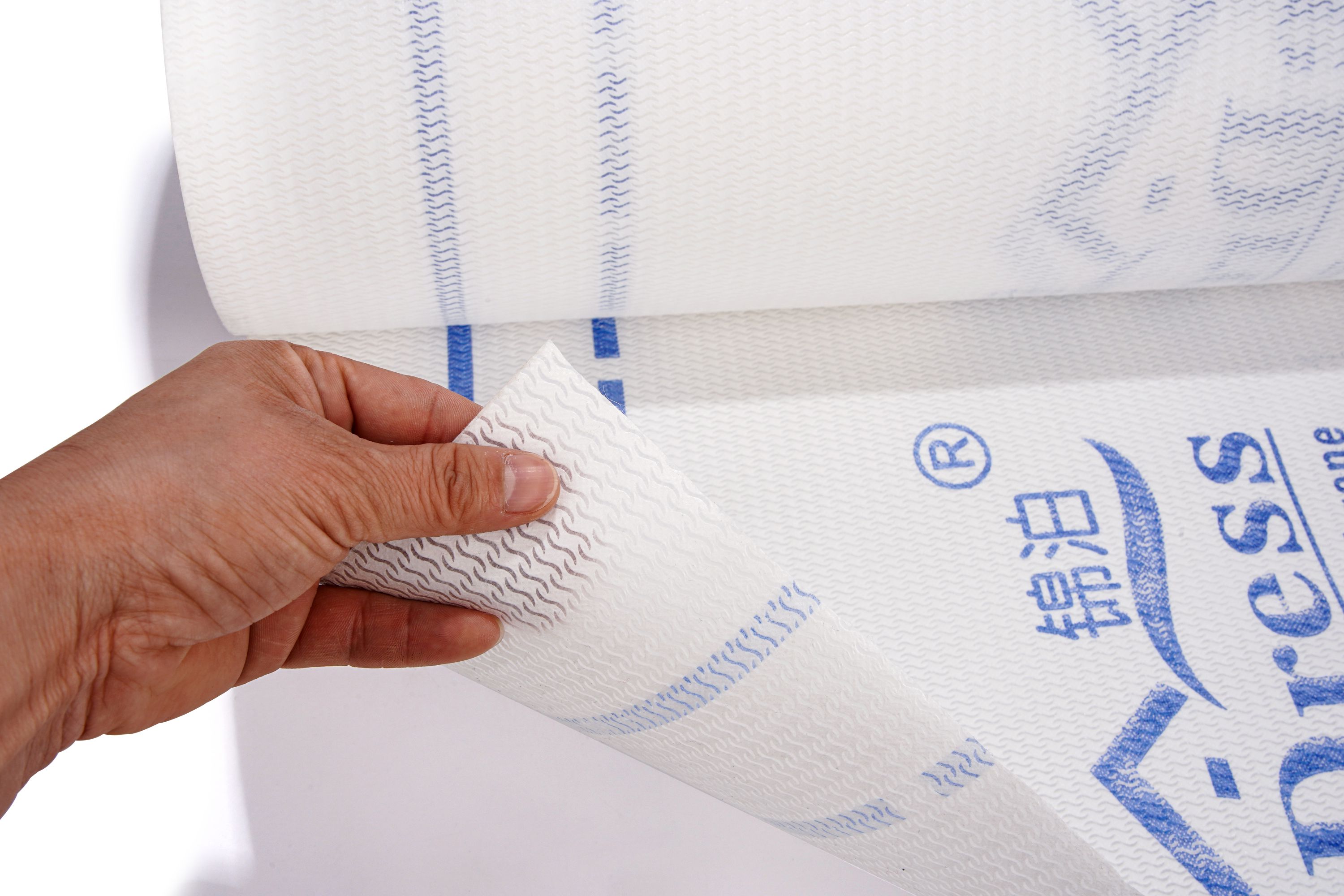
The phrase “chemistry that clicks” often brings to mind efficient reactions, but in polymer selection, it’s about finding a material whose molecular personality syncs with your application’s demands. A polymer isn’t just a datasheet of tensile strength and melt flow—it’s a network of backbone flexibility, side-group polarity, and crosslink density that dictates how it will behave under real-world stress. For instance, a polyamide’s hydrogen-bonded amide groups give it toughness and wear resistance, while a silicone’s siloxane backbone offers unbeatable low-temperature flexibility and thermal stability. The right choice clicks when the polymer’s intrinsic chemistry aligns with the failure modes you’re trying to avoid.
Start by mapping your application’s harshest conditions: continuous temperature, exposure to solvents or UV, cyclic loading, and even sterilization methods. Then weigh processing constraints—can your equipment handle the viscosity, shrinkage, or moisture sensitivity? Sometimes the best polymer is one that seems unremarkable on paper but excels in a narrow niche, like a fluoropolymer for chemical inertness or a thermoplastic polyurethane for abrasion resistance with elastic recovery. Don’t chase the highest performance numbers; chase the chemistry that quietly solves the problem without adding unnecessary cost or complexity.
Pore by Pore: Tailoring Structure for Filtration and Breathability
The secret to balancing filtration and breathability lies in the microscopic architecture of the material. Instead of treating the entire surface as one uniform barrier, engineers manipulate individual pore geometry, size distribution, and interconnectivity to create paths that block unwanted particles while letting air glide through. A tightly packed matrix of small pores might trap fine dust, but it also raises resistance, making each breath feel like drinking through a narrow straw. Conversely, overly large pores let air rush in but fail to capture anything meaningful. The craft is in the compromise: layering regions with different pore densities, or shaping each pore like a funnel so that incoming air slows down just enough for particles to latch onto the walls while clean air escapes through the center.
This pore-by-pore approach allows for a level of control that bulk material properties simply cannot offer. By varying the diameter of individual channels or staggering their alignment, a fabric can be tuned for a specific environment—high humidity, heavy particulate load, or intense physical exertion. In practice, this means a mask that stays dry against the skin during a sprint yet still filters out pollen on a windy day. The same principle applies to building wraps, outdoor gear, and even automotive cabin filters, where the demand for both protection and comfort pushes designers to think not in terms of whole sheets, but in terms of thousands of tiny, purposeful openings.
Achieving this level of precision often involves a mix of advanced manufacturing and iterative testing. Techniques like electrospinning, laser perforation, or additive manufacturing allow pore patterns to be drawn with sub-millimeter accuracy, then validated against real-world airflow and particle capture data. The result is a structure that feels almost alive—dense where it needs to shield, open where it needs to breathe. It is a reminder that sometimes the most effective solutions are not about using more material, but about asking each tiny opening to do its job a little better.
From First Prototype to Full Production: No Gaps in Support
Moving from a first prototype to full production often creates friction: design intent gets lost, contact points change, and process knowledge falls through the cracks. We avoid that by keeping the same engineering team involved from the initial design review and first article inspection all the way through pilot runs and mass production. There is no handoff meeting where critical details disappear; instead, the people who helped refine your prototype are the ones tuning the production line later.
During prototyping, we provide detailed manufacturability feedback, material recommendations, and fast-turn samples, so issues are caught before tooling is committed. In the pilot phase, we work beside your team to validate process parameters, test fixtures, and quality gates. Once full production begins, our engineers stay on the floor to monitor yields, adjust cycle times, and handle any deviations on the spot. Documentation, including revisions and change orders, is updated continuously and shared with you in real time.
That continuity means you never have to re-explain the product history or chase down a new support contact. The same standards applied to the first prototype carry through to the final unit, closing the gap that usually appears between development and production.
Tested Like You'd Use It: Real-World Conditions, Not Just Lab Specs
Lab numbers look impressive on a spreadsheet, but they rarely survive first contact with actual use. That's why every unit gets dragged through the same daily abuse you'd put it through—commutes, rain-soaked weekends, dusty trails—before it ever gets a stamp of approval.
We don't just cycle it in a temperature-controlled chamber and call it a day. Instead, we hand it to people who use it hard: bike messengers, field technicians, parents with strollers. Their feedback gets folded back into the design, so weak points get fixed before you ever notice them.
The result is a spec sheet that actually means something. No inflated battery claims, no waterproof ratings that only hold up in a sterile lab. Just gear that works when your hands are full, the signal is weak, and the forecast was wrong.
Every Roll, Every Time: Manufacturing Consistency Without the Guesswork
Consistency in manufacturing isn't a lucky streak—it's a system built on exact repetition. When every roll of material, every stamped part, every mixed batch behaves the same way shift after shift, operators stop relying on intuition and start trusting the process. The real work happens before the line ever starts: parameters locked down, raw inputs verified, machine calibration checked against a standard that doesn't drift. Without that groundwork, “consistent” becomes a word you hope for instead of a result you can measure.
The biggest enemy of repeatability is quiet variation—a tiny temperature swing, a worn die that still passes visual inspection, an operator adjusting a dial “just a little” because it worked last Tuesday. These small guesses compound into scrap, rework, and customer complaints that no final inspection can fully catch. True consistency means closing those guess-loops: sensors that flag drift before it becomes a defect, work instructions written so plainly that two different people do the same thing the same way, and feedback loops that treat every outlier as a signal to investigate, not an excuse to shrug.
When the guesswork is gone, manufacturing becomes boring in the best possible way. The line runs, the data stays flat, and quality stops being a heroic save and becomes a quiet baseline. That's the goal behind every roll, every time: not chasing perfection with more inspection, but engineering the conditions where perfection is the default. And the companies that get there don't talk about “consistency initiatives”—they just have processes that don't need second-guessing.
FAQ
We work with ePTFE, PU, and TPU films, adjusting pore size, thickness, and backing adhesives to match pressure equalization, acoustic performance, or liquid barrier needs.
Yes, we start by reviewing your IP rating target, temperature range, and exposure conditions, then recommend a membrane structure that balances airflow and protection.
Low-volume runs are available, including die-cut samples and small reel quantities, so you can validate venting performance before committing to mass production.
Each batch goes through air permeability testing, visual inspection, and peel adhesion checks. We also keep traceability records tied to your part number and material lot.
We can adjust adhesive type, add protective liners, incorporate color coding, or combine membranes with backing meshes and plastic support rings for easier assembly.
Standard prototype tooling takes about 5-7 business days, and we can ship express samples once your drawing or DXF is confirmed.
Our films end up in outdoor sensors, automotive lighting, battery packs, medical devices, and consumer electronics that need pressure equalization without letting in dust or moisture.
We can supply data sheets covering airflow, water entry pressure, and temperature resistance, plus support you with material certifications if your product needs UL or REACH compliance.
Conclusion
Every product has its own way of breathing—some need a whisper of airflow, others a steady rush. Our custom breathable membrane OEM starts there, matching your exact air exchange requirements rather than forcing you into off-the-shelf options. We work through polymer chemistry with you, selecting materials that hold up to your specific environment, whether that means chemical exposure, temperature swings, or long-term moisture. The pore structure gets tuned for the balance you need between blocking contaminants and letting vapor escape, so filtration and breathability stop being a trade-off.
Prototyping moves quickly, but we don't vanish after the first roll ships. From initial samples to full production, you have direct engineering support, and every batch is tested under conditions that mimic real use—not just clean lab specs. The goal is simple: each roll performs like the last, with consistency you can rely on without second-guessing. That's what tailored OEM means here—your product's demands shape the membrane, not the other way around.
Contact Us
Contact Person: Miranda
Email: [email protected]
Tel/WhatsApp: +8615231299719
Website: https://www.ihousewrap.com/