

DIN Rail Power Supply: Key Known Options for Reliable Industrial Performance
2026-05-24
In industrial automation, reliable power isn't just a nice-to-have—it’s the backbone of uptime and safety. Yet choosing the right DIN rail power supply often means navigating a sea of specs and trade-offs. From wide input ranges to rugged designs, the known options can vary wildly in performance. At the heart of this challenge lies a critical balance between efficiency, form factor, and resilience. One name that consistently surfaces among engineers is TPS, renowned for addressing these very demands with precision. But what really sets a standout solution apart? Let’s dig into the key factors that drive reliable industrial performance.
The Evolution of DIN Rail Power Solutions
Early DIN rail power supplies were simple, linear devices that converted AC mains to low-voltage DC, usually for basic relay logic or sensor circuits. They were bulky, inefficient, and often generated more heat than useful output. As industrial automation expanded in the 1980s, the demand for compact, reliable power grew, pushing manufacturers to adopt switched-mode topologies. These designs slashed size and weight while boosting efficiency, but early switchers introduced noise and had a steep learning curve for engineers accustomed to linear regulation.
By the late 1990s, the rise of networking and smart devices forced another leap. Power supplies now had to deliver tight regulation, hold-up time, and communication capabilities. Features like power factor correction, overload protection, and parallel redundancy became standard. The DIN rail form factor evolved as well—slimmer profiles, better thermal management, and plug-in terminals for quick maintenance. These units were no longer just power bricks; they became intelligent nodes that could report health status and predict failures before they shutdown a line.
Today, the evolution continues with wide-bandgap semiconductors, digital control loops, and IIoT integration. Modern DIN rail power supplies can handle wide input voltage ranges, operate in harsh environments, and synchronize with cloud analytics platforms. They prioritize energy harvesting, peak shaving, and even bidirectional power flow in some microgrid applications. Looking ahead, the convergence of edge computing and power conversion promises a future where every DIN rail unit is a self-aware, self-optimizing energy manager, blurring the line between power supply and smart grid device.
Selecting the Ideal Form Factor and Wattage
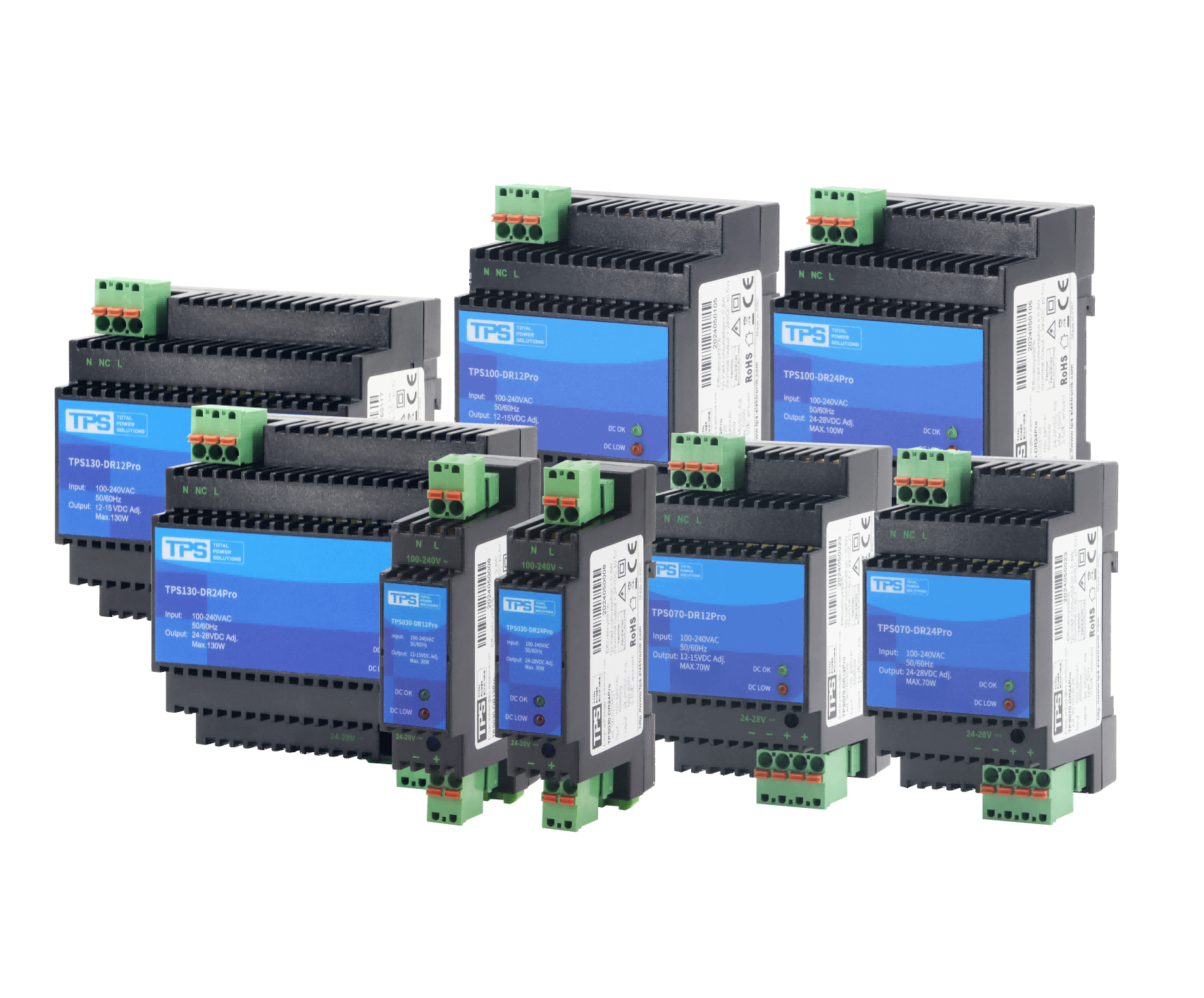
Picking a power supply isn’t as simple as grabbing the shiniest unit off the shelf—it starts with understanding where it’s going to live. Small form factor builds, like mini-ITX systems, demand compact SFX or SFX-L supplies that squeeze into tight spaces without choking airflow. On the flip side, standard ATX cases give you the freedom to use full-sized units, often with larger, quieter fans and extra room for cable management. The physical dimensions matter just as much as the electrical specs because a mismatched form factor can leave you with a power supply that simply won’t fit, no matter how many watts it pushes.
Wattage isn’t a one-size-fits-all number either—it’s about matching your hardware’s actual appetite, not just slapping in the biggest number you can afford. A system running a mid-range GPU and a modest processor might barely graze 400W under load, making an 850W unit overkill and inefficient at typical idle draws. But pair a hungry CPU with a flagship graphics card and a handful of drives, and suddenly you’re flirting with 700W peaks where headroom becomes your safety net. The trick is to calculate your peak draw honestly, then add a comfortable margin—usually 20-30%—so the power supply runs in its sweet spot, keeping efficiency high and fan noise low.
There’s also the human element people forget: your future plans. Maybe you’re running a modest setup today, but if a graphics card upgrade is on the horizon next year, buying a little extra wattage now saves you from replacing the entire unit later. Similarly, if you’re building in a case that could move to a larger chassis down the line, an SFX unit with an ATX adapter bracket might give you flexibility. In the end, the ideal choice balances the physical box you’re building in, the components you’re powering right now, and the ones you might add tomorrow—all without treating the power supply as an afterthought.
Balancing Efficiency, Ripple, and Cost
Designing power converters often feels like walking a tightrope. You need high efficiency to minimize heat and energy loss, yet reducing ripple is equally critical for clean, stable output. But every improvement in one area seems to tug at the others—tighter ripple control might demand more complex filters or faster switching, which can hike up both component cost and power dissipation. It’s a classic engineering dilemma where priorities clash, and the “best” solution depends heavily on the specific application. Industrial motor drives might forgive a bit of ripple for ruggedness and low cost, while sensitive medical equipment demands whisper-quiet outputs at any price.
The real art lies in finding the inflection point where all three factors align acceptably. Sometimes a slightly lower switching frequency reduces switching losses dramatically with only a modest increase in ripple, allowing a smaller, cheaper output capacitor. Other times, investing in a premium MOSFET or a more intelligent gate driver pays for itself in thermal savings and board space. The key is to treat the design not as a set of isolated specs, but as a system where efficiency, ripple, and cost are traded fluidly—often through iterative simulation and prototyping, because textbook formulas rarely capture the full picture. Seasoned engineers know that the optimal balance often lies in the “good enough” zone where none of the three is perfect, but the end product works flawlessly in its intended environment.
Ensuring Continuous Operation with Redundancy Modules
In critical power systems, the smallest interruption can cascade into costly downtime. Redundancy modules step in as silent sentinels, orchestrating power from multiple sources to feed a common load. Should one supply falter, the module instantaneously reroutes energy from the healthy ones, often within microseconds—so fast that connected equipment never sees a glitch. This isn’t just about having backups; it’s about intelligent decoupling that lets you hot-swap or service a power supply without ever bringing the system down.
Traditional setups might simply tie multiple supplies together, but that invites single points of failure. True redundancy lies in isolating each feed through internal MOSFETs or diodes, preventing backfeeding and ensuring a flawless handover. Look for modules that actively balance current across active units, which not only extends their lifespan but also keeps internal temperatures down, quietly boosting overall efficiency. This approach sidesteps the common pitfall of one supply shouldering the entire load until it fails, only to pass a stressed burden to its neighbor.
Real-world demands call for more than a box of relays. Top-tier redundancy modules incorporate monitoring features—dry contacts, LED signaling, or even digital interfaces—to flag issues before they escalate. They can alert you to a failing power supply, a tripped circuit, or a gradually drifting voltage that might otherwise go unnoticed until a critical alarm sounds. By weaving these alerts into your existing control systems, you shift from reactive firefighting to proactive maintenance, keeping operations running smoothly around the clock.
Thermal Performance and Environmental Hardening
Advanced thermal management is at the core of durable electronics. By integrating phase-change materials and anisotropic graphite sheets, heat is rapidly drawn away from critical components, preventing hotspots that degrade performance over time. This passive cooling approach keeps junction temperatures well within safe margins even under sustained heavy loads, without adding bulk or moving parts.
Environmental hardening goes beyond simple conformal coatings. The system employs a multi-layer defense: nanocrystalline corrosion-resistant alloys, hermetic seals rated for immersion, and vibration-dampening mounts tested to MIL-STD-810 standards. Together, these features allow the unit to shrug off salt fog, driving rain, and thermal shock cycles that would cripple lesser designs.
Real-world validation included 2,000 hours of accelerated life testing with temperature swings from -40°C to +85°C and 95% humidity. Post-test teardowns revealed no moisture ingress or thermal interface degradation, confirming that the enclosure and cooling strategy work in concert to extend field life dramatically.
Simple Installation Tips for Long-Term Reliability
When setting up equipment, a little extra care during installation pays off over time. Always double-check that surfaces are clean and level before securing anything in place. Even tiny misalignments can lead to uneven wear or loosening later on. Use the right tools for the job—forcing a fastener with the wrong driver might save a minute now but invites headaches down the road. And resist the urge to overtighten; following torque specifications isn't just a suggestion, it's a safeguard against cracks and stress fractures that quietly shorten lifespan.
The environment where you install makes a bigger difference than most people think. If your setup will face vibration, consider using locking washers or thread-locking compounds from the start. In damp or outdoor locations, apply a thin coat of anti-seize or corrosion inhibitor on threads and mating surfaces. It takes seconds but prevents the kind of rust-welded nightmare that turns routine maintenance into a battle. Also, route cables and hoses so they don't rub against sharp edges or move excessively—a piece of spiral wrap or a well-placed clamp costs pennies compared to replacing damaged wiring.
Finally, take the installer's version of a test drive before walking away. Run the system through its full range of motion if applicable, listen for strange sounds, and check all fasteners again after the first few hours of operation. A quick re-torque after initial settling catches what even careful installation misses. And don't toss the manual once you're done—scribble notes about what you did differently or any quirks you noticed. Future you will thank you when it's time for service, and the habit builds reliability into everything you touch.
FAQ
A DIN rail power supply is a compact, modular device that converts AC mains voltage to a stable DC output, designed to snap directly onto a standard DIN rail. Its popularity in industry comes from the space-saving installation, easy scalability, and rugged construction that handles wide temperature ranges, vibration, and electrical noise often found in factory floors and control cabinets.
There are three primary categories: basic switched-mode supplies for general use, fully-featured regulated supplies with overload and short-circuit protection, and specialized units like redundant modules, uninterruptible power supply (UPS) add-ons, or high-efficiency types for demanding applications. The differences lie in their input/output ranges, efficiency ratings, safety certifications, and extra functions such as remote monitoring or active power factor correction.
A regulated supply is essential when your equipment requires precise, stable voltage despite fluctuations in load or input power. Unregulated units output a voltage that varies with line and load changes, which can cause erratic behavior or damage to sensitive electronics like PLCs, sensors, and communication modules. Regulated models maintain tight voltage tolerance, making them a safer bet for most control system components.
Look beyond just wattage. Key factors include the ambient temperature rating and how the output derates at high temperatures, the hold-up time (how long it can bridge short power dips), overload behavior (hiccup mode vs. constant current limiting), and immunity to electromagnetic interference (EMI). Choosing a unit with conformal coating adds reliability in humid or dusty environments, while screw or spring clamp terminals affect installation ease and maintenance downtime.
Trusted names include Phoenix Contact, Siemens, Weidmüller, Mean Well, and PULS. Phoenix Contact and Weidmüller often lead in flexibility with extensive lineups and smart diagnostic features. Siemens integrates seamlessly with other automation gear. Mean Well dominates the value segment with wide availability and solid performance. PULS focuses on ultra-high efficiency and extreme reliability, often found in critical infrastructure. Each has a niche, so the choice hinges on project scale, budget, and support needs.
Start by listing every device's nominal current draw and add them together. Multiply the total by a safety factor—usually 1.25 to 1.5—to account for inrush currents and future expansion. Check the supply's peak current capability for motor starts or capacitive loads. Also, verify the derating curve: a unit rated for 10A at 25°C might only deliver 7A at 60°C, so select based on the actual environment inside the enclosure.
Overcrowding is a frequent issue—mounting supplies tightly with no lateral space reduces airflow and causes overheating. Wrong wiring gauge leads to voltage drop or terminal heating. Ignoring earth grounding and not bonding the DIN rail can create floating potential and noise problems. Another mistake is mixing AC and DC cabling in the same trunk, which invites interference. Always follow the manufacturer's spacing guidelines and use ferrules for stranded wires to prevent stray strands from causing shorts.
Efficiency standards are tightening, pushing manufacturers to adopt GaN (gallium nitride) transistors for smaller, cooler-running designs. Networked power supplies with built-in IO-Link or Ethernet are gaining ground, allowing real-time load monitoring and predictive maintenance alerts. There's also growing demand for supplies that can handle wide-range AC and DC inputs, accommodating renewable energy and battery-powered systems without extra converters. Finally, edge computing nodes are driving ultra-compact, high-output models that fit into ever-shrinking control panels.
Conclusion
DIN rail power supplies have evolved from basic linear designs into compact, high-efficiency switching units that meet the demanding needs of modern industrial automation. Early solutions were often bulky and inefficient, but advances in power electronics now deliver form factors that pack high wattages into narrow housings, saving valuable cabinet space. Selecting the right unit means matching the width and power rating to the load, while also considering future expansion—oversizing slightly can prevent premature upgrades. Modern designs routinely achieve efficiencies above 90%, reducing both energy costs and internal heat buildup, while well-engineered filtering keeps output ripple low to protect sensitive control electronics. This balance of efficiency and clean power directly impacts long-term system stability, making it a key differentiator among known reliable options.
For continuous operation in critical processes, incorporating redundancy modules becomes essential; they seamlessly switch to a backup supply in case of failure, ensuring zero downtime. Thermal performance is equally vital—hardened units with wide operating temperature ranges, conformal coating, and rugged enclosures withstand harsh industrial environments without derating. Installation practices also play a major role in reliability: ensuring proper ventilation spacing, using correct wire gauges, and firmly securing units to the rail prevent intermittent faults. Together, these considerations—evolutionary design, smart sizing, efficient clean power, redundancy, environmental hardening, and careful installation—form the foundation of a dependable DIN rail power infrastructure that keeps production lines running smoothly.
Contact Us
Contact Person: Lily
Email: [email protected]
Tel/WhatsApp: +49 (0) 2161 49526-0
Website: https://tps-elektronik.com/en/