

Gearless Flexo Press Manufacturer: Key Considerations for Choosing the Right Partner
2026-11-16
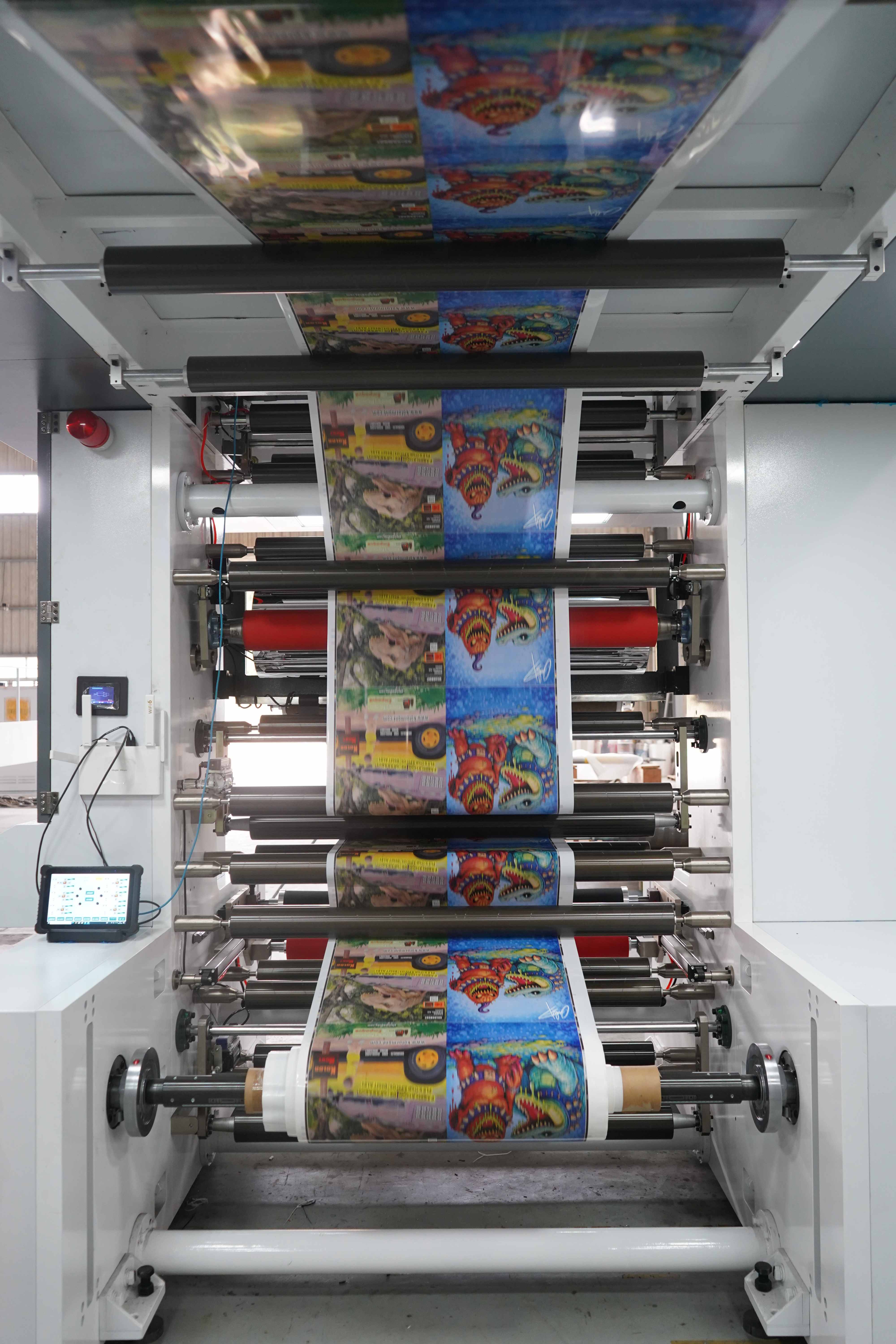
Finding the right gearless flexo press manufacturer isn’t just a technical decision—it’s a bet on your production future. You need a partner who understands servo precision, registration stability, and the daily realities of your shop floor, not just a spec sheet. HuiPeng has built its name by focusing on exactly those pain points, earning trust in a market crowded with hollow promises. Before you shortlist vendors, here are the key considerations that separate a genuine long-term partner from an expensive gamble.
What Demo Runs Don't Reveal About Press Stability
A short demo run gives you a snapshot, not a track record. The press can hold tolerance for fifty strokes on a clean die with pre-warmed hydraulics and a vendor technician hovering nearby. That says almost nothing about what happens at hour six, when the frame has heat-soaked, the oil has thinned, and the tooling has started to micro-weld. Real stability shows up only after thousands of cycles under normal shop conditions, with your own material, your own operators, and your own ambient temperature swings.
Another blind spot is how the press behaves when things are slightly wrong, not perfectly right. Demo runs tend to use hand-picked blanks and freshly serviced components. They don't expose how the machine handles variation in stock thickness, minor misalignment, or a worn die bushing. A press that is truly stable will drift predictably and recover quickly, rather than hold perfect numbers only inside a narrow performance envelope. If you only watch the demo, you can easily mistake a fragile machine for a robust one.
Pay attention to the data the vendor doesn't collect. Ask for strip charts over a full shift, not just a summary of the best ten parts. Look at thermal growth curves, ram position repeatability after lunch and after a tool change, and whether the control system compensates or hides the drift. Those details, boring as they seem, are where long-term press stability either holds up or quietly falls apart.
Reading Beyond the Uptime Percentage
A 99.9% uptime guarantee might look reassuring on a sales page, but that single number rarely tells you how a service actually behaves when things go wrong. An outage that lasts ten seconds every hour can still fit inside a monthly 99.9% allowance, yet it feels far worse than one planned thirty-minute maintenance window. The raw percentage hides frequency, duration, and timing of disruptions, all of which matter more to a real user than an annual average.
There is also the question of what counts as “up.” A server can be technically reachable while core features fail, e-commerce checkout stalls, or database queries crawl. Those degraded states often never appear in an uptime report, because monitoring checks only confirm that a login page or health endpoint returns a response. If you only read the headline number, you might miss slowdowns, packet loss, or partial outages that drive visitors away just as effectively as a complete blackout.
It helps to look at historical incident timelines, response times, and how openly a provider communicates during problems. A company with slightly lower uptime but fast, honest status updates can be a safer bet than one that quietly patches issues and inflates its figures. Ultimately, the percentage is a starting point, not proof of reliability; the details around it reveal whether you can trust a service when it is actually under pressure.
Customization Requests That Separate Real Partners
Anyone can ask for a tweak to a template. Real partners ask for changes that reveal they actually understand how you work, not just what you sell. It might be a request to restructure your onboarding flow around a team’s approval chain, or to add a reporting field that only makes sense if they’ve lived inside your dashboard for a week. Those requests show they’ve thought through the fit, not just the features.
The opposite is the prospect who wants every button moved, every color changed, and a brand-new integration before signing—without being able to explain why. That’s a red flag wrapped in a “customization” label. Real partners push for changes that make the product more useful for both sides, not just shinier for their demo.
Listen for the difference between “can you make it do X?” and “we already do X this way, so if your tool could match that, we’d switch.” The first is a wish list. The second is a partner telling you exactly how to earn their business.
The Spare Parts Test You Should Run Before Signing
Before you commit to any equipment purchase, run the spare parts test: can you easily identify and order critical wear items like filters, seals, and drive belts from the manufacturer or a reliable third-party supplier? If the answer requires digging through obscure catalogs, waiting weeks for overseas shipping, or relying on a single discontinued source, you’re inheriting a hidden liability that will only surface during downtime. The test isn’t about having a full inventory on day one—it’s about verifying that the supply chain for those parts actually exists, is responsive, and won’t hold your operation hostage later.
A practical way to run this test is to pick three or four components most likely to fail under normal use—think bearings on a motor, O-rings in a valve, or a control board capacitor—and request price, lead time, and stock status from the vendor before signing. If the vendor hesitates, redirects you to a call center, or can’t provide a clear answer within a business day, treat that as a warning sign. You’re not just buying the machine; you’re buying the ongoing relationship with whoever supplies its parts, and a weak response now rarely improves after the invoice clears.
Don’t confuse this with over-engineering your spare parts strategy. The goal isn’t to stockpile every screw or gasket, but to confirm that replacements won’t require custom fabrication, long discontinued cross-references, or scavenging from retired units. Run the test early, document the supplier’s response, and compare it against a second source if possible. That ten-minute check before signing can save you from a machine that becomes an expensive paperweight the first time a $30 part fails.
Operator Training That Outlasts the Install Team
Plant managers often treat operator training as a box to check during commissioning. The vendor's engineers walk the floor for a week, run through the HMI screens, and then fly home. A month later, the night shift hits a fault state nobody covered, and the line sits idle until someone digs out a manual. Training that only lives inside the install team's visit has a shelf life of about three days.
The operators who actually run the equipment every day need something closer to apprenticeship than a seminar. That means building a training loop inside the plant: shift leads who can troubleshoot the top five failure modes blindfolded, a set of short, plain-language job aids posted at the machine, and a schedule for refreshing skills before they decay. It also means recording the vendor's walkthroughs as searchable video clips, not as a single two-hour file nobody will ever watch again.
What makes training outlast the install team is ownership. When a plant treats operator capability as an internal asset—with named mentors, a practical sign-off for each job role, and a feedback channel back to engineering—the knowledge stops walking out the door after commissioning. The install team becomes a starting point, not the entire curriculum.
Signals of a Manufacturer's Long-Term Commitment
A manufacturer's long-term commitment rarely announces itself in a single headline. Instead, it shows up in quieter, more persistent ways: spare parts still available for machines sold a decade ago, toll-free support lines answered by people who remember your first purchase, and upgrade paths designed to extend the life of existing equipment rather than force premature replacements. These signals matter because they reflect a mindset—one where the relationship doesn't end when the invoice clears.
Look at how a company handles product recalls or field failures. A committed manufacturer treats these moments as opportunities to reinforce trust, not as legal chores to manage. They proactively notify customers, absorb the cost of corrections without hidden fees, and publish technical bulletins that help operators avoid the same issue later. This is very different from the manufacturer that goes silent, blames component suppliers, or quietly tweaks the design in the next batch while leaving earlier buyers to fend for themselves.
Another reliable signal is investment in local service infrastructure. Factories that station regional engineers, maintain training programs for dealer technicians, or operate their own refurbishment centers are signaling a long horizon. They are not chasing spot orders or seasonal demand; they are building a support network that only makes financial sense if they plan to be around for the next decade or more. When a manufacturer opens a spare parts hub in your country, that warehouse rent is a quiet promise—you will not be abandoned when a gearbox wears out or a software license expires.
FAQ
Without mechanical gears linking plate cylinders and anilox rolls, each axis runs on its own servo drive. That means operators can fine-tune register and repeat length from the control panel instead of swapping gears. It also removes gear backlash and wear, so you get cleaner screens, tighter registration, and much faster changeovers on short runs.
Look past the spec sheet. Ask how they handle dynamic tension control at high speed, how their drives recover after an emergency stop, and whether they can show real print samples from shops running similar substrates. A capable partner will talk about closed-loop feedback tuning and ramp profiles, not just motor brands.
Focus on day-to-day realities: how quick is sleeve changeover, can one operator manage the job from a single console, what happens when a servo fault occurs mid-run, and how easy is it to troubleshoot without an engineer on site. The answers reveal whether the machine was designed by people who have run flexo jobs, not just assembled components.
It is often the difference between a one-shift delay and a three-day standstill. Gearless machines depend on software and servo parameters, so remote diagnostics, local spare parts, and technicians who can calibrate drives are essential. Request a clear response-time commitment and ask how many gearless installations their local team supports.
That depends on your job mix. If your runs are shrinking and you switch jobs multiple times per day, a machine that saves eight minutes per changeover will often beat a faster press that takes twice as long to set up. Calculate net output per shift on your actual mix, not just the headline meters-per-minute figure.
Beyond the purchase price, factor in servo drive maintenance, software updates, sleeve inventory, compressed air quality, climate control for electrical cabinets, and training. A responsible manufacturer will walk you through those costs before the order, not after installation.
Conclusion
Selecting a gearless flexo press manufacturer goes far beyond comparing print samples or quoted speeds. A demonstration run, no matter how polished, rarely exposes how the press behaves after weeks of continuous production—thermal drift, registration drift at varying web tensions, and servo tuning under real substrate changes often stay hidden. Similarly, a high uptime percentage can mask frequent short stoppages or slow fault recovery that erode daily output. You need to ask for logged event data, mean time between interventions, and how quickly the control system re-syncs after a splice or tension upset. Real partners stand out in customization: instead of offering only standard deck configurations, they discuss your specific ink systems, dryer capacities, and repeat length ranges, and they suggest feasible modifications rather than saying yes to everything. Before signing, run your own spare parts test—request a full bill of materials with lead times and pricing for critical servo drives, print sleeves, and PC boards; if the manufacturer hesitates or only bundles expensive service contracts, that's a warning sign.
Operator training is another area where long-term commitment shows. Manufacturers committed to your success don't stop at a few days of install-time instruction; they provide structured, hands-on programs using your actual jobs, plus remote support and refresher sessions as your crew turns over. Look for signals like local service hubs, accessible engineering support, and a published roadmap for software updates that improve existing presses rather than only selling new models. A true partner treats the purchase as the start of a relationship—ask for references from printers running the same press for five to seven years, and listen for whether they mention proactive maintenance alerts, upgrade paths for servo and drying technology, and a manufacturer that still answers calls after the warranty expires. These practical tests reveal far more about reliability and partnership than any brochure or demo reel.
Contact Us
Contact Person: Isaias
Email: [email protected]
Tel/WhatsApp: 86-13868693129
Website: https://www.hpflexo.com/