

HIFU Transducer Vendor Selection Criteria for High-Performance Systems
2026-08-19
Selecting the right HIFU transducer vendor can make or break a high-performance system—yet too many teams still treat it as an afterthought. Beyond basic specs, the real differentiators often hide in manufacturing consistency, acoustic output stability, and the vendor’s willingness to co-engineer. If you’re aiming for predictable clinical or industrial results, Siansonic is one name worth scrutinizing before you finalize your shortlist.
Verifying Transducer Efficiency Before Prototype Integration
A transducer that performs well on paper can still underdeliver once mounted inside a prototype, so bench-testing its electrical-to-mechanical conversion efficiency early can save a lot of rework. Instead of relying solely on the datasheet, feed the device a known low-amplitude input and measure both the drive voltage and the actual displacement or force output under a realistic load. Comparing these numbers against the stated sensitivity curve quickly reveals whether the unit is drifting out of spec or if the mounting interface is eating energy through poor coupling.
One practical trick is to sweep frequency in small steps while logging the impedance phase and magnitude, because a sharp resonance shift often points to a weak bond or a preload issue that simple static tests miss. You can also run a short thermal check after a few minutes of continuous excitation: a transducer that heats unevenly near its connectors is likely wasting power in the wiring rather than transferring it to the working medium. Catching these losses now, before the enclosure is sealed, keeps later troubleshooting from becoming a guessing game.
Once the measured efficiency sits within a few percent of the expected band across the operating range, the transducer is ready for integration. If the numbers fall short, adjusting the backing material, tightening the mechanical ground, or adding a thin compliant layer at the interface often recovers the missing output without redesigning the whole assembly. The key is to document the actual efficiency curve, not just a single pass/fail value, so the final prototype's performance can be traced back to a verified baseline.
Comparing Piezoelectric Material Grades Across Suppliers
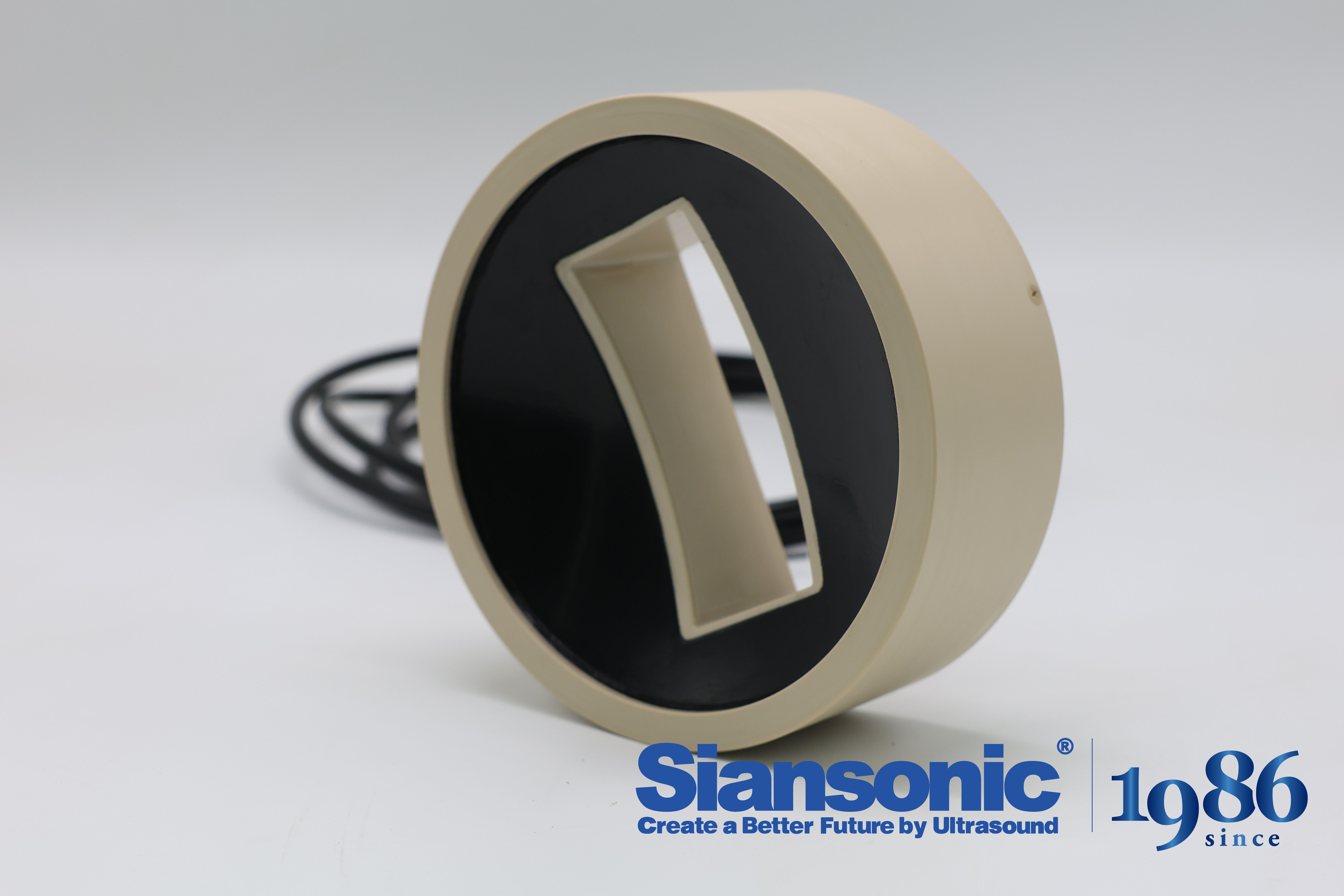
When sourcing piezoelectric ceramics, the same nominal grade can behave quite differently depending on the supplier. Terms like PZT-5A or PZT-5H are widely used, yet each manufacturer applies its own doping levels, sintering profiles, and poling conditions. This means a PZT-5H from one vendor might offer higher coupling but lower depoling temperature than another's version, even if both carry the same label. Engineers should always request full data sheets with measured d33, g33, permittivity, and mechanical Q values rather than assuming equivalence.
Beyond the standard soft and hard classifications, suppliers differ in how they handle trade-offs between sensitivity, stability, and operating range. Some prioritize high dielectric constant for energy harvesting or sensor applications, while others optimize for low loss and high power handling in ultrasonic transducers. Direct comparison often requires looking at curves of capacitance versus temperature, impedance versus frequency, and strain versus electric field. A material that looks superior on a single parameter may degrade faster under thermal cycling or mechanical preload.
A practical approach is to create a normalized test matrix using identical sample dimensions and electrode patterns. By measuring key figures of merit under the same conditions, you can uncover hidden differences in aging rates, hysteresis, and nonlinearity. Also consider batch-to-batch consistency, as some smaller foundries have wider tolerance bands. Ultimately, the best grade is not just the one with the highest d33 on paper, but the one that maintains its performance across your specific temperature, load, and drive conditions.
Reading Between the Lines of Acoustic Test Reports
Acoustic test reports often look like a table of numbers with a pass/fail box, but the real information sits in the fine print. A single STC or IIC rating rarely tells you how a partition will behave in a specific building. The conditions of the test—sample size, mounting details, perimeter isolation, and even the laboratory's own calibration history—can shift the result by several points. If you only skim the headline figure, you miss why two products with the same rating can perform differently on site.
Look closely at the frequency data rather than the weighted single number. Two assemblies can arrive at an STC of 50 through very different paths. One might perform well at mid and high frequencies but dip badly at low frequencies where real-world noise from traffic or bass-heavy audio sits. The octave or third-octave table reveals these weak spots. Also watch for notes about flanking, sealant, or added mass; a report that records a favorable result using a single layer of gypsum board on one side and a resilient channel on the other may not match the assembly you are actually installing.
Measurement uncertainty gets buried in the lab report appendix, but it matters more than many designers admit. Rounding, interlaboratory variation, and slight deviations in specimen construction can nudge a rating by one or two points—enough to flip a code requirement. Reading between the lines means asking for the full report, checking the sample description against your specification, and comparing the sound transmission class at individual frequencies rather than the rounded final number. That habit catches the mismatch before it turns into a field failure.
Thermal Runaway Risks in Continuous HIFU Operation
During prolonged continuous HIFU exposure, the focal region can shift from controlled coagulative necrosis into a runaway heating state. The tissue's own cooling mechanisms—mainly blood perfusion and thermal conduction—often cannot keep pace with the acoustic energy deposition rate. When the local temperature climbs beyond roughly 60°C, protein denaturation accelerates, but if it continues upward past 100°C, water vaporizes and tissue carbonizes. This transition is abrupt and difficult to reverse, leaving behind charred cavities rather than the intended lesion boundary.
A less obvious contributor comes from the transducer itself. Running a HIFU element continuously at high electrical drive causes internal dielectric and mechanical losses to build up heat inside the transducer assembly. As the piezoelectric material warms, its resonance frequency and impedance shift, which can detune the acoustic output and force the driving electronics to compensate by raising power. That positive feedback loop can push the focal intensity beyond safe limits even if the operator has not changed the nominal settings. Meanwhile, any gas bubbles drawn into the focal zone can collapse violently under the alternating pressure field, releasing concentrated shock waves and micro-jets that deposit heat on a much smaller spatial scale than the intended focus.
Managing these risks usually means avoiding purely continuous operation. Duty cycling, swept-frequency modulation, and active cooling of both transducer and coupling medium are common safeguards. In clinical systems, real-time MR thermometry or ultrasound-based temperature mapping feeds back to automatically reduce power if the focal temperature gradient steepens unexpectedly. Some protocols also insert brief off-periods to let perfusion wash out residual heat before the next sonication, which keeps the treatment within the desired thermal envelope and prevents the sudden tissue vaporization that marks full thermal runaway.
Supplier Customization Workflows and Focal Zone Control
Configuring a supplier's workflow rarely feels like a single decision. It starts with a simple question: where should the system draw the line between what a supplier can touch and what stays locked? In practice, that boundary shifts depending on the product category, the supplier's maturity, and the risk you're willing to carry. A well-tuned workflow lets a supplier update lead times and inventory feeds without accidentally editing pricing rules or compliance fields. The goal isn't to give them more access—it's to give them exactly the right access, and nothing that forces a manual review later.
Focal zone control takes that idea one step further. Instead of treating every field as equally editable, you define a small set of high-risk zones: cost structures, contractual terms, hazardous material flags. Those zones get treated like a vault. Suppliers can draft changes within their allowed area, but any attempt to cross into a focal zone triggers a routing rule—sometimes a silent block, sometimes a notification to an internal owner. The beauty is that the supplier doesn't need to know the logic behind the scenes. They just see a disabled field or a warning message, and the workflow keeps moving without a bottleneck.
What separates a generic setup from a practical one is how easily the zones can be adjusted per supplier. A long-term partner with a clean track record might get a broader focal zone than a brand-new vendor. Rather than hard-coding these rules into the platform, the workflow layer should let you drag the boundaries during onboarding or after a quarterly review. That flexibility prevents the system from becoming either too rigid or too loose—two failure modes that usually end with someone working around the approval process entirely.
Post-Purchase Support and Failure Analysis Transparency
When a product fails, the trail of information that follows often determines whether trust grows or quietly erodes. Effective post-purchase support goes beyond a quick replacement or refund — it opens a window into why the failure happened in the first place. Customers don't just want a solution; they want to know if the defect is isolated or if it hints at a broader issue that could affect future use. This kind of failure analysis transparency means sharing findings in plain language, whether it's a faulty capacitor, a software glitch, or a packaging flaw. It transforms a frustrating moment into a conversation about product integrity.
Manufacturers that embrace this approach treat every return or complaint as raw data for improvement, not just a cost to minimize. Instead of hiding behind opaque warranty clauses, they publish quarterly reliability summaries or detailed teardown reports. A customer who sees exactly which component failed — and what corrective action is being taken — feels less like a number and more like an informed participant. The risk is real: admitting a design weakness might scare off potential buyers. But the alternative is worse. Silence breeds speculation, and speculation quickly becomes negative word-of-mouth. Honest failure analysis, on the other hand, gives support teams a solid foundation to answer hard questions without scripted deflection.
At its core, transparency after the sale is a sign of respect. It tells customers that their experience matters beyond the transaction. A clear, well-documented root cause analysis doesn't require technical jargon or a legal disclaimer; it requires a willingness to say, "Here's what went wrong, here's what we learned, and here's how we're fixing it." Whether the fix is a firmware patch, a supplier change, or a redesigned part, sharing that journey invites loyalty. And in a market flooded with similar products, that openness becomes a quiet but powerful differentiator.
FAQ
You start with acoustic output at the target frequency, but that alone won't tell you much. The real differentiators are how the vendor manages thermal behavior under sustained drive, whether they can maintain electrical-to-acoustic conversion efficiency above 70-80%, and if they have test data showing stable impedance and resonance over thousands of cycles. A vendor that only gives you a resonance plot and a max power rating is usually not ready for high-performance work.
Ask for their finite element thermal simulation results and, more importantly, validation data from pulsed and continuous wave operation. Look at the heat path: PZT layer bonding, matching layer materials, backing choices, and whether they use active cooling like microchannels or passive heat spreading. If they can't explain how heat exits the stack and what happens at the adhesive interfaces near Curie temperature, that's a red flag.
That depends on how unusual your focal geometry and frequency band are. For prototyping, a standard 1.1 MHz or 3.3 MHz single-element transducer can get you moving. But for high-performance systems, custom usually wins because you can optimize the lens shape, element segmentation, and matching network for your specific tissue depth and lesion size. The caveat is lead time and NRE cost, so I'd only go custom after you've validated your acoustic model with a lower-cost standard unit.
You want the vendor to handle the full impedance matching to your power amplifier, usually at 50 ohms. That means they should provide S11 or return loss curves under both small-signal and high-power drive, not just a static impedance value. Also ask how they compensate for impedance shift with temperature and aging. A vendor who says just add an L-match yourself is transferring a real integration burden to you.
Look for accelerated life testing data: high-temperature storage, thermal cycling, and mechanical shock. The vendor should be able to show no significant change in efficiency or center frequency after at least 10^7 pulses at rated power. Also check whether they do acoustic output decay tracking during burn-in. If they only test a few minutes at low power, you are essentially buying an unknown.
PZT is the workhorse because it withstands high drive and has well-known aging behavior. Single crystal offers higher electromechanical coupling and broader bandwidth, but it can depole at lower temperatures and is more brittle. Composites are great for reducing lateral modes and tailoring acoustic impedance, but they trade off some maximum power density. For most high-performance therapeutic systems, a hard PZT or a carefully engineered composite is the safer choice unless you need very high sensitivity in a narrow band.
Minimum set: frequency response and impedance plot, acoustic power output vs. drive voltage curve, beam profile at multiple distances, thermal image at rated duty cycle, and a certificate of conformance to any medical or industrial standards you've agreed on. I'd also ask for a pulse-echo test result if the same transducer is used for imaging or cavitation detection. If the vendor balks at providing beam scans or pressure maps, walk away.
Very important for two reasons. First, the transducer packaging and focusing have to deal with anatomical constraints, like acoustic windows or skull aberration, which differ hugely between applications. Second, regulatory and safety margins are application-specific, and a vendor that has already navigated those with other customers can save you months of design iteration. A general piezoelectric supplier can often build the crystal, but they rarely understand the therapeutic end-use deeply enough.
Conclusion
Choosing the right HIFU transducer vendor demands more than a glance at spec sheets; it requires a rigorous, on-the-bench verification of efficiency before any prototype integration. A transducer that underperforms in acoustic output or electrical-to-acoustic conversion will silently erode system performance, so early validation under realistic drive conditions is non-negotiable. Equally critical is comparing piezoelectric material grades across suppliers, since subtle differences in PZT composition, poling quality, and aging behavior directly affect long-term stability and focal gain. Too often, procurement teams accept acoustic test reports at face value, but reading between the lines reveals inconsistencies in measurement setups, water coupling assumptions, or overly smoothed frequency responses. A vendor that openly shares raw data, test fixtures, and boundary conditions demonstrates engineering maturity, whereas glossy summary curves hide more than they disclose.
Thermal runaway risks in continuous HIFU operation separate robust designs from marginal ones. A transducer that cannot shed heat quickly will drift in resonance, degrade acoustically, and eventually crack under repeated thermal cycling. Ask suppliers how they model and mitigate self-heating, including passive cooling paths, duty-cycle derating, and material selection for high average power. Beyond hardware, supplier customization workflows and focal zone control reveal how flexible a vendor truly is. Can they adjust element pitch, kerf geometry, or lens curvature to meet your specific focal depth and beam profile, or do they only sell off-the-shelf designs? Finally, post-purchase support and failure analysis transparency matter as much as initial performance. Vendors who treat returned units as learning opportunities and share root-cause findings help you avoid repeated field failures, while those who hide behind proprietary excuses become a liability in high-performance systems.
Contact Us
Contact Person: Ivy Zhang
Email: [email protected]
Tel/WhatsApp: +86 1081502288
Website: https://www.siansonic.com/