
Industrial Furnace Spare Parts That Improve Performance and Reduce Downtime
2026-09-04
Furnace operators don’t plan for failure—they plan around it. When a radiant tube cracks or a roll seizes mid-cycle, the real cost isn’t the part: it’s the lost production hours, rushed labor, and quality drift that follow. The right spare parts can flip that equation. At THINKING-LONG, we supply industrial furnace components designed to endure thermal cycling, resist oxidation, and keep uptime where it belongs. In this post, we break down the upgrades that matter most.
The Radiant Tube Upgrade That Cuts Fuel Bills Without Replacing the Whole Furnace
Most furnace operators assume a spike in gas bills means the whole unit needs to be replaced. That is rarely the case. A radiant tube upgrade targets the exact component where heat transfer happens, letting you recover efficiency without tearing out the furnace shell, insulation, or controls. By replacing only the tubes with a higher-performance design, you cut fuel consumption dramatically while keeping the rest of the system intact.
The savings come from how modern radiant tubes handle the burner flame. Upgraded alloys and revised internal profiles pull more heat out of the combustion gases before they leave the tube. That extra energy goes into the workload instead of going up the stack. In practical terms, the burner can run at a lower firing rate and still hit the same process temperature, so each cubic meter of fuel does more useful work. Payback periods of less than a year are common in continuous furnaces.
Because the retrofit stays limited to the radiant section, downtime is measured in shifts rather than weeks. There is no need to re-qualify the entire furnace or disturb aging but still reliable components. For plants that want meaningful fuel savings without a capital-intensive rebuild, this upgrade is often the fastest and least disruptive route.
Burner Nozzles That Keep Flame Shape Tight and Temperature Even
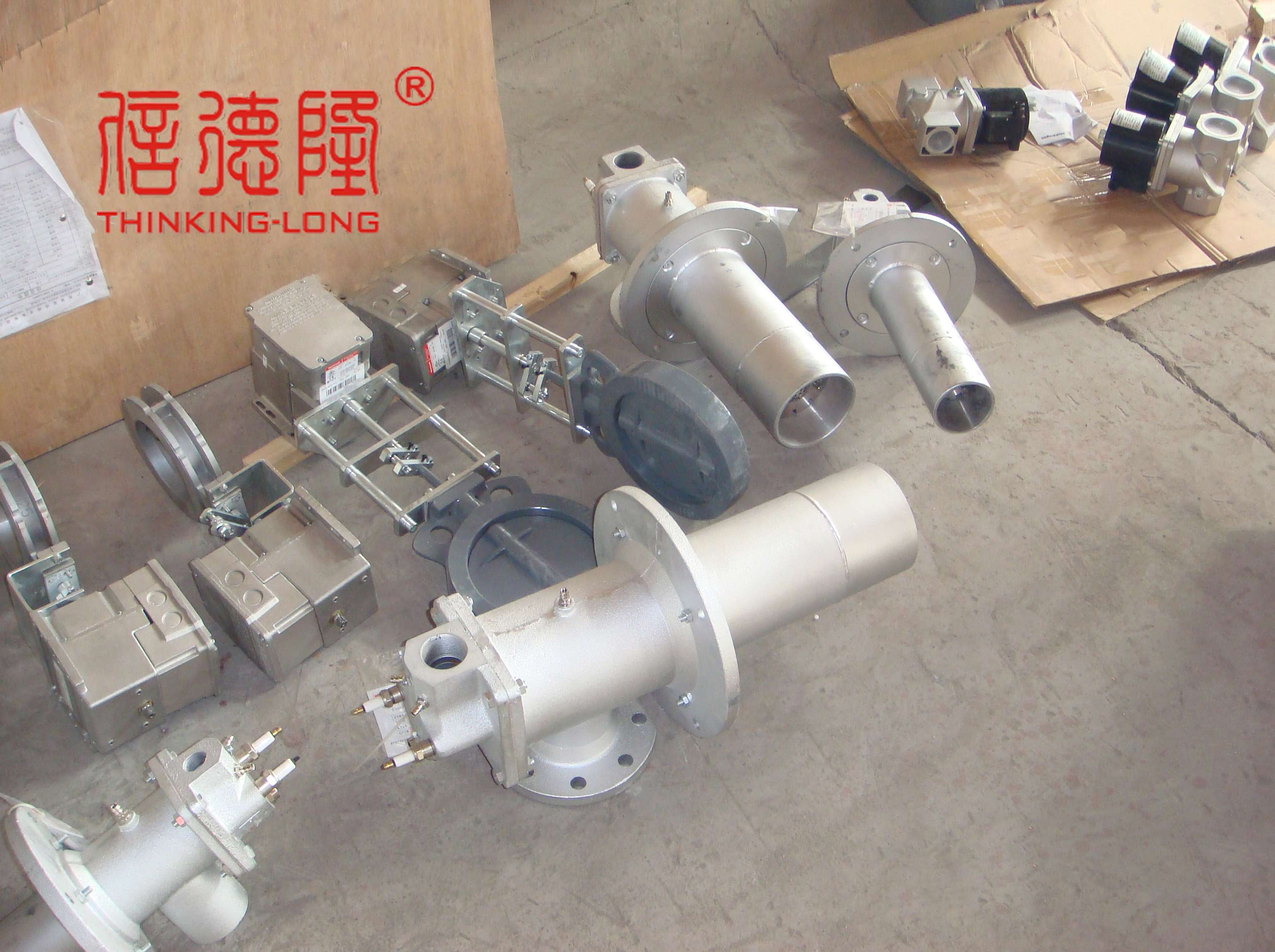
The nozzle's internal passage is machined with a series of stepped tapers that progressively accelerate the fuel-air mixture. This controlled acceleration forces the combustion front to anchor at a defined point just beyond the tip, limiting radial spread. As a result, the flame stays narrow and coherent, with a visible boundary that holds steady even when supply pressure fluctuates slightly.
Temperature uniformity comes from the arrangement of six offset injection ports around the central bore. These ports release small, staggered fuel pulses that overlap in the mixing zone, spreading heat release across a wider cross-section without creating concentrated hot spots. A shallow recess at the exit face also recirculates a portion of burnt gas, which preheats the incoming stream and smooths out local temperature spikes.
Long-term performance depends on the nozzle's resistance to carbon buildup. The exit edge is radiused rather than sharp, which discourages deposit formation and keeps the flow pattern symmetrical. Routine inspection shows that after hundreds of operating hours, the flame profile remains tight and the temperature gradient across the outlet stays within a few degrees of the initial calibration.
Refractory Panels That Outlast Standard Brick by a Wide Margin
Standard firebrick has long been the go-to for high-heat enclosures, but it comes with familiar weaknesses: joints crack, spalling accelerates under thermal cycling, and replacement cycles eat into operating budgets. Refractory panels flip that equation. Engineered as large-format monolithic boards, they eliminate the mortar joints that typically fail first. The result is a lining that holds its integrity through repeated expansion and contraction, often delivering two to three times the service life of conventional brick in the same environment.
The real advantage shows up under continuous duty. Brick linings transfer heat unevenly, creating hot spots that degrade material from the inside out. Panels, by contrast, spread thermal stress across a uniform surface, resisting the micro-fractures that eventually turn brick into rubble. Many operators report running five to seven years on a single panel installation while neighboring brick units need partial relining every eighteen to twenty-four months.
Maintenance downtime drops accordingly. Fewer tear-outs, less waste, and no skilled mason required for form-fit panel swaps. In gasifiers, kilns, and combustion chambers, the switch to refractory panels isn't just a material upgrade—it's a straight reduction in cost per operating hour.
Seal and Gasket Kits That Stop Costly Heat Leaks at the Door
A door that doesn't seal tightly is one of the fastest ways to burn through energy budgets. On ovens, kilns, dryers, or any heated enclosure, the gasket around the door takes constant abuse from repeated opening and closing, high temperatures, and thermal cycling. Over time it flattens, cracks, or pulls away from the frame. The result is a steady stream of heated air escaping around the perimeter—not just a small inefficiency, but a measurable loss that forces burners or heating elements to work harder.
Seal and gasket kits solve this by matching the exact profile and material needed for the door. Rather than settling for generic rope or adhesive tape, these kits include the right cross-section, density, and temperature rating for the job. High-temperature fiberglass, silicone-encased cores, and graphite-impregnated braids are common choices because they maintain flexibility and resilience after hundreds of cycles. Correct installation matters just as much as the material; the kit's instructions guide you through cleaning the groove, applying the right adhesive, and setting the proper compression so the door closes evenly against the seal.
The payoff is immediate. Once the door seals correctly, heat stays inside where it belongs. Temperature uniformity across the work area improves, which reduces hot spots, extends element life, and prevents under-processed batches. In many facilities, the cost of a seal and gasket kit is recovered within weeks through lower fuel or electricity consumption alone. It's a small, targeted fix that stops one of the most common and expensive leaks in thermal equipment.
Thermocouple Replacements That End Temperature Guessing in Every Zone
Swapping in fresh thermocouples does more than replace a worn part—it removes the drift and lag that force operators to second-guess actual zone temperatures. In multi-zone furnaces or extruders, a single aging sensor can make an entire profile unreliable, so matching each zone with the correct type and sheath material keeps readings stable across the full range.
Field checks often reveal that 'mystery' temperature swings are just corroded junctions or loose connections at the terminal block. Replacing the thermocouple with a grounded or ungrounded junction suited to the environment stops those swings, and recalibrating the loop right after installation closes the gap between setpoint and actual heat.
The payoff shows up in fewer rejected parts and faster changeovers, because operators no longer compensate by feel. When every zone reports a true value, tweaking a recipe becomes a deliberate adjustment rather than a guess, and maintenance stops chasing false alarms.
Roller and Drive Upgrades That Keep Workpieces Moving Smoothly
When a production line starts to show signs of hesitation—workpieces nudging instead of gliding, occasional lurches at transfer points—the problem rarely lies in the main motor or the control cabinet. More often, it's the humble rollers and the drive elements coupling them that have drifted out of spec. Worn bearing seats allow a few thousandths of an inch of play, which translates into microscopic skewing that accumulates over dozens of feet of conveyor. Upgrading to crowned rollers with sealed, preloaded bearings removes that lateral wandering without forcing the entire frame to be re-machined. Similarly, replacing tired V-belts with positive-drive timing belts on the roller drive shafts eliminates the micro-slip that can make a supposedly synchronized line run slightly out of phase.
The difference shows up most clearly in stations where a workpiece must be presented to a robot or a vision system. A standard straight roller with a greased bronze bushing might have a runout of fifteen thousandths under load—enough to make a camera's edge detection jitter and trigger unnecessary refusals. Switching to precision-ground rollers with a hardened surface and a dynamic balance rating cuts that runout to under two thousandths. When you pair that with a drive upgrade from a single long shaft with multiple sprockets to individual brushless DC rollers linked over a fieldbus, you also gain the ability to fine-tune speed in each zone without stopping the line. The result is a conveyor that doesn't just transport parts; it hands them off with the same repeatability as a pick-and-place unit.
Practical upgrades don't have to mean a complete teardown. Many facilities get a measurable improvement by replacing only the drive rollers in accumulation zones and the turnaround end rollers. Using a duplex chain with self-lubricating links on the drive side, or a polyurethane timing belt with aramid tension members, gives you a longer service interval and less debris than open grease or oil drip systems. If the existing frame can accept a larger diameter roller, even a five-millimeter increase in diameter reduces bearing speed and surface pressure enough to double the interval between bearing replacements. These changes are quiet—no new enclosures or guarding needed—but they keep the line flowing with fewer micro-stops and less operator intervention, which is what smooth material handling is actually about.
FAQ
Heating elements, thermocouples, insulation modules, and burner nozzles usually top the list. If any of these degrade, temperature control drifts and energy consumption climbs fast.
It depends on operating temperature and cycle frequency, but a visual check every six months is wise. Cracks or sagging mean heat loss is already costing you money, so replacing those modules early prevents bigger rebuilds later.
Upgraded burners with better flame retention and tighter fuel-air mixing can cut hot spots and soot buildup. Less soot means fewer cleanings and longer runs between shutdowns, so the downtime reduction is real.
Watch for erratic temperature readings, slow response to setpoint changes, or drifting output. Replacing thermocouples at the first sign of drift avoids scrapped batches and emergency stoppages.
Aftermarket can work well if the supplier specializes in furnace parts and matches material specs exactly. The risk is lower-grade insulation or heating elements that fail faster, so ask for test data before buying.
A monthly check of seals, rollers, and electrical connections, combined with replacing wear items on a schedule rather than waiting for failure, keeps unexpected downtime rare without overspending on parts.
Conclusion
Upgrading the radiant tubes in an industrial furnace often delivers immediate fuel savings, because modern designs transfer heat more efficiently without forcing you to replace the entire system. Pair that with burner nozzles engineered to hold a tight flame shape, and you get a more even temperature profile across the work zone—fewer hot spots, less wasted gas. Meanwhile, swapping standard brick for advanced refractory panels can dramatically extend the lining's service life, which means fewer shutdowns for repairs and less heat bleeding through the walls. These three upgrades alone can transform a furnace from a temperamental energy hog into a steadier, more predictable asset.
But performance isn't just about combustion. Door seals and gasket kits are often overlooked, yet they stop the silent heat leaks that force burners to work harder than necessary. Replacing aging thermocouples with responsive, well-placed units eliminates the guessing game in every zone, giving operators real temperature data they can trust. Finally, roller and drive upgrades keep workpieces gliding smoothly through the furnace, preventing jams and uneven processing that lead to costly downtime. Together, these spare parts form a practical path to lower operating costs and more reliable throughput.
Contact Us
Contact Person: Qian Xijun
Email: [email protected]
Tel/WhatsApp: 8613961736750
Website: https://www.thinkinglong.com/