

KYN28-12 Medium Voltage Switchgear Supplier: Ensuring Safe and Efficient Power Distribution
2026-11-02
In medium voltage distribution, the KYN28-12 switchgear is a workhorse—until a supplier cuts corners on safety or delivery. MOLDVOLT takes a different path, focusing on robust design and consistent performance so your power distribution stays both safe and efficient. Here’s what to look for in a KYN28-12 supplier and why that choice matters more than you might think.
Where KYN28-12 Safety Margins Meet Daily Operational Reality
KYN28-12 switchgear carries impressive rated short-time withstand currents and arc fault containment figures, yet the real test comes when those margins intersect with everyday routines. Operators rarely push equipment to its theoretical limits; instead, they deal with aging busbars, occasional moisture ingress, and hand-cranked breaker insertion at 5 a.m. during a trip. In these moments, the margin between a controlled interruption and a loud failure often depends less on the nameplate and more on how well the gear has been treated since commissioning.
Daily operational reality also reshapes what “safety” means. A panel may pass a type test at 31.5 kA for one second, but if the cable compartment is stuffed with old terminations and the door interlock has been zip-tied open for convenience, that margin quietly disappears. Field crews learn to read subtle signs: a faint ozone smell after switching, a heater circuit that never cycles off, a slight resistance change on a contact thermometer. These are not dramatic failures; they are the slow erosion of design headroom.
Wise maintenance teams therefore treat KYN28-12 safety margins as living values, not static guarantees. They schedule infrared scans before the humid season, exercise withdrawable parts quarterly, and keep a log of unusual operating forces. In doing so, they do not simply preserve a rating—they keep the gap between “should survive” and “actually will” wide enough for the messy, unplanned, and very human side of power distribution.
The Hidden Thermal Loads Your Medium Voltage Switchgear Quietly Manages
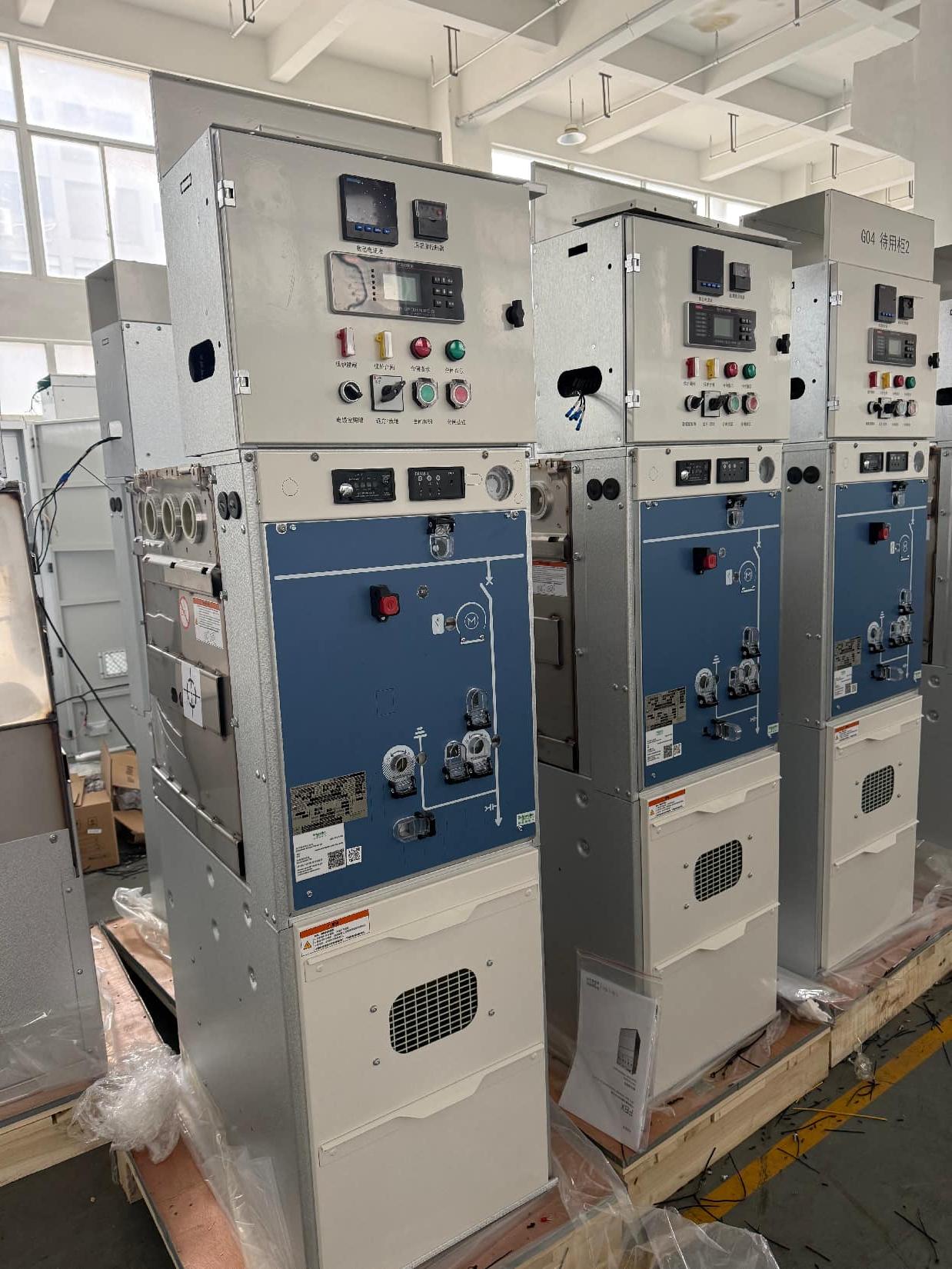
Medium voltage switchgear doesn't just route power; it quietly absorbs and dissipates heat from busbars, breakers, and cable terminations. These thermal loads aren't always obvious on the nameplate, but they accumulate in ways that can age insulation and loosen bolted connections before a single alarm goes off.
The real challenge is that heat migrates unevenly through the enclosure. A hot joint near the rear bus compartment can remain invisible to front-mounted sensors, while convective airflow patterns push warm air into sealed compartments that were never designed for active cooling. This silent accumulation is what turns a routine load step into a thermal fatigue event.
Managing these hidden loads requires reading the subtle signs: slight discoloration on bus insulation, faint ozone odors after peak loading, or a temperature spread across phases that doesn't match load balance. In well-designed installations, passive ventilation paths and de-rating margins handle these loads without drama. In older gear, the same heat becomes the quiet driver of unplanned outages.
Internal Arc Testing Beyond the Pass or Fail Checklist
A pass/fail result on an internal arc test tells you the enclosure survived a single, tightly scripted event. It doesn't reveal how close it came to failing, which joints leaked plasma first, or whether the pressure relief system actually worked as designed or simply got lucky with a slow burn. Real switchgear in the field faces a wider range of fault currents, arc durations, and room geometries than any standard can fully capture. So the smartest engineers treat the certificate as a starting point, not a conclusion.
Look beyond the binary outcome by examining the post-test teardown. Is the deformation concentrated near the arc origin or spread across the structure? Did the pressure relief flaps open symmetrically, and did they reseat properly? Check the busbar supports for hairline cracks that won't show up on a camera feed. These details matter because a second downstream fault—common after a major event—will find any weakened points. A unit that passes once but loses most of its mechanical margin isn't really ready for service.
Also consider the test environment itself. A lab with a high ceiling and generous volume will produce lower pressure buildup than a tight electrical room with low clearance. If your installation conditions deviate from the test setup, the "pass" may not translate. Ask for the pressure curve and thermal imaging data, not just a green checkmark. Those records let you compare your specific layout against the tested arrangement and decide whether extra venting, arc-resistant ducting, or revised relay settings are needed before you trust the gear with your people and plant.
Busbar Geometry Choices That Cut Energy Losses Over Time
Skin effect and proximity effect punish solid rectangular bars at higher frequencies. Choosing a thinner, wider profile or splitting a single bus into multiple insulated laminations lets the current use more of the copper cross-section, which slows the creeping rise in resistance and heat that silently erodes efficiency over years of operation.
Surface finish and edge geometry also matter more than they first appear. Sharp corners and rough edges invite uneven current density and local heating, while rounded edges and a smooth, clean surface distribute stress more evenly. Over time, that difference shows up as less oxidation, lower contact resistance at joints, and far fewer hot spots that accelerate aging.
Busbar spacing and orientation round out the geometry decision. Closer parallel runs increase mutual inductance and can crowd current toward inner faces, raising losses. Leaving enough separation or using an interleaved layout reduces those induced circulating currents, so the assembly stays cooler and keeps its original loss profile much longer.
How Operator Habits Shape Switchgear Reliability More Than Spec Sheets
Spec sheets list withstand ratings and endurance cycles, but they never capture what happens when a breaker is racked in and out by someone in a hurry. In plants where operators treat racking as a rushed chore, misaligned contacts and worn shutters appear long before the theoretical mechanical life is reached. The same panel that passes every factory test can develop hot spots within months if operators routinely ignore partial discharge readings or reset a tripped breaker without investigating the fault.
Daily habits matter more than design margins. A crew that logs infrared scans, keeps panel doors closed, and follows a deliberate sequence for switching sees fewer unexpected failures than one with better equipment on paper but sloppy routines. For example, frequent manual operation without checking lubrication turns a premium breaker into a source of arcing faults; constant breaker pumping during fault conditions degrades contacts faster than any datasheet predicts.
Reliability is ultimately a record of repeated human choices. Spec sheets provide a baseline, but operator discipline dictates whether that baseline is ever approached. The difference between two identical switchgear lineups often comes down to whether someone takes the time to verify contact alignment, clean bus insulation, or simply exercises the breaker monthly instead of letting it sit for years.
Rethinking Maintenance Access Without Compromising Arc Protection
For years, arc flash protection often meant sealing off equipment behind heavy doors and rigid barriers, leaving maintenance crews squeezed into tight spaces or forced to work through tiny inspection windows. That trade-off never sat right. Modern switchgear design is starting to treat access and arc safety as parallel goals instead of opposites. Remote racking mechanisms, finger-safe terminal covers, and insulated bus compartments now let technicians reach critical components without placing themselves directly in the blast zone. The result is not just safer work, but faster fault-finding and fewer unplanned outages.
A key shift is moving the operator away from the hazard rather than simply hardening the enclosure around it. Wireless temperature sensors, infrared viewing ports, and camera-based inspection systems deliver real-time condition data from outside the arc flash boundary. When manual intervention is unavoidable, arc-resistant gear with pressure-relief ducts and reinforced hinges keeps the energy contained long enough for personnel to retreat. These features don't weaken the protection—they change how and where people interact with the equipment.
Rethinking maintenance access also means questioning legacy layouts. Instead of stacking breakers behind a single bolted panel, designers are adopting modular compartments with tool-less entry and visible isolation gaps. Grounding switches and lockable disconnects are placed within reach, not buried behind buswork. Every added inch of clearance and every simplified step reduces the chance of a risky shortcut. Arc protection remains the floor, not the ceiling; better access raises the baseline of both safety and uptime.
FAQ
The KYN28-12 is a metal-enclosed, withdrawable switchgear designed for medium voltage power distribution. It handles incoming and outgoing lines, busbar connections, and protection of transformers and motors in industrial and utility networks.
Safety relies on its fully insulated busbar system, internal arc fault containment, and mechanical interlocks that prevent incorrect operations like opening a live circuit breaker compartment. Earthing switches and shutters add another layer of protection for personnel.
It is rated for 12 kV, which covers most medium voltage distribution applications in factories, commercial buildings, and substations. The design also accommodates variations within that class, such as 10 kV or 11 kV systems.
You will find them in utilities, mining, oil and gas, data centers, hospitals, and large manufacturing plants. They suit any site that needs reliable switching and protection at medium voltage without taking up excessive floor space.
Routine upkeep includes checking contact wear, inspecting insulation surfaces for dust or moisture, verifying mechanical interlocks, and testing protection relays. Withdrawable breakers make it easy to isolate a unit for service without shutting down the entire board.
It minimizes energy losses through high-quality copper busbars and low-resistance contacts. The compact layout shortens cable runs and reduces heat buildup, while fast breaker operation limits downtime during faults, keeping the network stable.
A dependable supplier should provide type test reports covering internal arc classification, short-circuit withstand, and temperature rise. Look for ISO 9001 quality management, along with third-party certificates from recognized bodies like KEMA or ASTA.
Yes, suppliers often offer options for different current ratings, protection relay brands, busbar layouts, and enclosure protection degrees. You can also request special finishes for corrosive environments or additional metering compartments.
Conclusion
KYN28-12 switchgear earns its reputation in the messy details of daily operation, not just on paper. Safety margins written into design documents only prove their worth when they absorb voltage fluctuations, dust accumulation, and the occasional misjudged switching sequence. Those same cabinets quietly handle thermal loads from continuous current and gradual contact degradation that no nameplate fully anticipates. Internal arc testing, when read as more than a pass/fail box to tick, shows how pressure relief paths and compartment seals actually behave in the first milliseconds of a fault. A supplier who builds in extra thermal headroom and validates arc containment under substation-like wear conditions—rather than idealized lab settings—gives operators a real safety cushion.
Long-term efficiency also depends on physical geometry and human routine. Busbar cross-sections and bend radii affect skin and proximity losses; small layout choices can reduce wasted energy that compounds over a decade. Operators who routinely exercise breakers, check contact wear, and refuse to bypass interlocks often influence reliability more than any upgraded specification sheet. Maintenance access matters just as much: removable covers and inspection windows must allow safe servicing without weakening the arc-rated enclosure. The most dependable KYN28-12 suppliers treat these factors as one integrated system, where safety margins, thermal behavior, switching habits, and serviceability reinforce each other instead of competing.
Contact Us
Contact Person: Hellen
Email: [email protected]
Tel/WhatsApp: 86-13634205622
Website: https://www.voltcabinet.com