

LED Grille Light Bulb Supplier Guide to Finding a Reliable Manufacturing Partner
2026-08-26
Searching for an LED grille light bulb supplier can feel like navigating a maze of conflicting claims. One minute you're comparing lumen outputs, the next you're wondering if the factory actually exists. That's why we created this no-nonsense guide—with hard-won lessons from LUXFIGHTER—to help you spot red flags early and lock in a manufacturing partner you can trust.
What Separates a True LED Grille Specialist from a Generalist
A real LED grille specialist doesn't just mount a light bar behind the mesh. They study how the grille's geometry affects beam spread, glare, and heat dissipation. Before touching a single wire, they ask about your driving habits—highway cruising, off-road trails, urban stop-and-go—because the right LED arrangement for a show truck is completely wrong for a daily commuter.
The difference shows up in the details a generalist overlooks. A specialist routes wiring through factory grommets instead of drilling new holes, matches the LED color temperature to your existing DRLs so the front end doesn't look mismatched, and accounts for CAN bus resistance so the vehicle doesn't throw error codes. These aren't optional refinements—they're the baseline of a job done properly.
Beyond installation, a true specialist knows when to say no. They'll steer you away from overpowered grille LEDs that blind oncoming traffic or overheat in summer, and toward a setup that balances visibility, legality, and durability. That level of restraint comes from years of seeing what actually works on the road, not from a parts catalog.
Signs a Factory Can Handle Custom Optics and Housing
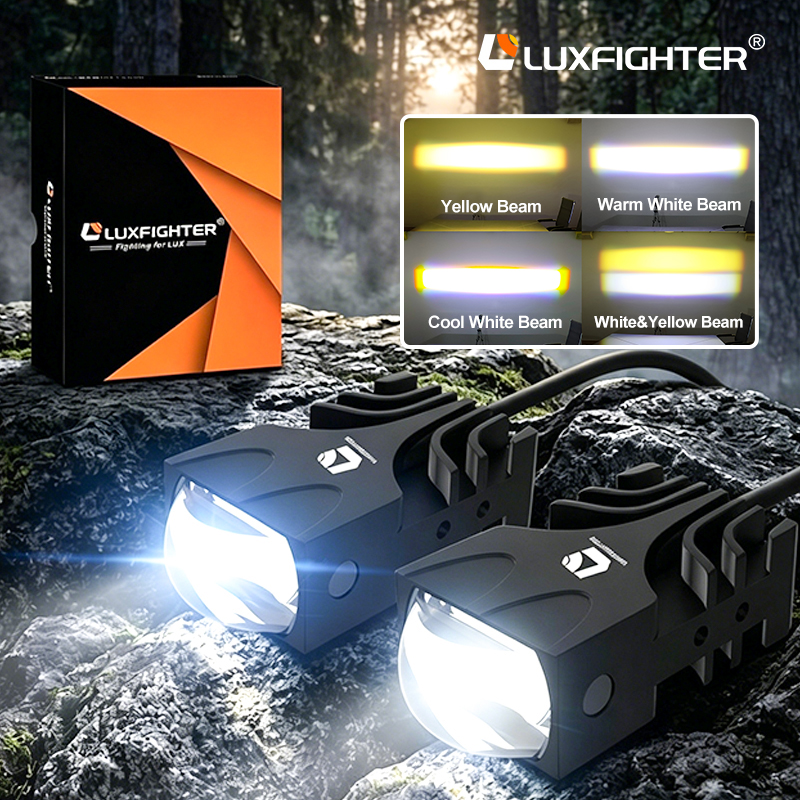
A factory that genuinely handles custom optics and housing rarely starts with a price list. Early conversations go straight into engineering specifics—coating wavelength ranges, angle-of-incidence tolerances, barrel material expansion rates, or how the lens seat will be bonded. They ask for your optical path drawing, not just a part number, and they raise questions about stray light baffles or O-ring groove compression before you do.
During a facility tour or video audit, look for tooling that cannot be bought off the shelf. An interferometer is common, but a custom reference sphere matched to your radius is not. Dedicated assembly jigs with spring-loaded retainers, temperature-controlled adhesive curing stations, and CMM fixtures shaped like your housing all point to real custom capability. The staff can explain why a particular edge bevel is 0.2 mm instead of 0.5 mm and how that affects stress distribution after press-fit.
The strongest sign shows up at the prototype stage. A capable factory sends back more than shiny samples—they flag issues like edge blackening interfering with the housing bore, then suggest a spacer thickness change or a slight counterbore adjustment. They share batch consistency data for the first five units, including centration and focal length variation, rather than cherry-picking one good lens for approval.
How to Pressure-Test Quality Claims with a Small First Order
A small first order is not a purchase; it is a physical interrogation of the supplier's promises. Pull three or four units at random the moment the shipment arrives and measure the features that matter most: edge straightness, weld penetration, coating thickness, thread engagement. Do not announce which pieces will be inspected. If the claimed tolerance is ±0.5 mm, record the actual spread across your sample. One defective unit in a ten-piece order is a 10% failure rate, and that number tells you far more than a glossy datasheet.
Push beyond surface appearance. Cut, scratch, or disassemble one unit in ways the supplier did not expect. A cheap finish often hides under a nice topcoat; a weak joint reveals itself under a simple stress test. Order a mix of stock and slightly customized items so you can see whether consistency holds when the production line shifts. Check packaging as well, because scuffed corners or loose hardware bags indicate a careless handoff between factory floor and freight forwarder.
Finally, use the small order to test the supplier's response loop. Report a minor quality issue you actually found, and ask for a corrective action explanation, not just a refund. A supplier that can walk you through root cause and propose a concrete fix proves their quality claim runs deeper than marketing. That conversation, more than the parts themselves, often reveals whether they can hold the line when your order volume grows.
Why Lead Time Honesty Matters More Than Promises
A realistic lead time is far more useful than an optimistic one. When a supplier admits a part will take six weeks instead of four, the buyer can actually plan around that window. Production schedules hold, inventory levels stay sane, and nobody spends Friday afternoon chasing a shipment that was never going to arrive. The promise of speed feels good in the quote, but an honest number prevents the quiet chaos of missed dates.
Overpromising on lead time creates a hidden debt. Engineering teams lock in designs, marketing schedules a launch, and customer support prepares for an influx of orders. Then the date slips, and all those downstream plans bend or break. The supplier's short-term win becomes the buyer's long-term headache. Honesty about lead time doesn't just set expectations; it protects everyone else's timeline from a false start.
Experienced buyers eventually learn which vendors tell the truth. A supplier who consistently hits a longer lead time earns more trust than one who keeps missing a shorter one. Word gets around in procurement circles. Over time, reliability outweighs the appeal of a bold promise. That's why lead time honesty matters more than the promise itself: it's the only metric that survives contact with reality.
Questions to Ask About Thermal Management and Driver Sourcing
When evaluating a lighting fixture, the first thing I ask about thermal management is whether the heat path has been designed as an intentional system rather than an afterthought. How does the manufacturer move heat away from the LED junction and into the surrounding environment? Are they relying on passive convection, a finned aluminum housing, or something more active? The answer matters because every ten-degree rise in junction temperature can cut LED lifespan by half. I also want to know if they've done any long-term lumen maintenance testing under real-world ambient conditions, not just in a climate-controlled lab.
On the driver side, the questions rarely stop at 'is it UL listed?' I ask where the driver is sourced and whether it's a commodity component or something custom-engineered for the fixture. Does the driver carry its own thermal protection, and how does it behave at the upper end of its rated temperature range? A driver that runs hot in a sealed fixture will fail long before the LEDs do. I also want to see the driver's inrush current rating, dimming compatibility, and whether the manufacturer has a documented process for substituting drivers when a supplier changes a design—because that happens more often than people think.
Finally, I like to ask a question that often gets evasive answers: 'What happens in year five?' Thermal management and driver sourcing are not just about the first thousand hours. I want to know if the thermal interface materials will dry out, if the driver capacitors are rated for the fixture's expected operating temperature, and whether replacement drivers will still be available from the same source or a compatible one without requalifying the entire fixture. A good answer shows that the manufacturer has thought through the entire service life, not just the point of sale.
Building a Partnership That Outlasts a Single Production Run
Long-term manufacturing relationships rarely hinge on a single order. They depend on whether both sides can adapt when specifications shift, timelines compress, or material costs fluctuate without warning. A supplier who treats every production run as a one-off transaction will optimize for the invoice, not the partnership. The same goes for a buyer who squeezes margins until the factory has no room to invest in better equipment or training. Real durability comes from shared problem-solving, not just shared spreadsheets.
One practical way to build that resilience is through transparency about capacity and constraints. If a factory knows your product roadmap six months out, it can reserve the right machines, stockpile critical components, and avoid gambling on spot-market chaos. In return, you get honesty about what is actually feasible: whether a tolerance is realistic, whether a finish will hold up under repeated use, or whether a delivery date needs to slide by three days. That kind of candor feels inefficient in the short term, but it prevents the slow erosion of trust that kills repeat business.
Beyond the operational details, partnerships survive because both sides treat mistakes as shared failures rather than opportunities to assign blame. A batch arrives with a subtle defect. The supplier could argue that the spec was ambiguous. The buyer could demand a full refund and start sourcing elsewhere. Neither move strengthens the relationship. Instead, a joint debrief, a revised inspection checklist, and a small investment in better tooling turn the incident into a reason to keep working together. Partnerships outlast production runs because they are built on accumulated proof that each side will show up when the next problem appears.
FAQ
Start with their production floor, not just their catalog. Ask for a live video walkthrough or schedule a visit. Look at how they handle thermal management in the housing and whether they use branded LED chips like Lumileds or Seoul Semiconductor. A factory that is proud of its process will show you the reflow oven and aging test racks without hesitation.
Request batch-level test reports for lumen output, color rendering index, and driver efficiency. Better yet, pay for a third-party inspection before shipment. Tell them you will randomly pull samples from the finished cartons, not from a pre-selected table. That usually separates serious partners from traders with a nice website.
Not risky, but limiting. Standard products mean faster lead times and lower tooling costs, but you will compete on price alone. If you want a unique beam angle, a non-standard color temperature like 3500K, or a specific driver brand, you need a manufacturer with in-house engineering. Ask if they can modify the PCB layout or optics within two weeks.
For most markets, CE and RoHS are the floor, not a differentiator. Look for ENEC or UL certification on the actual bulb model you plan to buy, not just on the factory. Also check if they have ISO 9001 for process control and, ideally, an LM-80 report for the LEDs they use. A missing LM-80 often means shorter lifespan than claimed.
Insist on a breakdown that separates tooling, packaging, driver, and LED costs. Ask about the cost of changing the color temperature later, the fee for custom labeling, and who pays for rework if the driver fails a burn-in test. Also clarify the warranty process: will they send replacement drivers or expect you to ship the whole bulb back?
It depends on whether you need new tooling. For a new housing mold, expect MOQs around 1,000 to 3,000 units. For an existing mold with just a different LED or driver, many factories will accept 300 to 500 pieces. Be wary of anyone offering unlimited customization at 100 pieces unless you are paying a steep premium for hand assembly.
For a modified standard product, about 20 to 30 days after you approve the golden sample. If new tooling is involved, add another 15 to 25 days for mold fabrication and trial runs. During peak seasons like September and October, add a buffer of at least two weeks. Always confirm the Chinese holidays in advance because they will delay component sourcing.
Conclusion
Finding a reliable manufacturing partner for LED grille light bulbs isn't about ticking boxes. A true specialist stands apart because they speak the language of optics and housing constraints without hesitation—they ask about beam angles, diffuser materials, and recess depth before quoting a price. Generalists might offer lower unit costs, but they rarely have the in-house capability to iterate on custom lenses or extruded aluminum profiles. When evaluating a factory, ask for evidence: past projects with non-standard cutouts, thermal simulations, or even a quick sketch of how they'd mount your PCB. Then force a real test with a small first order—not a sample, but a payable pilot run. Watch how they handle the unglamorous details: tolerance sheets, packaging that prevents lens scratches, and whether they flag potential issues before you do. Lead time honesty shows up early; a factory that admits a 35-day timeline for custom tooling is more trustworthy than one promising 20 and then blaming the anodizing supplier.
Quality isn't a certificate on the wall. Dig into thermal management: ask what junction temperature they design around, how they bond the LED board to the housing, and which driver brands they source from. If they can't explain why they chose a particular aluminum alloy or potting compound, move on. A factory that treats drivers as a commodity will eventually ship you a batch that flickers in cold starts. Beyond the technical checks, look for a partner willing to share production updates without being chased, someone who brings up cost-saving ideas for the next run but doesn't cut corners this time. The best relationships don't end when the container leaves—they extend into warranty claims, replacement part stock, and honest conversations when a design needs rework. A supplier who remembers your product's quirks six months later is worth more than a lower quote from a vendor who can't recall your beam angle.
Contact Us
Contact Person: Gavin Chen
Email: [email protected]
Tel/WhatsApp: (+86)756-6831079
Website: https://www.luxfighter.com/