

Low Power Consumption Air Compressor Working Principle: How It Delivers Efficient Performance
2026-08-17
What if you could cut energy costs without sacrificing air output? It sounds too good to be true, but that's exactly what Seize Air low power consumption air compressors are designed to do. The secret lies in their working principle—a clever combination of advanced compression technology and smart control. Let’s take a closer look at how they achieve efficient performance while keeping power draw remarkably low.
Inside the Compression Cycle: Where Power Is Saved
Most of the power loss in a compression cycle never shows up on a gauge. It hides in the gap between the piston or scroll and the cylinder wall — the clearance volume that lets a little compressed gas sneak back during the intake stroke. That leftover gas has to expand before fresh refrigerant or air can enter, so the machine spends part of every cycle re-expanding what it just squeezed. Cutting that clearance, or using a variable-volume head, directly shaves input power without touching the actual compression ratio.
Another quiet drain is the pressure ratio itself. Running a single stage up to a high discharge pressure heats the gas more than necessary, and heat is just energy you paid for that never reaches the load. Splitting the work into two stages with an intercooler between them lets the gas shed heat at low pressure. The second stage then starts with a denser, cooler charge, so it needs less shaft work to reach the same final pressure. Even a modest intercooling arrangement can drop total power by five to ten percent on larger machines.
There is also the problem of over-compression. If the discharge pressure inside the compressor rises above what the downstream system actually needs, the extra pressure is wasted as soon as the valve opens. A well-tuned cycle matches the internal pressure rise to the real load, using a slide valve, variable speed drive, or simply right-sizing the compressor for the season. The savings come not from squeezing harder, but from knowing when to stop squeezing.
Variable-Speed Motors: The Heart of Efficient Air Delivery
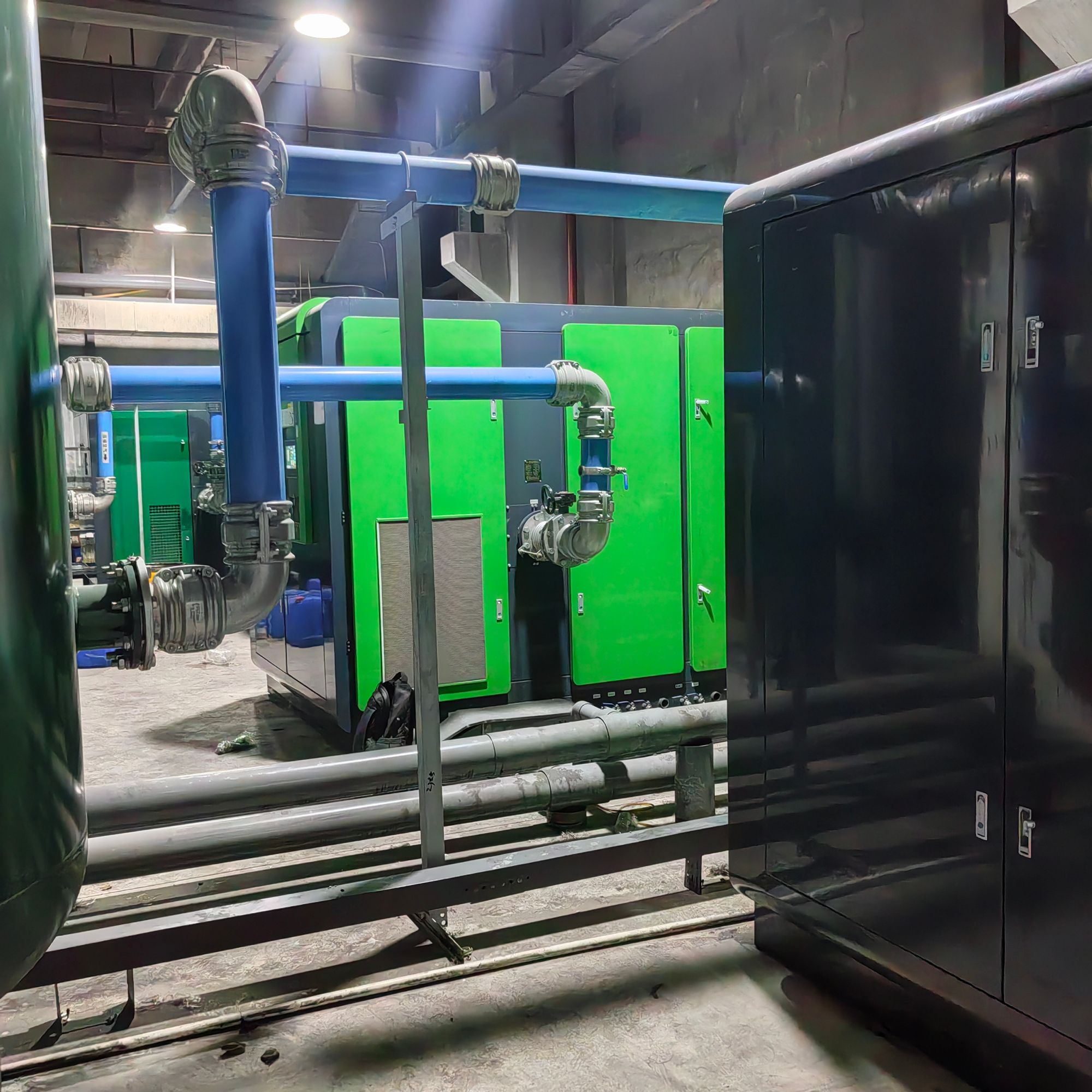
A fixed-speed motor treats every minute like a peak-load emergency. It spins at full rated speed until a thermostat or pressure switch trips, then shuts down entirely. Variable-speed motors flip that logic. They read the actual air volume or pressure requirement and adjust revolutions per second accordingly. When demand dips, the motor slows; when it rises, the motor accelerates—without stuttering between off and full blast. That continuous modulation is what makes them the real driver of efficient air delivery, not just a bolt-on efficiency feature.
The savings come from the physics of part-load operation. In many ventilation and compressed air systems, demand spends the vast majority of time well below maximum. A fixed-speed motor still draws near-full current even when only a fraction of that air is needed. A variable-speed unit, by contrast, follows an affinity law: cutting speed by 20% can reduce power draw by roughly half. Over thousands of operating hours, that difference compounds into lower energy bills and a smaller carbon footprint without sacrificing a CFM of actual output.
Beyond raw kilowatt-hours, variable-speed motors change how air delivery feels and lasts. They eliminate the harsh on/off cycling that causes duct popping, temperature swings, and humidity spikes. Soft starts reduce mechanical stress on belts, bearings, and impellers, stretching service intervals. For anyone managing a building, a paint booth, or a data center, that translates into more stable pressurization, quieter operation, and fewer emergency repair calls. The motor isn't just a component; it's the regulating pulse of the whole air system.
Cooling Strategies That Cut Power Consumption
Raising the cold aisle set point is one of the cheapest moves you can make. Many facilities still run supply air at 18–20°C out of habit, but modern servers and storage arrays handle inlet temperatures of 25°C or even 27°C without reliability issues. Shifting the set point upward reduces chiller runtime and lets economizer modes kick in sooner, which trims a surprising amount of energy before you touch any hardware.
Pair that with proper airflow management instead of adding more cooling units. Blanking panels, sealed rack gaps, and hot or cold aisle containment stop the constant mixing that forces CRAC units to work against themselves. Variable speed fans and pumps are another direct lever—at partial load, dropping fan speed from 100% to 80% can cut fan power by nearly half, since power draw follows the cube of speed. Use pressure sensors under raised floors or in ducts to tune speeds dynamically rather than guessing.
Where the climate allows, free cooling with outside air or evaporative assist can bypass mechanical chillers for hundreds of hours each year. For high-density zones, direct liquid cooling at the chip or rack level removes heat far more efficiently than pushing chilled air through a crowded aisle. The trick is to measure hot spots and pressure differentials first, then apply the strategy that matches the actual load pattern—oversized redundancy often wastes more power than it saves.
Smart Pressure Regulation Without Constant Restarts
Traditional setups let a pressure switch slam the system off at the upper limit and back on at the lower limit, which turns normal operation into a series of hard restarts. This design takes a different route: the controller samples pressure several times per second, compares it against the target, and continuously nudges the variable frequency drive or the proportional valve opening. As a result, pressure stays within a narrow band around the setpoint, so the shutdown threshold is rarely touched during routine demand changes.
The real difference comes from learning the system's pressure behavior instead of reacting to fixed limits. When demand drops at night and pressure builds faster, the controller anticipates the rise and reduces pump speed early, avoiding an overshoot that would normally trigger a stop. It also distinguishes slow drift from tiny leaks or thermal expansion from genuine load changes, applying small corrective actions that keep the system stable without forcing the compressor or pump into another start-stop cycle.
Over time, this approach spares contactors, motors, and pipework from the wear of frequent inrush currents and water hammer. Even a sudden demand spike is handled first by rapid modulation; only if the adjustment range is genuinely exhausted does the system perform a single, deliberate switchover rather than a pointless series of short-cycle restarts.
Low-Friction Air Ends and Leak-Free Sealing
Inside a rotary screw compressor, the air end does the heavy lifting. When its rotors and bearings are machined to exacting tolerances, internal friction drops sharply. Less friction means less heat, less wear, and more of the motor's energy going directly into compressing air instead of being wasted as mechanical drag. Users notice it as cooler discharge temperatures, quieter operation, and lower amp draws even under partial load conditions.
But even the best air end can't compensate for a leaky sealing system. Threaded fittings, hose connections, and valve block interfaces are common escape routes. The design here uses precision-machined metal-to-metal seats paired with O-ring face seals at every junction. That dual approach keeps the compressed air where it belongs, which means the compressor doesn't have to run longer just to maintain target pressure. Over a year of continuous duty, the energy savings from avoiding even a small persistent leak can rival the cost of the machine itself.
What ties these two features together is control strategy. With low internal friction and a genuinely leak-free circuit, the pressure band can be tightened without causing rapid cycling. The compressor spends more time in its most efficient operating window and less time ramping up or idling down. For a facility manager, that translates into predictable air delivery and a maintenance schedule driven by hours rather than surprise failures.
From kWh to CFM: Measuring Real Efficiency Gains
Most facility managers still track energy use in kilowatt-hours because it shows up on the utility bill. But that number alone hides whether the equipment is delivering proportional output. A compressor can consume the same kWh while its actual airflow drops due to leaks, filter clogging, or worn components. Without measuring cubic feet per minute, you are essentially paying for wasted motion.
The shift from kWh to CFM reframes the question from "how much electricity did we buy" to "how much useful work did we get for that electricity." Real efficiency gains appear only when you divide delivered airflow by energy input. Two machines might both draw 40 kW, yet one produces 150 CFM and the other 180 CFM. The second unit is not just better—it is cheaper to run per unit of compressed air.
Field measurements often reveal that a system with a lower kWh rating can still underperform if its CFM output falls short. Conversely, a modest increase in CFM at the same power draw translates directly into lower operating cost per part produced or per cycle completed. That is the difference between an energy audit that stops at the meter and one that follows the air to the point of use.
FAQ
It relies on smarter design rather than smaller output. Variable speed drives, optimized compression paths, and reduced internal pressure drops let it match airflow to actual demand. That avoids the constant start-stop cycles and wasted energy typical of fixed-speed machines.
The core idea is to compress air only when and at the level needed. Instead of running at full load all the time, the drive adjusts motor speed to maintain a stable pressure band. This cuts unloaded running hours and lowers specific power, which is the energy used per cubic meter of air.
A variable speed drive continuously regulates motor rpm based on real-time air demand. If demand drops, the compressor slows down rather than idling or blowing off excess pressure. This directly trims electric consumption and reduces mechanical wear, keeping the system in its most efficient zone.
Absolutely. A large share of input energy ends up as heat. Low power consumption designs often include integrated heat exchangers that capture this thermal energy for facility heating or process water preheating. Reusing that heat offsets other energy loads, so the compressor's net impact drops even though its electric draw remains the same.
Featured design choices include low-friction coatings on rotors or pistons, tighter clearances, and efficient intercooling between stages. Reducing internal leakage and pressure drops means the machine does not have to work as hard to deliver the same pressure. Two-stage compression with intercooling is a common approach because it needs less power than a single high-ratio stage.
Very important. Oversized compressors and excessive pressure setpoints are major hidden energy drains. A low power consumption unit is typically right-sized for the load profile and uses narrow pressure bands. Lowering the system pressure by just 1 bar can reduce energy use by about 7 percent, so precise control makes a measurable difference.
Regular filter replacements, leak audits, and keeping coolers clean are essential. Dirty intake filters and clogged coolers raise internal resistance and force the motor to work harder. Checking for air leaks in the distribution piping also prevents the compressor from running extra hours to compensate, which directly protects the energy savings.
It focuses on air delivery efficiency rather than raw motor power. Through precise pressure control, reduced internal losses, and smart cooling, the machine produces the required flow at the lowest possible energy input. That means the output feels just as strong, but the electricity bill and heat load stay much lower.
Conclusion
Low power consumption air compressors achieve efficiency not through a single magic component, but by rethinking the entire compression cycle. Inside the compression chamber, the key lies in minimizing wasted motion and heat. Instead of running at full throttle regardless of demand, these machines adjust their work profile. Variable-speed motors sit at the core, matching motor revolutions per minute to the actual air requirement. When a factory line pauses or a dental tool rests, the motor slows down dramatically, drawing only a fraction of the power used by a fixed-speed unit. This alone can cut energy consumption by twenty to thirty percent. Cooling strategies further reduce losses: oversized intercoolers and aftercoolers strip heat from the compressed air, lowering the energy needed to reach target pressure. Smart pressure regulation avoids the constant start-stop cycle that plagues traditional compressors, which waste power every time the motor kicks back on. Instead, the system holds a narrow pressure band and idles at ultra-low wattage between cycles.
Mechanical refinements multiply these savings. Low-friction air ends use precision-machined rotors and specialized coatings to reduce parasitic drag, while leak-free sealing keeps every cubic foot of compressed air inside the system. A tiny leak of just three millimeters can waste hundreds of dollars in electricity annually, so airtight fittings and self-adjusting seals matter more than most operators realize. The true test of efficiency comes from measuring real energy use against output: kilowatt-hours consumed per cubic foot per minute delivered. A well-designed low power compressor might deliver five CFM per kilowatt, while a conventional unit delivers three. Over a five-year lifespan, that gap translates into thousands of dollars saved and a smaller carbon footprint. By integrating variable-speed control, intelligent cooling, and low-resistance mechanics, these compressors prove that efficiency is not a single feature but a system-level discipline. The result is quieter operation, longer component life, and air delivery that adapts to demand rather than forcing demand to adapt to the machine.
Contact Us
Contact Person: Mia
Email: [email protected]
Tel/WhatsApp: +86 19821985894
Website: https://www.seize-air.com