

Mechanical Reversing Ceramic Hydraulic Filter Press Piston Pump Manufacturer for Consistent Filtration Results
2026-08-25
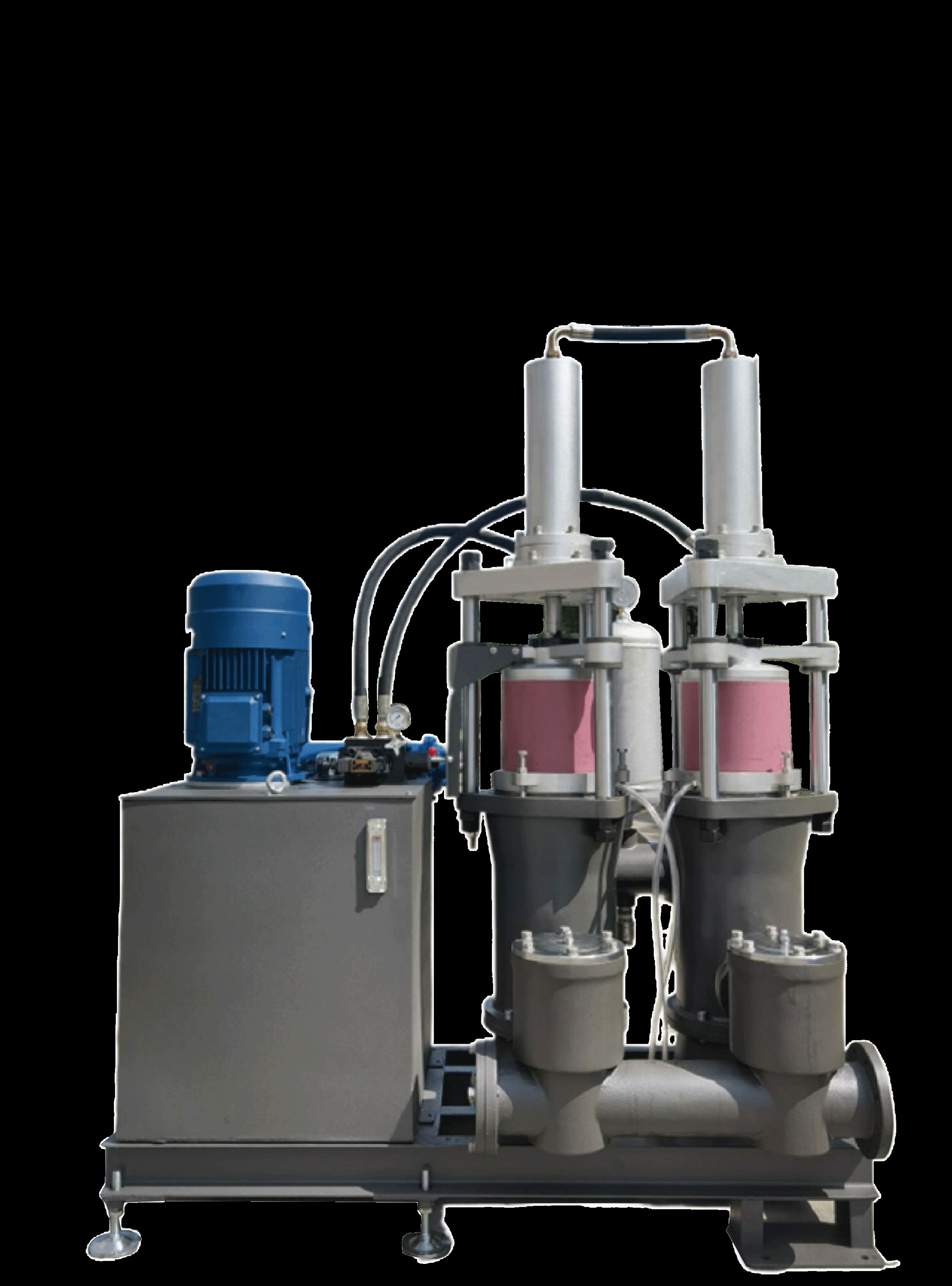
Filtration consistency rarely gets traced back to the pump—but it should. A mechanical reversing ceramic hydraulic piston pump is the unsung force behind predictable filter press cycles, holding pressure with a precision that ordinary designs simply can't match. Sinou has spent years honing this exact mechanism, and the result is a manufacturer that understands consistency isn't a feature—it's a promise. So what separates a truly reliable pump from one that only looks good on paper? Let's find out.
Ceramic Piston Design for Uninterrupted Filter Press Runs
A well-engineered ceramic piston does more than push slurry through the press—it keeps the entire cycle moving without surprise stops. The key lies in the piston's wear face: high-purity alumina or zirconia-toughened ceramics hold their surface finish far longer than hardened steel, so sealing rings don't chew into grooves and start leaking mid-run. Operators who switch to ceramic often notice the same pressing pressure holds steady from first cake to last, with no slow drift that forces early plate opening.
Differential thermal expansion is the silent killer of most press pistons. Ceramic pistons designed with a floating sleeve or a relieved core absorb the mismatch between the ceramic head and the steel drive rod, preventing hairline cracks that turn into blowouts. The best designs also integrate a gentle taper on the leading edge—this reduces the initial shock when the piston reverses direction against a full chamber of thickened sludge.
Maintenance windows change too. Instead of swapping pistons every few hundred cycles due to scoring, crews inspect ceramic pistons after thousands of runs and usually find only light polishing marks. The real gain is uninterrupted production: no unplanned downtime for a seized piston, no bypass leakage forcing a second squeeze on the same batch. For plants running continuous dewatering lines, that reliability translates directly into more dry solids per shift.
Mechanical Reversing and Its Effect on Slurry Flow
Reversing the mechanical direction of a slurry transport system does more than change flow orientation; it redistributes solids that have settled during steady-state operation. In horizontal or slightly inclined pipelines, heavier particles often form a bed along the invert. When pumps or impellers are reversed, the sudden shift in shear and velocity profile lifts this bed unevenly, causing localized surges in solids concentration that can momentarily exceed the design limit.
The effect is most pronounced with coarse or high-specific-gravity slurries, where inertia keeps particles moving in the original direction for a short period after the fluid velocity reverses. This lag creates a transient zone of increased friction loss and can lead to pressure spikes at elbows or bends. Operators often notice that reversing a slurry line requires a longer ramp-up than reversing a clear water line because the packed solids must first be re-suspended before the bulk flow stabilizes.
Over repeated cycles, mechanical reversing can either help or harm the system. On one hand, it prevents permanent settling in dead legs and evens out wear on impellers and casings. On the other, frequent reversals accelerate fatigue in pipe joints and may push settled fines into instrument ports or seal cavities. A practical approach is to limit reversal frequency, monitor differential pressure during the transient, and allow enough flush time before switching direction.
Hydraulic Pressure Control in Dense Filtration Applications
In dense filtration, the relationship between pump output and cake resistance shifts quickly as solids accumulate. A fixed pressure setpoint that works at the start often leads to blinding or uneven cake formation later. Operators need to ramp pressure gradually, holding a lower differential during initial bridging, then increasing only after a stable base layer forms.
Real-time hydraulic control depends less on single-point pressure readings and more on the rate of change across the filter media. Fast spikes usually mean surface blockage or channeling, while a steady climb with declining flow indicates normal compaction. Modulating a pressure-regulating valve in small steps, rather than wide-open corrections, prevents disturbing the cake structure and keeps filtrate clarity consistent.
For slurries with high solids loading, backpressure regulation on the concentrate side can be as important as feed pressure. A slight resistance on the outlet maintains uniform flow distribution across the membrane or plate, especially in multi-element housings where pressure drop varies. Tuning this balance extends cycle time and reduces the need for aggressive backwashing.
How Piston Pump Manufacturers Reduce Wear at the Seal Face
Material pairing and surface finish are the first line of defense. Manufacturers rarely rely on a single hardened face; instead, they mate a hard face such as reaction-bonded silicon carbide against a softer carbon-graphite counterface, letting the carbon transfer a micro-thin lubricating film during run-in. Surface roughness is typically held below 0.05 µm Ra, and some plants add isotropic superfinishing to remove directional grind lines that can act as leak paths or abrasive hotspots under load.
Pressure and thermal management prevent the fluid film from collapsing. Seal face wear accelerates when excessive closing force squeezes out the lubricant or when localized heat causes the film to vaporize. To counter this, manufacturers integrate stepped or wavy hydrodynamic grooves into the rotating face; these grooves pump a few microns of fluid between the faces at speed, lifting them just enough to avoid dry contact. Thermal mapping of the gland area guides placement of cooling jackets or barrier fluid circuits that keep face temperature below the fluid's vapor point.
Contamination control and condition monitoring address abrasive damage that can otherwise machine the faces. Abrasive particles in the oil tend to embed in the softer face and score the harder one, so return-line filtration to ISO 4406 18/16/13 or better is paired with magnetic plugs and off-line kidney-loop filtration on critical units. Some manufacturers also embed wear sensors that measure micron-level face separation, allowing operators to spot a degrading film before scoring begins.
Reversing Stroke Timing and Cake Moisture Consistency
Getting the reversing stroke timing right on a planetary mixer changes how evenly water, fat, and flour come together in a cake batter. A short reverse pulse every few seconds disrupts the usual circular flow, pulling dense material from the bowl's edge back into the center. Without that interruption, pockets of dry flour stay trapped under the paddle, and those unmixed clumps end up as hard, dry spots in the baked crumb. Too much reversing, though, chops through the batter and overworks the gluten, which squeezes moisture out during baking and leaves the cake drier than intended.
Adjusting the reverse stroke interval also affects how air is incorporated and retained. When the paddle switches direction briefly, it breaks up large air pockets into smaller, more stable ones, and that finer dispersion helps the batter hold onto water during the bake. The result is a cake that springs evenly and stays moist longer after cooling. Many bakers overlook this because they judge mixing time only by visual smoothness, but two batters can look identical while their moisture distribution differs sharply based on when and how often the reverse stroke kicked in.
A practical way to dial this in is to run a split batch test: keep the forward speed constant, then vary the reverse duration from one second to three seconds at fixed intervals. After baking, measure the moisture content at the cake's center and outer edge. You'll usually find that a shorter, more frequent reverse pulse keeps the edge from drying out while the center stays tender. Once you lock in that timing for your specific mixer and bowl size, even small changes in ingredient temperature or flour brand become easier to compensate for, giving you batch-to-batch moisture consistency without changing the formula.
Building Filtration Systems Around Real Slurry Variability
Filtration systems often fail not because the equipment is undersized, but because the design assumes a slurry that never actually exists. Lab-scale tests typically use a single, well-mixed sample with a narrow particle size distribution. Real slurry, on the other hand, shifts constantly. Solid content can swing by ten percentage points within an hour. Particle size distribution broadens and narrows as upstream grinding or thickening conditions change. Temperature, pH, and even dissolved salts alter how particles agglomerate and how quickly a filter cake forms. Ignoring this variability leads to systems that work beautifully on a bench but choke, blind, or dump wet cake the moment feed conditions drift.
A more robust approach is to map the actual envelope of slurry behavior before fixing equipment sizes. This means pulling months of operational data—not just averages, but frequency distributions and extreme values. For example, a nickel laterite operation might see feed solids fluctuate between 18% and 34% by weight, while the fraction of fines under 10 microns varies from 20% to 45%. Designing around these real ranges often calls for different choices: wider feed channels to handle viscosity spikes, variable-speed vacuum pumps instead of fixed-speed units, and filter cloths rated for a broader particle spectrum. It also forces you to question the standard safety factors. A system that only works when solids stay above 25% is not a system; it is a bet.
During commissioning, the real test is to deliberately upset the process. Ramp up solids concentration quickly. Switch to a finer or coarser feed blend. Run with colder slurry or higher chloride levels. Watch how the filter responds—not just throughput, but cake moisture, cloth blinding rate, and filtrate clarity. These disturbances often reveal control loops that were tuned for a narrow operating window and fall apart under normal swings. The goal is not to build a system that performs perfectly under one idealized slurry, but one that degrades gracefully across the full range of what actually comes down the pipe.
FAQ
The mechanical reversing system switches the piston direction without relying on electronic sensors or solenoids. That means fewer components can fail mid-cycle, so the pump maintains steady flow and pressure even during long batch runs. It also reduces downtime from electrical faults, which keeps feed to the filter press uniform.
Ceramic plungers and liners resist wear from abrasive slurries and corrosive chemicals far better than metal parts. They keep tolerances tight over thousands of cycles, so internal leakage stays low and pressure delivery stays predictable. This directly supports consistent cake formation and clear filtrate.
Yes. It is built for high-pressure operation, commonly up to 200 bar depending on the model. The ceramic components and reinforced drive end hold up under repeated mechanical reversal, so you get stable pressure at the filter plates rather than pulsation or fading as the cycle progresses.
Maintenance is minimal if the pump is flushed after each run. The ceramic surface does not corrode or score easily, but you should inspect seals and packing regularly. Replacing seal sets on schedule prevents abrasive slurry from migrating into the power end, which keeps the ceramic plungers in good shape for years.
It is, precisely because the ceramic wetted parts withstand erosive wear that quickly ruins stainless or hardened steel. The pump can handle slurries with sand, lime, metal hydroxides, and other abrasive solids as long as particle size is within the manufacturer's specified limits, which helps avoid unnecessary wear on valves and seats.
Each pump is assembled and tested on a dedicated test bench before shipping. The testing includes pressure cycle simulation, flow verification, and internal leakage checks. Manufacturing tolerances for ceramic inserts and valve assemblies are held to tight ranges, so replacement pumps or spare parts perform identically to the original installation.
The pump can be driven by an electric motor with a reduction gearbox, or by a hydraulic power unit if variable flow is needed. The mechanical reversing linkage is designed to accept both drives without modification to the fluid end. This gives flexibility in plant layouts while keeping the same ceramic wetted path.
In abrasive service, ceramic plungers can last 3 to 5 times longer than chrome-plated or nitrided steel plungers. Actual life depends on slurry abrasiveness, temperature, and operating pressure, but users often report fewer unscheduled changeouts and more predictable maintenance intervals.
Conclusion
In filter press operations, consistent output depends on how well the feed pump handles abrasive slurries and varying solids. A ceramic piston design gives the pump a hard, chemically inert contact surface that holds up through long runs without frequent seal replacement. Mechanical reversing adds reliability: rather than relying on electronic sensors or solenoid valves that can drift, the piston assembly shifts direction through a physical linkage, which keeps slurry moving at a steadier rhythm. This matters when the slurry contains fine particles that settle quickly. Hydraulic pressure control is tuned for dense filtration, where resistance builds as the cake forms. By adjusting pressure incrementally, the pump avoids hammering the filter cloth while still delivering enough force to maintain throughput.
Wear at the seal face is reduced through a combination of ceramic hardness and controlled reversing stroke timing. A shorter, well-timed reversal limits the dry-running window and prevents abrasive particles from embedding at the seal edge. That timing also influences cake moisture: when the stroke reverses too slowly, slurry stalls and water drains unevenly, leaving wet patches. A manufacturer that accounts for real slurry variability will configure pump speed, pressure ramp, and stroke length based on particle size distribution and concentration, not just generic specs. In practice, this means fewer interruptions, tighter moisture control, and a filter press cycle that stays predictable even when feed conditions shift from one batch to the next.
Contact Us
Contact Person: HaiYan
Email: [email protected]
Tel/WhatsApp: +86 18957325588
Website: https://www.senyoubeton.com/