

OEM Batch Off Cooling Line Streamlines Rubber Manufacturing Operations
2026-11-02
Operators know the frustration: freshly milled rubber stacks up while the cooling line crawls. That bottleneck doesn’t just delay production—it eats into margins. AUGU AUTOMATION tackles this head-on with an OEM batch off cooling line that accelerates cooling and smooths the entire operation. Here's what sets it apart.
Where Batch Cooling Stops Being the Bottleneck
Batch cooling tends to lose its chokehold on cycle time when heat removal moves out of the vessel itself. In a kettle that relies on a simple cooling jacket, the temperature drop from 180°F to 80°F can eat up hours, but once the product is pushed through a plate-and-frame chiller during transfer to packaging, that wait disappears from the batch window. The thermal step stops dictating how fast the line runs.
Another point where batch cooling stops being the bottleneck is when the next unit operation has a built-in hold. If the recipe calls for a 30-minute mixing pause or an overnight rest after cooling, then shaving ten more minutes off the chill time does nothing for throughput. The constraint simply moves to the hold timer or the downstream filler, and the cooling capacity already in place becomes more than enough.
Scale also changes the picture. In small pilot batches, the surface-area-to-volume ratio works against you, so the cook and the chill can take nearly the same time. At full production, however, scraped-surface agitators, external recirculation loops, and larger temperature differentials pull heat out fast enough that filling speed, not thermal lag, limits the line. Adding more cooling at that stage often yields no extra output and turns into unused capital.
From Mill to Pallet Without the Waiting Game
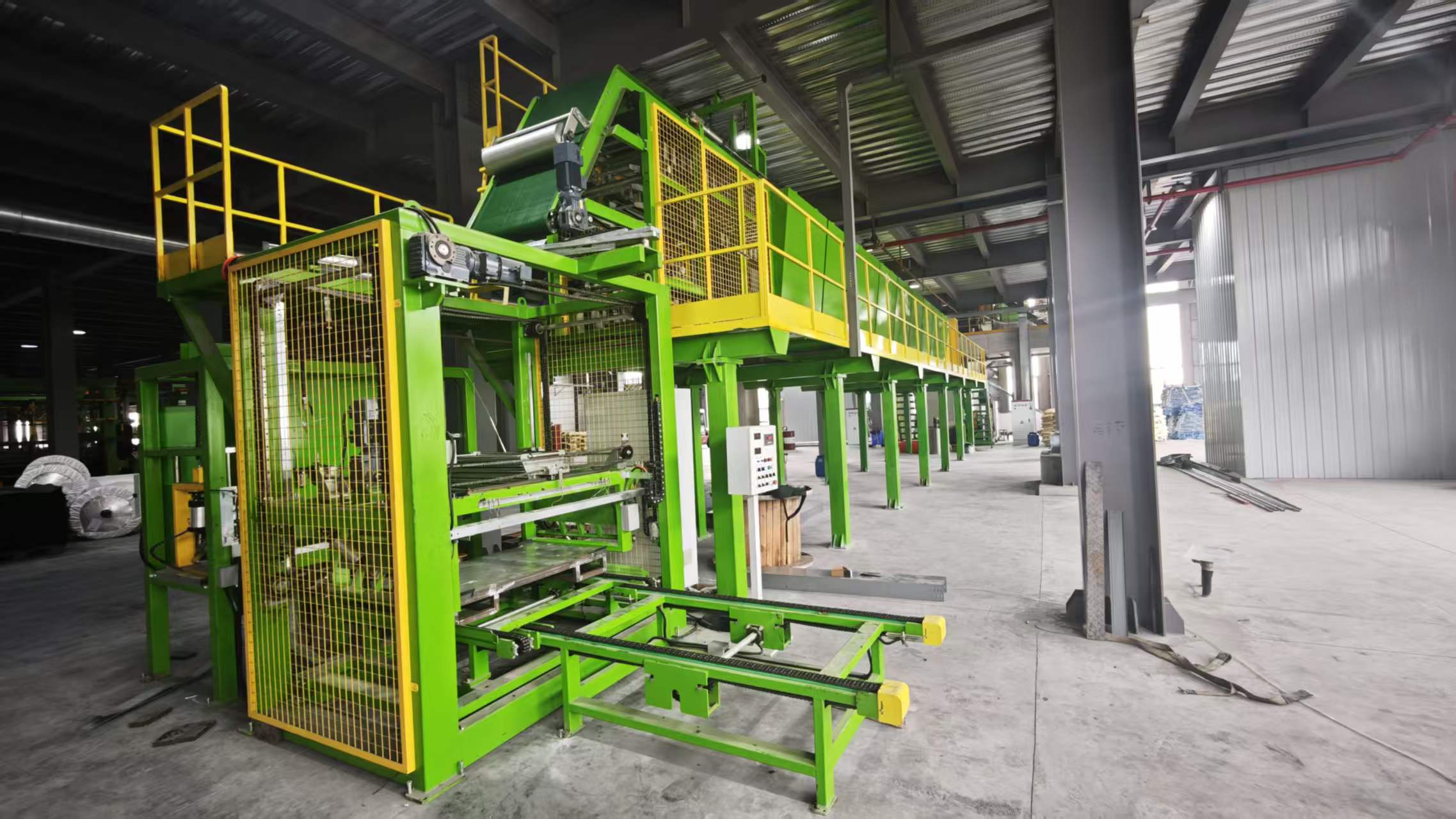
We run our own sawmill next to the pallet assembly line, so rough-cut lumber moves straight into production instead of sitting in a yard for weeks. That means when a customer orders 500 pallets on Tuesday, the boards are already being notched and nailed by Wednesday morning—not waiting on a third-party supplier's schedule.
Cutting lead times isn't just about speed, it's about control. Our team tracks moisture content and board dimensions at the mill, so the wood that hits the pallet line doesn't need to be reworked or sorted. Fewer handoffs translate into fewer reasons for a shipment to slip.
The result is a straightforward promise: standard pallet orders ship within 48 hours of confirmation, and custom sizes stay under a week. No staged delays, no "check back next month." You get pallets when you need them, not when the supply chain finally catches up.
Temperature Curves That Match Your Compound
Every compound has its own thermal personality—some demand slow ramps to avoid side reactions, others need sharp spikes to reach activation energy without lingering. Our approach reads your material's decomposition profile, phase transitions, and heat capacity data, then builds a heating regime that stays inside the safe window while pushing throughput. You don't adjust your chemistry to the equipment; the curve adjusts to your chemistry.
Thermal stability data, DSC traces, and TGA curves all feed into a matching algorithm that doesn't just approximate—it replicates the ideal thermal path for your molecule. Impurities that form at 212°C? The curve flattens before that threshold. A polymorph transition that requires a fast quench? The cooling segment tightens accordingly. The result is less trial-and-error in the lab and more batches that pass specification on the first run.
Compact Layout, Continuous Output
Space is rarely a luxury in busy work environments. The design here eliminates unnecessary bulk without sacrificing what matters: every component sits close to the next, reducing the machine's footprint while keeping all controls within easy reach. Small teams don't have to rearrange the room just to make space for it.
What makes this layout especially useful is how it feeds into a steady work rhythm. Because the internal path from input to output is short, there's less waiting between cycles. You get a consistent stream of finished work rather than stop-and-start bursts, which is exactly what tight deadlines demand.
The result feels less like running a large piece of equipment and more like having a reliable extra pair of hands. It slips into existing workflows without forcing a big adjustment, yet the difference in daily throughput becomes noticeable almost immediately.
Changeovers in Minutes, Not Hours
Traditional changeovers drag on for hours because crews must unbolt fixtures, reposition guides, and then run test pieces to verify alignment. The shift toward minute-level changeovers starts with eliminating those trial-and-error adjustments. Quick-release clamps, preset tool offsets, and marked position stops let the next setup snap into place without guesswork. When every motion has a defined home, a changeover stops being a production interruption and becomes a brief rhythm change.
Getting to that point requires watching the current process without assumptions. Many teams discover that half the time is spent walking to fetch tools or waiting for a cart to clear the aisle. Moving those preparations outside the machine window, or staging the next job's materials on a dedicated cart while the current job still runs, removes the hidden delays. Simple changes like color-coded hoses and single-point connections often cut changeover time by more than half before any equipment is upgraded.
Diagnostics That Prevent Downtime Before It Starts
Most maintenance teams only discover a failing component after it has already taken a line offline. Our approach flips that timeline: sensors embedded across critical assets stream operational data continuously, and edge-based algorithms compare every reading against known degradation signatures. The moment a bearing begins to vibrate outside its normal envelope or a cooling circuit shows a slight pressure drift, the system flags it—not as an emergency, but as a scheduled intervention weeks before failure would occur.
What makes this different is the ability to distinguish between harmless fluctuation and genuine early warning. Instead of relying on static thresholds that generate false alarms, the diagnostics engine learns the unique rhythm of each machine under varying loads and ambient conditions. It then builds a living baseline, so when something truly anomalous emerges, maintenance crews receive a concise, prioritized alert with suggested root causes and recommended actions.
The result is a maintenance calendar driven by actual equipment health rather than arbitrary intervals. Teams stop replacing parts that still have useful life, and they stop reacting to breakdowns that should never have happened. Downtime becomes a planning decision, not a surprise.
FAQ
It cools rubber compound sheets or strips after mixing or milling, using a conveyor system with forced air or water sprays to bring the temperature down before the material is stacked or moved to the next processing step.
By automating the cooling and stacking stages, it reduces manual handling, prevents sticking or scorching, and lets operators run continuous batches without waiting for rubber to cool on open racks.
A standard setup includes a dip tank or anti-tack applicator, an inclined conveyor, cooling fans, a festoon or stacking system, and a discharge conveyor. Some lines also add weigh scales or metal detectors.
Hot rubber remains reactive and can scorch or lose dispersion quality if left uncontrolled. Rapid, uniform cooling locks in compound properties and prevents premature crosslinking.
Yes, most can be adjusted for sheet thickness, conveyor speed, cooling time, and dip solution to suit natural rubber, EPDM, SBR, nitrile, or silicone compounds without major redesign.
Routine tasks include cleaning dip tanks and cooling fans, checking belt tracking, lubricating chains, and inspecting anti-tack spray nozzles to keep the line running consistently.
It eliminates much of the manual transport of hot rubber sheets, monitoring of cooling racks, and stacking of finished batches, freeing operators to focus on quality checks or upstream mixing tasks.
Key considerations are throughput rate, rubber sheet width and thickness range, cooling capacity in terms of temperature drop per minute, anti-tack system compatibility, available floor space, and how easily the line integrates with existing mills or extruders.
Conclusion
The OEM batch off cooling line reworks rubber manufacturing by removing the slowest step in the process. Instead of letting mixed stock pile up behind a sluggish cooling stage, this system keeps material moving straight from the mill to the pallet. Operators no longer have to pace production around heat removal; the line handles each batch continuously, with temperature ramps adjusted to suit the specific compound being run. That means less scorching, fewer rejected batches, and a steady feed to downstream operations without half-finished pallets stacked around the floor. The payoff shows up quickly in daily output because the waiting game disappears.
Its footprint stays surprisingly lean for the throughput it delivers, so a busy plant doesn't need to sacrifice floor space to gain line speed. Swapping from one rubber grade to another takes minutes rather than hours, thanks to tool-free adjustments and clearly marked access points. Built-in diagnostics watch bearing temperatures, belt tension, and drive loads in real time, flagging small issues before they turn into line stoppages. The result is a cooling line that works as a partner to the mill room: quieter, cleaner, and far less likely to interrupt a production schedule. It's a shift from cooling as a necessary pause to cooling as an active, controlled stage.
Contact Us
Contact Person: Lareina
Email: [email protected]
Tel/WhatsApp: +86 17561696737
Website: https://www.auguauto.com/