

OEM Powder Valve Selection Tips for Bulk Handling Systems
2026-08-30
Selecting the right OEM powder valve can make or break a bulk handling system—yet too many engineers discover this only after a costly retrofit. From bridging and rat-holing to abrasive wear and leak paths, the wrong valve quietly undermines throughput and product quality. In this guide, we cut through generic specs and focus on the practical selection criteria that matter for powders, granules, and hard-to-flow materials. Whether you're designing a new line or troubleshooting an existing one, these tips will help you avoid common pitfalls—and if you're looking for proven valve solutions, AVM offers a range of OEM configurations built for demanding bulk solids applications.
Start With Powder Behavior to Understand What Your Valve Faces
Every powder has its own personality, and ignoring it is the fastest way to a valve failure. Some materials flow like water, others bridge and rat-hole, and a few pack down so hard you'd swear they turned to stone. Before you pick a valve, watch how the powder moves under pressure, moisture, and aeration. Does it cling to surfaces? Does it settle into a solid cake overnight? These quirks define the forces your valve will actually face—far more than any datasheet ever will.
A valve that works perfectly on free-flowing salt can seize up within days on titanium dioxide. The difference isn't the valve's fault; it's the powder's behavior under shear. Cohesive powders create arching above the inlet, while abrasive ones chew through seals. If you skip the lab tests and pilot trials, you're essentially guessing with expensive hardware. Measure the powder's flow function, wall friction, and permeability first. Then match the valve type to those numbers, not to a catalog photo.
Even the same powder changes behavior with humidity, particle size distribution, or a new supplier. A rotary valve tuned for one batch can jam on the next simply because the powder arrives with a higher fines content. That's why starting with powder behavior isn't a one-time step—it's a continuous check. Run a shear cell test quarterly, watch for buildup in your hopper, and listen to the valve's operating torque. The powder will tell you what your valve faces long before a breakdown does.
Seal Failures Are Expensive, So Prioritize Leak-Proof Designs
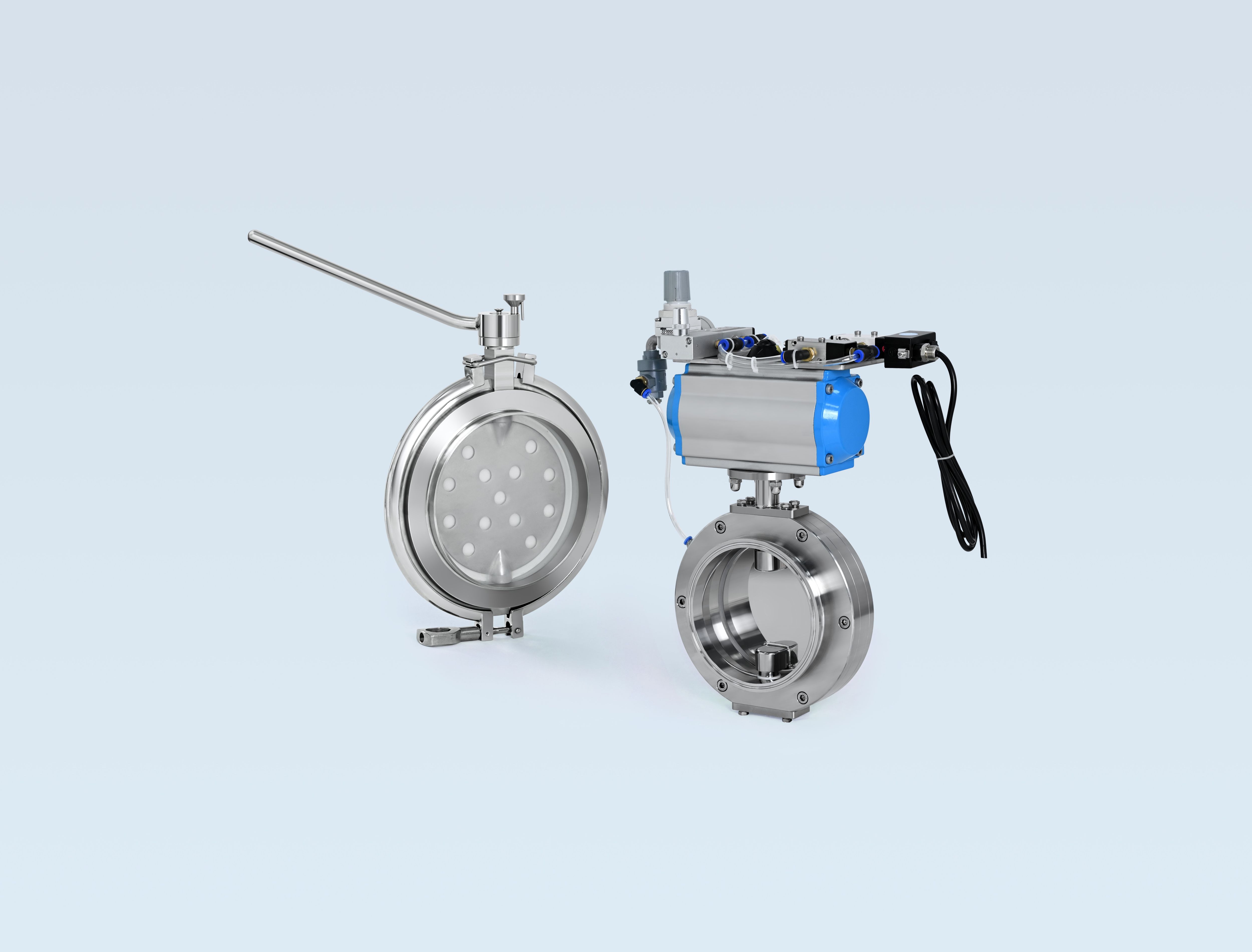
Every unexpected drip from a hydraulic cylinder or flange connection isn't just a nuisance; it's a direct hit to your maintenance budget. Downtime to replace seals, clean contaminated fluids, and repair scored shafts adds up faster than most reliability teams admit. Worse, a single overlooked leak can cascade into premature bearing wear, control valve sticking, or even environmental compliance fines that dwarf the original component cost. So before chasing cheaper seal materials or quick fixes, step back and ask whether the design itself invites failure.
Leak-proof starts on the drawing board, not on the repair bench. That means considering groove geometry, surface finish, and dynamic clearance together, rather than treating the seal as an afterthought. A well-designed housing keeps the lip square under pressure, avoids sharp edges that shave elastomers during assembly, and drains residual fluid away from sensitive areas. In many plants, switching to a slightly more expensive seal profile with better extrusion resistance has eliminated a chronic leaker that used to eat three hours of technician time every month.
The real payoff shows up in unplanned work orders. When seals stop failing, you stop writing emergency permits, stop hunting for spare parts on a Sunday, and stop explaining why the line went down again. One food processing plant cut its annual seal-related downtime by 71% simply by standardizing on a dual-lip design with a vented groove for washdown environments. That wasn't luck, it was deciding that leak-proof design deserves the same attention as motor sizing or bearing selection.
Abrasive Powders Demand More Than Standard Materials
Walk into any grinding or polishing operation and you'll quickly see why off-the-shelf abrasive powders fall short. The particles need to fracture at just the right moment, not too early to waste material, not too late to burn the surface. Standard aluminum oxide or silicon carbide might handle a narrow set of tasks, but once you introduce tough alloys, heat-sensitive composites, or exacting surface finish requirements, those generic grains start causing more problems than they solve. The real demand is for powders engineered with controlled friability, tight particle size distribution, and chemistry tailored to the workpiece—not just whatever comes out of a bulk bin.
Consider what happens when a supplier simply reaches for a standard fused alumina for a high-precision lapping job. The oversized particles scratch, the undersized ones load up the lap plate, and the inconsistent hardness leads to uneven material removal. Operators end up compensating with longer cycle times or extra finishing steps, quietly eating into margins. A truly differentiated abrasive powder, on the other hand, is designed backwards from the application: the crystal structure is modified, the particle shape is classified, and the surface treatment is selected to match the specific bond system or carrier fluid. That kind of intentional engineering is rare, but it's what separates a mediocre finish from a mirror-like one.
The push for tighter tolerances and new material systems—think ceramic matrix composites, additively manufactured parts with intricate internal channels, or hardened tool steels with demanding edge retention—means the old assumptions about abrasive powders no longer hold. You cannot simply bump up the grit size or add more pressure and expect better results. Instead, the powder itself becomes a critical process variable, one that demands customization in morphology, purity, and even fracture mechanics. Suppliers who treat abrasive powders as a commodity will keep missing the mark, while those who embrace the complexity can deliver surface quality that standard materials simply cannot touch.
Valve Actuation That Matches Your Automation Reality
Most automation projects start with a tidy set of specs, but the real world has a way of adding surprises—tight corners, odd mounting angles, varying air supply, or control signals that don't line up with the data sheet. Valve actuation that fits your reality means looking beyond the catalog and choosing something that works when conditions are less than perfect. It's about matching torque, cycle speed, and feedback options to what actually happens on your floor, not just what the simulation predicted.
We've seen enough installations to know that one-size-fits-all actuation rarely holds up. Sometimes a rack-and-pinion actuator is overkill, and a simple scotch yoke with the right spring pack will save space and maintenance headaches. Other times, the electrical environment demands a compact quarter-turn unit with a manual override that operators can actually reach. The point is to pair the actuator's personality—its power curve, duty cycle, and fail-safe behavior—with the specific valve and process it's controlling.
That's why we start with your process story instead of a model number. Whether you're automating a single ball valve on a skid or retrofitting a line with dozens of butterfly valves, the goal is the same: actuation that feels like it belongs there. No unnecessary complexity, no hidden setup costs, and no compromises that come back as downtime later. Just the right motion, the right feedback, and the right fit for the way you run your plant.
Cleanability Is a Design Feature, Not an Afterthought
Most products are born in a sketchbook, not a cleaning closet. Designers obsess over silhouette, texture, and color, yet rarely pause to imagine a sticky residue building up in a seam or a brush struggling to reach a hidden crevice. When cleanability is treated as an afterthought, it shows up later as a frustrated user with a toothpick and a bottle of solvent—or worse, a product that gets tossed because it simply can't be restored to a respectable state.
Making cleanability a core tenet changes every choice from the start. It means selecting materials that resist staining and don't trap microbes in micro-pores. It means designing joints that either seal completely or open wide enough for a hand to wipe through. It means avoiding decorative ridges and recesses that serve no function other than collecting dust. A truly cleanable product has no dead zones—every surface is either visible, reachable, or removable.
The payoff goes beyond hygiene. Tools, kitchen gadgets, and electronic devices that stay clean with minimal effort feel more professional and last longer. Users don't just use them; they trust them. When cleanability is baked into the design, it disappears into the experience—no special instructions, no awkward disassembly required. That's the difference between a product that merely works and one that endures.
Contamination Control Starts at the Valve Selection Stage
The path to effective contamination control often begins before installation, at the moment valves are specified. Internal geometry, surface finish, and seal materials determine whether a system stays clean or gradually accumulates harmful residues. Dead legs, crevices, and rough wetted surfaces may escape routine inspection while quietly promoting biofilm formation and particulate shedding.
A drainable body design with minimal internal discontinuities cuts cleaning and sterilization time noticeably. Electropolished stainless steel or certain engineered polymers resist microbial adhesion far better than standard alloys, and even the seat material deserves scrutiny—some elastomers leach compounds or degrade under repeated steam cycling, adding foreign matter directly into the product stream.
Selecting valves without weighing cleanability invites contamination risks that later filtration or sterilization may not fully correct. Working with manufacturers on surface roughness, connection geometry, and CIP/SIP performance can prevent a host of recurring quality issues from ever reaching the production floor.
FAQ
The rotor tips and housing bore take the brunt of particle erosion. If clearances open up past 0.15 mm, air leakage rises and the valve loses its feeding consistency. Hardfacing the rotor tips, using a replaceable bore liner, and moving to an adjustable rotor design usually doubles the service interval.
Steeper angles mean the powder will pile up instead of flowing once the diverter stops. A valve with a steepened inlet chute and polished internal surfaces helps avoid ratholing. For very sluggish materials, a vibrated or fluidized inlet may be the only way to get reliable switching.
Fine particles pack into the gap between the disc edge and the seat, preventing a full seal and eventually scoring the elastomer. Once the seat is torn, air and powder leak past even in the closed position. If isolation is the only requirement and the line runs under low differential pressure, a specialty high-tolerance butterfly can work, but it's rarely worth the upkeep.
Pinch valves shine with free-flowing granular products that don't abrade the rubber sleeve. They give a full-bore opening with no dead spots, which is helpful for contamination-sensitive blends. But if the powder has sharp edges or runs above 2 bar differential, the sleeve will wear out in weeks, not months.
Without a vent port, the high-pressure air trapped in the rotor pockets expands as the pocket passes the inlet, blowing powder back up the feed chute and starving the valve. A well-placed vent lets that air escape to a dust collector, keeping fill efficiency above 90% and preventing pressure spikes upstream.
Every pit, weld seam, or sharp corner acts as a nucleation point for powder to hang up and later drop into the next batch. Specifying a 0.8 µm Ra or better internal finish with continuous welds and no threaded fasteners in the product zone cuts cleaning time dramatically and makes CIP validation easier.
The powder compacts in the gate's guide channels, and each actuation forces more material into the throat. Eventually the gate can't fully close, and the product leaks into the downstream line. If a slide gate is unavoidable, look for a design with a purged or shielded guide and an angled blade to slice through the packed bed.
Aluminum saves weight and cost but is off-limits for many food and pharma applications due to corrosion with acid cleaners. Stainless steel, particularly 316L with a low ferrite content, holds up to washdown cycles and doesn't contaminate the product. If the line runs dry, ambient conditions, aluminum can work, but any chance of moisture or chemical exposure tips the scale to stainless.
Conclusion
OEM engineers sizing powder valves for bulk handling should first map how the powder actually behaves in the system—particle size distribution, moisture uptake, aeration, and flow function all change what the valve internals will experience. A valve that works for free-flowing plastic pellets can bind or bridge with cohesive calcium carbonate. That mechanical reality drives spec decisions far more reliably than catalog pressure ratings. Seal failures remain the most common source of unplanned downtime, so look for designs that eliminate stem packing or use live-loaded, externally adjustable seals. For abrasive materials like silica or alumina, standard cast iron or mild steel bodies wear quickly; specify hardened trim, ceramic liners, or tungsten carbide coatings on the flow path and disc edges rather than relying on thicker walls alone.
Actuation should match the plant's automation maturity, not a wish list. If the line still runs basic relay logic, a fully instrumented smart positioner adds cost and failure modes without delivering useful diagnostics. Simple rack-and-pinion pneumatic actuators with discrete position sensors often fit better. Cleanability has to be designed in: split-body valves or units with tool-free access make dry wipe-down or wet wash cycles practical, and internal contours without dead legs prevent product buildup. Contamination control starts at selection by matching wetted materials to powder chemistry, avoiding reactive metals or elastomers, and choosing surface finishes that release product cleanly. The best OEM valve choices treat these constraints as an integrated design problem, not a list of independent specs.
Contact Us
Contact Person: Ananda
Email: [email protected]
Tel/WhatsApp: 8619016718200
Website: https://www.wzaomi.com