

Reliable Electrical Slip Ring Which One Should You Choose
2026-08-13
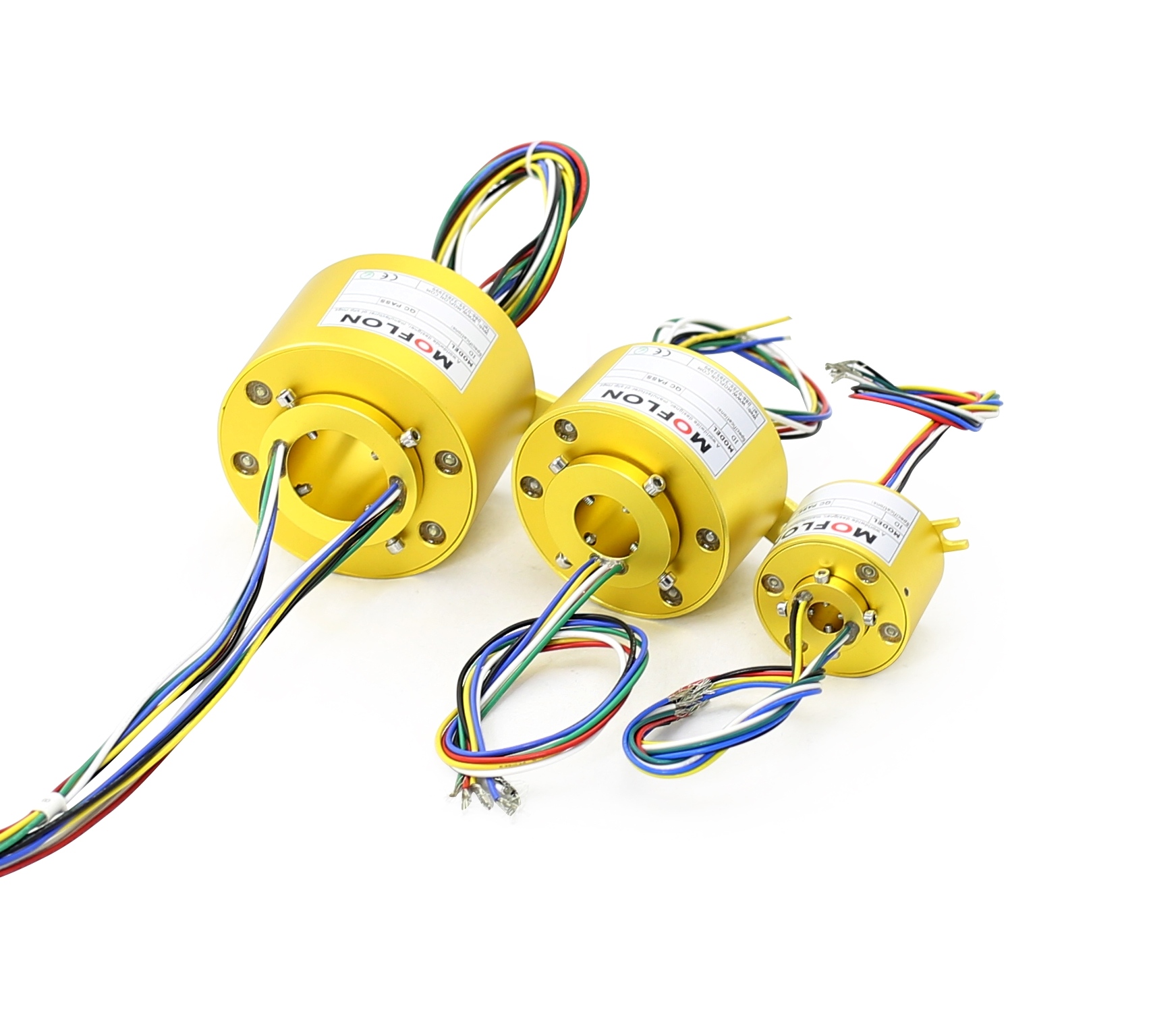
Choosing a reliable electrical slip ring often feels like sorting through a maze of specs, seal ratings, and supplier promises—especially when unplanned downtime is not an option. Whether your design powers a wind turbine, a packaging line, or a medical scanner, the wrong pick quietly inflates maintenance costs and shortens system life. That’s why a proven partner like MOFLON matters more than a glossy datasheet. In this guide, we strip away the marketing noise and focus on the engineering details that actually separate dependable rotary joints from costly compromises. From contact materials to signal integrity and IP protection, here’s what to check before you commit.
Know the Voltage, Current, and Signal Types Your Ring Must Carry
Before you pick a slip ring, map every conductor that has to pass through the rotating joint. A 24 V control line and a 480 V motor feed cannot be treated as the same problem, even if the total wattage looks modest. High voltage dictates insulation thickness, creepage distance, and sometimes potting or separation between adjacent rings. High current, on the other hand, drives contact material choice, ring width, and thermal management. If you ignore either one, you get arcing, hot spots, or premature brush wear long before the rated turns are reached.
Signal requirements are just as specific. A simple analog sensor output can tolerate a little contact resistance drift, but a 100 Mbps Ethernet channel will not forgive impedance mismatches, crosstalk, or intermittent contact. Digital signals, differential pairs, and RF lines usually need dedicated rings with controlled spacing, shielding, and sometimes coaxial or twisted-pair routing inside the rotor. Mixed systems should group power, low-level analog, and high-speed data into separate zones rather than daisy-chaining them across the same ring stack. That separation reduces noise coupling and keeps maintenance predictable.
Sealing Claims Are Useless Unless Matched to Real Exposure
An IP67 label on a flashlight or phone case sounds reassuring, but it only proves the sample survived a thirty-minute dunk in still, room-temperature freshwater. That's a far cry from salt spray, thermal shock, or a turbulent stream. Without matching the seal to the specific environment a product will actually face, the rating is little more than a marketing badge.
Many outdoor gear brands tout "waterproof" while testing only one axis or a static gasket. Real-world exposure involves repeated flexing, grit intrusion, and pressure changes that lab fixtures rarely replicate. A jacket that survives a shower test may still leak at the shoulders after an hour of hiking with a pack, because the harness compresses the membrane and breaks the seal. Claims need to be tied to scenarios that mirror actual use.
For engineers and buyers alike, the fix is straightforward: ask for test conditions, not just the passing grade. If a connector is rated IP68 but only tested face-up without cable strain, it will likely fail when mounted upside down or yanked. Match the sealing claim to real exposure—temperature swings, mechanical load, chemical contact—or accept that the spec is only a rough starting point.
Brush vs. Brushless: The Wear Difference Shows Up Faster Than You Think
If you've ever held a brushed motor after a long session, you know the feel: warm, almost gritty, like it's been grinding against itself. That's not your imagination. The carbon brushes physically ride against the commutator, and from the very first spin they're shedding microscopic particles. Within a few hours of regular use, you can already see a fine dark dust around the motor vents. It doesn't scream for attention, but it's the earliest sign that the contact surfaces are being eaten away. That dust gets into bearings, into the windings, and before long the motor starts to sound raspier and run a little hotter at the same RPM.
Brushless motors skip that physical contact entirely. The rotor has no wires to wear down; the commutation happens electronically. So where a brushed motor's performance declines in a slow, almost predictable slope, a brushless motor holds its baseline far longer. The difference isn't just theoretical either. Take two identical drones, one brushed and one brushless, fly them for ten hours total. The brushed one will have noticeably reduced punch, lower top speed, and shorter flight times per battery. The brushless one might have lost almost nothing. That's because there's no friction material being consumed, no arc pitting on a commutator, no carbon buildup to clog the tiny gaps.
What surprises most people isn't that brushless motors last longer—it's how quickly the gap appears. In applications like RC cars or power tools, a brushed motor can show measurable power loss after just a few days of normal use. You won't notice it until you switch to a fresh one and suddenly remember what full torque felt like. Brushless systems, by contrast, don't have that “worn-in” phase where performance quietly drops off. They keep the same responsiveness until a bearing finally gives out or a sensor fails, which is usually a much longer horizon. So if you're choosing between the two, don't think of brushless as just “better when it eventually wears out.” Think of it as avoiding the slow, silent downgrade that starts much sooner than any spec sheet suggests.
RPM, Housing Diameter, and Mounting Space: Get the Measurements Straight
RPM is only half the story if the replacement unit can't physically fit. Before ordering, pull the existing motor's nameplate data and then verify the frame dimensions against the mounting footprint. A 1750 rpm motor and a 3450 rpm motor with the same horsepower often have different shaft heights and bolt-circle diameters, so matching speed alone won't prevent a rework of the base plate.
Housing diameter matters most in tight enclosures. Measure the widest point across the motor body, not just the end bell, and leave enough clearance for airflow around the fins. Some aftermarket housings run larger than OEM even at the same frame size, especially with cast iron versus rolled steel construction. A quarter-inch can be the difference between a bolt-in swap and cutting new mount holes.
Mounting space includes more than the base footprint. Check the distance from the shaft shoulder to the first obstruction, the position of the conduit box, and whether the shaft is horizontally or vertically aligned. Write down the NEMA or IEC frame designation if present, then back it up with actual measurements of the mounting holes and shaft diameter. That removes guesswork when the catalog crosses to a different brand.
Ask About Lubrication Intervals Before They Become Your Problem
Waiting until a component starts grinding or overheating is the quickest way to turn a minor maintenance task into a major rebuild. Lubrication intervals are not arbitrary numbers in a manual; they exist because bearings, gears, and sliding surfaces break down oil films at predictable rates. If you ignore the schedule because the machine "still runs fine," you're gambling with heat cycles, contamination buildup, and additive depletion that you cannot see from the outside.
The real question is not whether the oil looks dirty, but whether its viscosity, acidity, and load-carrying additives are still within safe limits. Different operating conditions — high humidity, frequent stops and starts, dust exposure — can cut the useful life of a lubricant in half. Asking about the right interval before symptoms appear means you can plan downtime around production schedules instead of reacting to a seized shaft at 2 a.m. on a Saturday.
A good practice is to verify the manufacturer's standard interval against your actual duty cycle. If you run hotter, faster, or in a dirtier environment than the baseline, shorten the interval proportionally. Better yet, work with a lubrication specialist to sample the oil at the halfway point. That way, you get hard data on wear metals and oxidation long before they turn into a failure that stops the line.
A Low Bid Won't Cover the Cost of Unplanned Downtime
Procurement teams often celebrate a rock-bottom quote without asking why it's so low. The answer usually lives in thinner materials, slower support, or skipped quality checks. When those shortcuts surface, the result isn't a minor hiccup—it's an unplanned line stoppage that burns through payroll, idles equipment, and disappoints customers waiting on orders.
A cheap component that fails once can wipe out a year's worth of negotiated savings. The real math includes the cost of emergency repairs, overtime to catch up, and the reputational damage when delivery promises slip. Most low bids don't carry enough margin to absorb those risks, so the buyer ends up paying twice: once for the part and again for the chaos it creates.
The smarter approach is to evaluate bids against the cost of downtime per hour, not just the purchase price. Ask about mean time between failures, guaranteed response windows, and spare parts availability before making a decision. A slightly higher bid with robust support is often the least expensive way to keep production running.
FAQ
Reliability comes down to the contact system and how well it handles wear. Look for multi-point brush contacts rather than a single point, and check the brush pressure rating. Gold-on-gold works well for low-current signal lines, but high-current power channels often last longer with silver graphite or precious metal alloy brushes. Also pay attention to the housing material and bearing quality—cheap bearings cause wobble that accelerates contact wear.
It usually depends on your mechanical layout. If you need to pass hydraulics, pneumatics, or a shaft through the center, a through-bore slip ring is the practical choice. Capsule slip rings take up less axial space and are easier to seal, which makes them better for compact machines without a central passage requirement.
Not always. Gold is excellent for low-current signals because it resists oxidation and gives low electrical noise. But for power circuits carrying several amps or more, gold can wear faster under arcing and heat. Many reliable designs mix contact types: gold for signal rings and silver alloy or carbon brushes for power rings.
The IP rating determines how well the unit excludes dust and moisture. For outdoor or washdown areas, IP65 or higher is usually needed, but keep in mind a high IP rating on paper does not guarantee long-term sealing if the shaft seal degrades. Ask the manufacturer for the actual seal material and temperature range, not just the rating number.
You can, but you should not rely on a generic design. Look for physically separated channels, shielded twisted pairs for data, and enough spacing between power rings and signal rings to limit crosstalk. Some slip rings use coaxial or dedicated Ethernet channels for reliable high-speed data, while power runs through separate high-current rings.
That depends heavily on the contact technology. Brushed designs often need occasional inspection and brush replacement, while fiber brush or brushless designs can run for tens of millions of revolutions without servicing. If your application is hard to access, paying more for a low-maintenance design usually saves money over time.
People focus on current and voltage but forget insulation resistance, dielectric strength, operating temperature range, vibration tolerance, and allowable axial/radial loads. Also check the electrical noise spec if you are sending low-level analog signals. These hidden specs often separate a long-lasting unit from one that fails early.
Yes, especially if the signals are sensitive or the power channels carry variable loads. Shared channels can introduce noise spikes and voltage drop that corrupt data. Separate channels with proper shielding and grounding give a cleaner signal path, which reduces troubleshooting time later.
Conclusion
Selecting a reliable electrical slip ring starts with knowing exactly what your application demands. Ignore generic catalog specs and instead map out the voltage levels, current per circuit, and whether you're passing analog signals, digital data, or both. A slip ring that handles 5A power may fail quickly on millivolt thermocouple signals if contact resistance fluctuates. Sealing claims are another trap: an IP65 rating means little if your ring will sit near salt spray or washdown chemicals. Ask for the specific test conditions and match them to your real exposure, not a label. Brush or brushless decision becomes visible sooner than most expect. Brushed rings can work, but brush dust and wear accumulate in weeks under continuous rotation, causing intermittent dropouts. Brushless designs last longer in clean environments but may not justify the cost if duty cycle is low.
Get the mechanical constraints right before comparing vendors: confirm the maximum RPM, the housing diameter needed to fit your shaft or bore, and the axial space you can actually spare. These numbers filter out most options quickly. Then ask about lubrication intervals before they become your maintenance burden. Sealed-for-life claims should specify what life means in operating hours and whether re-lubrication is possible without disassembly. Finally, don't let a low bid hide the true cost of unplanned downtime. A cheaper ring that fails on a crane or wind turbine nacelle can cost far more in lost production and service calls than the price difference between mid-tier and premium units. Reliable slip rings earn their keep through stable contact resistance, honest environmental ratings, and serviceable design, not through a tempting initial quote. Compare the total cost of ownership over the expected service life and you'll often find that the so-called expensive ring is the cheaper decision.
Contact Us
Contact Person: Xiangpin Li
Email: [email protected]
Tel/WhatsApp: 86 186 1706 8578
Website: https://www.moflon.com