

Reliable Programmable Power Supply – Key Features and Buying Tips
2026-05-14
When precision meets reliability, your projects deserve nothing less. A programmable power supply isn't just a tool—it's the heartbeat of your test bench, shaping how efficiently you prototype, test, and troubleshoot. Yet with a flood of specifications and buzzwords, choosing the right one can feel overwhelming. Whether you're chasing ultra-low ripple for sensitive circuits or need remote control for automated setups, TPS has been quietly redefining what engineers expect from their power sources. In this guide, we'll break down the must-have features and share practical buying tips that cut through the noise, so your next power supply delivers exactly what your work demands.
What a Programmable Power Supply Actually Means
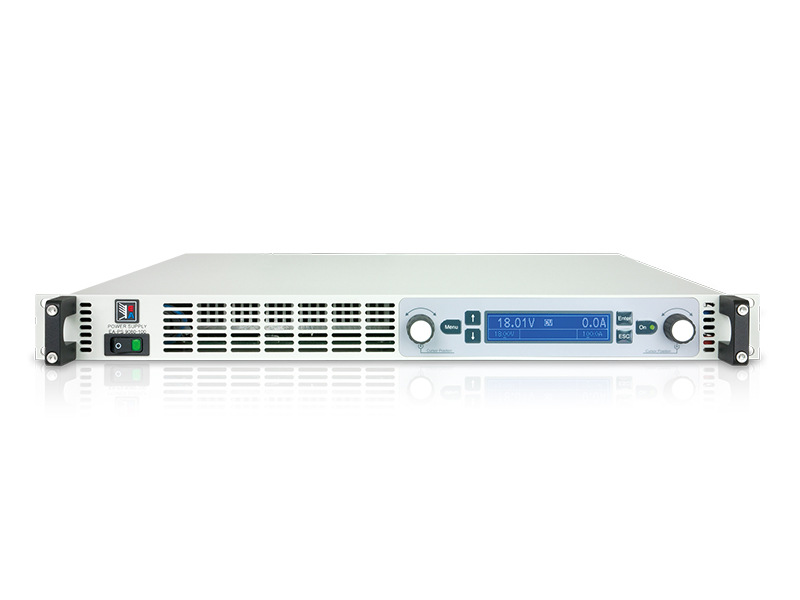
At its core, a programmable power supply gives you the ability to command its output—voltage, current, maybe even slew rates—via software rather than front-panel knobs. This isn't just about remote control; it's about turning power delivery into a precise, repeatable script that can simulate real-world conditions, whether you're testing a circuit's startup behavior or running a 72-hour burn-in cycle.
What makes it actually "programmable" in a practical sense is the flexibility to automate sequences, log data, and respond to triggers without ever touching the hardware. You're not just setting a voltage; you're defining a dynamic profile—ramps, steps, dropouts—that mimics battery discharge, powerline fluctuations, or the erratic demands of a motor startup. And because it's all done digitally, you gain the repeatability that manual setups can never match, freeing engineers to focus on interpreting results rather than tweaking dials.
The Numbers That Define Performance
When we talk about performance, the truth often hides in plain sight within a handful of figures. Response time, throughput, and error rates aren't just metrics on a dashboard—they're the pulse of any system. A drop in one or a spike in another can tell you more than any lengthy report ever could.
These numbers gain their power from context. A 200-millisecond response might be lightning-fast for a data-heavy application but painfully slow for a real-time API. Understanding the benchmarks that matter to your specific environment turns raw data into actionable insight.
Over time, these defining numbers reveal patterns that static snapshots never could. Tracking how they evolve under different loads or during peak hours separates a resilient system from one that merely survives under ideal conditions. Performance isn't a one-time test—it's a story written in digits that never stop moving.
How You'll Talk to It: Interfaces and Control
When you first approach the system, the way you interact feels almost conversational—but not in the clumsy, keyword-driven manner of early voice assistants. There’s a blend of touch, gesture, and spoken word that the device reads as a single intent. You might tap a surface to wake it, then half-whisper a command while tracing a circle in the air, and the machine seamlessly stitches these inputs together. It’s less like operating a tool and more like nudging a collaborator who already knows the context you’re working within.
One of the subtler breakthroughs is how the interface adapts to the noise and chaos around you. Instead of demanding your full attention, it picks up on partial cues—a raised eyebrow, a tilt of the head, even the way your hand hovers near a sensor. The control surface isn’t a fixed panel but an inferred layer that appears where you need it: projected onto a kitchen counter when you’re cooking, or simply vibrating a pattern against your wrist when your hands are full. The physicality of the interaction makes digital commands feel like an extension of your own reflexes.
What’s missing, refreshingly, is the performative aspect you find in so many gadgets. There’s no need to project your voice or exaggerate movements; the system learns the casual, imperfect ways you naturally communicate. Over time, it starts to fill in your gaps, anticipating a request before you fully articulate it—but with a light touch that stops short of feeling intrusive. The result is a dialogue where the boundary between giving instructions and simply thinking aloud begins to blur.
When Things Go Wrong: Safety Features You Need
Most of us don't shop for a car assuming the worst will happen. We get caught up in horsepower, infotainment screens, and leather trim. But when the unexpected unfolds—a sudden stop on the highway, a patch of black ice, a driver running a red light—the things that truly matter aren't the specs you bragged about. They're the features working silently in the background, ready to step in when your own reaction time might not be enough.
Modern vehicles pack a quiet arsenal that rarely gets attention until it's needed. Automatic emergency braking can sense an impending collision and apply full stopping power before you even touch the pedal. Blind-spot monitoring keeps an eye on those hidden zones you can't see, while lane-keeping assist gently nudges you back if you drift. Even straightforward-seeming tech like adaptive cruise control takes on a protective role, maintaining a safe gap without you having to constantly adjust—critical in stop-and-go traffic where fatigue sets in. These aren't gimmicks; they're second sets of eyes and a faster foot on the brake.
Beyond the electronics, the vehicle's bones matter just as much in a worst-case moment. Crumple zones are engineered to sacrifice themselves, channeling crash energy away from the cabin. Side-impact beams and reinforced roof pillars create a survival cage that's tested far beyond what most of us will ever experience. And then there are the airbags—curtain, knee, seat-mounted—tucked away until milliseconds matter, working in tandem with seatbelt pretensioners that remove slack instantly. Together, these passive systems don't prevent the accident, but they shape the outcome when everything else already has.
Inside a Reliable Unit: Components and Construction
At the core of a truly dependable unit lies meticulous component selection and robust construction. It starts with high-grade materials—think reinforced alloys for structural integrity and thermally stable substrates for electronics. Every capacitor, connector, and circuit trace is chosen not just for performance under ideal conditions, but for resilience against vibration, temperature swings, and long-term wear. Manufacturers who prioritize reliability often over-engineer these parts, selecting components rated well beyond the nominal operating range to create a buffer against unexpected stress.
The way these components are assembled dictates how well they hold up over time. Soldering techniques, for instance, must ensure that joints remain intact even as the unit expands and contracts with heat. Conformal coatings shield sensitive circuitry from moisture and contaminants, while thoughtful layout design prevents interference between high-power and low-signal elements. Physical construction also plays a role—rugged enclosures with sealed seams and shock-absorbing mounts defend the internals against rough handling or harsh environmental exposure.
Testing at every stage cements the unit's reliability. Incoming components undergo rigorous screening to weed out early failures, and sub-assemblies are stressed beyond normal parameters to spot weak points. Final products might face accelerated life tests, where they're pushed to the brink of failure to validate the design. This layered approach, blending premium materials, careful assembly, and uncompromising testing, results in a unit that delivers consistent performance long after lesser devices would have failed.
Smart Buying in a Sea of Options
Walking into a store or scrolling through an online marketplace can feel like diving into an ocean of products, each claiming to be the best. The sheer volume of choices often leads to decision fatigue, making it tempting to just grab the first thing that looks decent. But smart buying isn’t about luck; it's about having a clear strategy before you even start browsing. Knowing what you actually need versus what's simply flashy can save you money and regret.
One underrated tactic is to ignore the star ratings for a moment and dig into the reviews that sound like real people wrote them—complaints about durability after six months, praise for a specific feature you care about. Patterns emerge when you read between the lines. Another approach is to set a waiting period for non-essential purchases; if you're still thinking about an item a few days later, it might be worth it. Often, the desire fades, proving it was just an impulse.
Finally, remember that price doesn't always signal quality. Some mid-range products outperform their premium counterparts because they focus on core functionality without unnecessary bells and whistles. Pay attention to warranty terms and return policies—they reveal how much a company stands behind its goods. Ultimately, smart buying means filtering out the noise and trusting a mix of research and your own judgment.
FAQ
A programmable power supply allows you to set voltage and current limits digitally—often via a front panel, PC interface, or even an analogue control signal. Unlike a basic bench supply with only manual knobs, these let you automate test sequences, simulate battery behavior, and log output data. The real magic is in the remote-control capability and the ability to store and recall complex waveforms or sweep patterns.
Linear designs offer extremely low noise and fast transient response, which is critical when you're powering sensitive analogue circuits or precision sensors. But they're heavy, inefficient, and generate a lot of heat at high currents. Switching supplies are far lighter and more efficient, but they produce high-frequency ripple that can swamp your measurements unless you add external filtering. For most mixed-signal prototyping, I'd lean toward a good linear supply unless portability or high power is a must.
Overvoltage protection (OVP) and overcurrent protection (OCP) are non-negotiable—they should be independently settable and fast-acting. Look for a supply with a true 'output disconnect' relay that physically isolates your circuit when an alarm triggers, instead of just turning off the PWM. Reverse-voltage protection is a lifesaver if you accidentally connect a battery or a charged capacitor backwards. Temperature monitoring and foldback current limiting also prevent the supply from cooking itself during a short.
It's a bigger deal than most people think. If you're going to automate tests, you'll need either USB, Ethernet, or GPIB—and the provided drivers need to be solid, not just a cobbled-together VISA library. Some supplies have an abysmal SCPI command response time, making scripted ramps painfully slow. Front-panel usability matters too: a clear display, intuitive menu, and a rotary knob that doesn't lag. I've seen brilliant engineers waste hours fighting a supply's interface instead of debugging their circuit.
A splitter just divides voltage, it won't give you isolated, independently controlled rails. If your board needs a bipolar supply (+/-15V) or mixed voltages like 5V and 3.3V with a common ground reference, a multi-channel unit with floating outputs is essential to avoid ground loops. Some dual-channel supplies can be configured in series or parallel tracking mode, which effectively gives you a higher voltage or higher current output on the fly—something you can't do with separate singles.
Don't be fooled by marketing numbers like a 1mV display resolution if the actual programming accuracy is only 0.1% + 5mV. Check the 12-month accuracy specs for both voltage and current, and also the readback accuracy—not all supplies measure what they output precisely. Ripple and noise specs (typically in mVrms and mVpp) are crucial for ripple-sensitive circuits. For battery simulation or LED driving, you'll want a supply with good low-current measurement resolution, sometimes down to microamps.
Think about whether you'll ever need arbitrary waveform generation—many mid-range supplies now let you define voltage/current profiles over time, which is invaluable for inrush testing or solar-cell simulation. Connectivity-wise, having an industry-standard IVI driver or a well-documented REST API means you aren't locked into one vendor's software ecosystem. Also, look for supplies with modular design or firmware that gets regular updates; I've seen models that gained new features years after release simply through a firmware upgrade.
Brand-new from a big-name vendor guarantees calibration and support, but often a well-maintained used instrument from Keysight, Keithley, or Rohde & Schwarz can outperform a new budget supply. Check for calibration history, and confirm that the fan isn't noisy or failing—fan replacement can be tricky and expensive. If the budget is tight, prioritize low ripple and solid protection over fancy GUIs. Also, read teardowns and user forums; a supply might have stellar specs but a hidden flaw like a tendency to oscillate with certain loads, and only real-world users will tell you that.
Conclusion
A programmable power supply isn't just a bench tool with knobs swapped for a keypad—it's a disciplined, software‑driven voltage and current source that lets you script entire test sequences, simulate real‑world line sags and swells, or remotely tweak output with microsecond precision. The heart of the matter lies in the numbers: pay less attention to the headline wattage and more to load regulation, ripple‑and‑noise specs, transient response time, and how cleanly the unit behaves when you cross from constant voltage into constant current. Modern control options range from old‑school RS‑232 and USB to LAN with built‑in Web servers and even industry‑standard SCPI command sets, so think carefully about whether you need API‑driven automation or simply a clean, front‑panel experience that doesn’t fight you.
On the inside, reliability is built in layers—over‑specified MOSFETs and Schottky diodes, generous heatsinking that doesn't roar like a server farm, and multi‑stage LC filtering that keeps noise out of sensitive prototypes. But the less glamorous features often matter most: independent over‑voltage and over‑current trips that latch off instantly, a real crowbar circuit rather than software guesswork, and transformer‑based isolation that saves both your DUT and yourself. When it’s time to buy, ignore the spec‑sheet hype and hunt for a topology that matches your work—linear for quiet analog circuits, switching for portable‑heavy loads, or hybrid for compromise. Check that the calibration procedure is transparent and that firmware updates don’t require a sacrificial ritual; a solid supply will feel heavy, run cool, and come from a brand that publishes full schematics or at least a decent service manual.
Contact Us
Contact Person: Lily
Email: [email protected]
Tel/WhatsApp: +49 (0) 2161 49526-0
Website: https://tps-elektronik.com/en/