

Slate Flexible Stone Veneer Factory Craftsmanship Behind Natural Stone Look Panels
2026-09-09
Most people assume a natural stone wall comes straight from a quarry—until they realize it bends. Slate flexible stone veneer flips that expectation, and behind every realistic panel is a factory process that’s equal parts material science and old-school craftsmanship. At Magic Stone, thin layers of real slate are transformed into flexible, lightweight sheets that mimic the depth and texture of solid rock without the weight or installation headache. The result looks so authentic that even close-up, the line between manufactured and quarried starts to blur. Here’s a closer look at how that illusion is built.
Sourcing Slate That Already Carries Natural Character
The best slate isn't manufactured into character—it carries it from the quarry. When you source stone that already shows natural rifting, mineral veining, and tonal shifts, you're bypassing the uniform look that plagues most processed materials. Look for slabs with subtle irregularities: a faint iron streak here, a slightly uneven cleft there. These aren't flaws; they're fingerprints of the earth's own production process. A supplier who understands this will sort their inventory by geological signature rather than just size and thickness, saving you hours of hunting through pallets that all look identical.
Ask to see photos of the quarry face before finalizing an order. Natural character often hides in specific extraction zones—the lower benches might yield slate with more mica sparkle, while upper layers show deeper color banding. Don't settle for a sample chip the size of a coffee mug; request a full-tile mockup under different lighting angles. If the distributor hesitates to share that level of detail, they're likely blending stock from multiple unknown sources, which flattens the very texture you're trying to capture.
Finally, price isn't a reliable guide here. Some of the most expressive slate comes from small, family-run operations that don't have the volume to supply big-box retailers. Build direct relationships with quarry reps or regional stone brokers who can hand-select bundles while they're still on the pallet. The goal isn't just any slate—it's slate that looks like it belongs to a particular hillside, not a factory line.
How Thin-Cut Stone Keeps Its Natural Texture on a Flexible Core
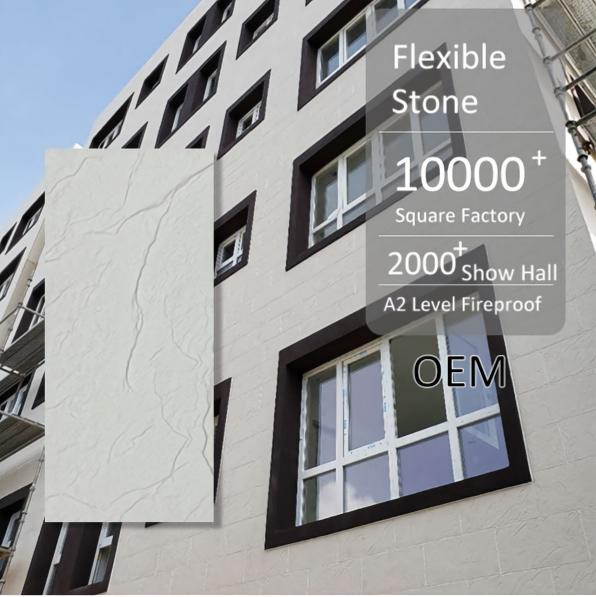
The natural texture comes from the way the stone is split rather than cut. Instead of sawing across the face, thin veneer producers use the stone's natural bedding planes. By cleaving along these layers, the original cleft surface—with its ridges, pits, and mineral variations—stays intact. That rough, unpolished character is not something you can replicate with a molded or printed finish.
After splitting, the thin stone sheet is bonded to a flexible core, typically a fiberglass or fabric-reinforced polymer. This backing doesn't interfere with the front face; it simply provides tensile strength and the ability to flex without cracking. The adhesive used is chosen to penetrate the stone's porous back just enough to lock the two materials together, leaving the visible side completely untouched.
This method also means the stone can be handled more like a flexible panel than a brittle slab. Since the natural texture sits on top of a core that bends, installers can wrap columns, curve along walls, or apply it to lightweight substrates without sacrificing the authentic stone surface. The texture remains because the splitting process prioritizes the stone's native fracture lines over a smooth cut.
Layering Mineral Pigments to Match Weathered Slate, Not Fresh Paint
Matching the muted, uneven surface of weathered slate requires abandoning the flat opacity of fresh paint. Instead, we build depth through successive washes of mineral pigments—iron oxides, umber, and ground slate dust—each layer allowed to dry before the next is applied. The first coat sinks into the substrate, staining rather than covering, while later passes catch on the natural high points, creating the chalky bloom and faint mottling you see on stone that has faced decades of rain and sun.
The key is restraint: a single heavy application looks artificial, but three or four thin, almost transparent glazes begin to mimic the way lichen and mineral deposits settle into crevices. We mix pigments with a weak binder so they can be worked with a dry brush, lifting or shifting color before it sets. This lets us replicate not just the base tone of old slate, but its subtle variations—the bluish cast under a shadow, the warm rust bleed near an old nail hole.
No two areas of a real slate roof weather alike, so we avoid uniform coverage. One section might get an extra wash of greenish umber; another, a dusting of fine gray powder pressed into the wet surface. The result reads as age and exposure, not as a coated surface. When the final layer cures, you can run a hand over it and feel the faint grit of stone, not the slickness of paint.
A Walk Through the Finishing Bench: Hand Tools on Every Panel
The finishing bench never stays tidy for long. A smoothing plane lies on its side next to a small pot of paste wax, its blade still carrying a faint curl of maple from the last pass. Card scrapers hang from a magnetic strip above, each one burnished to a different edge for the tight grain you always find on the last panel before assembly.
Every panel passes across this bench at least twice. First with a jointer plane to knock down the high spots left by the thicknesser, then with a cabinet scraper to level the areas where the grain reverses. A wooden try square sits near the front edge, not for show but because the toe of the plane sometimes nudges it out of square when you set a panel on edge.
The small details matter here. A block plane with an adjustable mouth handles the end grain after crosscutting, while a shoulder plane cleans up the tongue on a frame-and-panel joint if the fit feels too tight. No power cords, no dust collection ports—just the whisper of steel on wood and the occasional tap of a hammer adjusting a plane iron.
Testing Bend, Scratch, and Freeze Resistance Before a Panel Ships
Before a panel is cleared for shipping, it gets flexed on a test rig that pushes the edges upward while the center stays clamped. The bend test isn't about snapping the board in half; it simulates the kind of uneven pressure a panel might feel when it's being carried through a narrow doorway or installed on a slightly warped frame. We look for hairline cracks along the surface and any loss of adhesion between layers. If the panel survives a set deflection angle without visible damage, it moves to the scratch station. There, a series of weighted styluses—ranging from a soft plastic nib to a carbide tip—are dragged across the finish at controlled speeds. The goal is to mimic everything from a fingernail graze to a dropped set of keys, without letting a single scratch reach the underlying material.
The freeze test is less about cold weather and more about thermal shock. Panels are placed in a chamber that drops to -25°C for eight hours, then brought back to room temperature over the course of an hour. This cycle is repeated three times, and after each thaw the edges are inspected under magnification for signs of delamination or micro-fractures. A panel that survives this routine can handle being stored in an unheated warehouse or shipped through a northern winter without the surface turning brittle. Combined with the bend and scratch results, these three checks give a clear picture of whether the panel is ready for the rough reality of transit and installation.
Why Our Factory Embraces Irregularities Instead of Erasing Them
Walk through our workshop and you will notice something missing: the pressure to make every edge identical. A slight wave in a tabletop, a faint tool mark on a chair leg, a knot that interrupts the grain—these are not flaws that slipped past inspection. They are the fingerprints of the material and the hands that shaped it. Instead of sanding them into invisibility, we pause and ask what they offer. An irregularity tells you where the tree grew, how the metal cooled, or how the glaze pooled in the kiln. Erasing that would be erasing the story.
This mindset shapes our entire process. When a batch of handles comes out with tiny variations in curvature, we do not recalibrate the machine to enforce uniformity. We sort them by feel, pair them with pieces that share the same temperament, and let the final product carry that quiet unpredictability. The result is furniture and objects that feel alive rather than stamped. Buyers sometimes run a thumb over a subtle dip and smile—that is the moment the irregularity becomes the reason they chose it. We are not making copies of an ideal. We are making room for the real.
FAQ
It starts with real slate split into thin layers, usually a few millimeters thick. A flexible backing, often a polymer or fiberglass composite, is bonded to the back, and the stone is cut into manageable sheets. The finished panel bends without cracking while keeping the natural cleft surface intact.
They're actual stone. The factory slices natural slate into veneer-thin sheets rather than recreating the look with paint or digital printing. This is why each panel has slight variations in shade and texture, just like quarried slate.
The splitting technique matters most. Instead of sawing, the slate is separated along its natural cleavage planes, which exposes the rough, layered surface that gives slate its character. If the factory polished or sanded it flat, the material would lose that authentic look.
They sort raw stone by color range and grain direction before cutting. Panels from the same quarry lot are grouped, and thickness is checked at several points. Minor variations are allowed because they make the wall read as real stone rather than a repetitive pattern.
Yes, the panels can follow gentle to moderate curves. Most installers use a high-quality polyurethane adhesive and a notched trowel, then press the panel into place. For tighter radii, warming the backing slightly improves bendability, but sharp folds should be avoided.
Common options include fiberglass mesh, non-woven fabrics, or a thin polymer sheet. The backing absorbs flex stress and prevents the stone layer from snapping. A good backing also helps the panel hold its shape when glued to vertical surfaces.
Yes. Since the veneer is thin, edges are often lightly trimmed or left with a natural break rather than beveled like thick tiles. Some factories apply a thin edge sealant to prevent fraying of the backing, but the stone edge itself remains intentionally rough.
Conclusion
The slate that ends up on these flexible panels is never quarried for uniformity. We hand-select pieces that already show honest weathering—cleavage lines, mineral streaks, faint iron blooms—so the finished product doesn't have to fake age. The stone is sliced thin enough to flex, but the cut follows the natural grain instead of grinding it away. A fabric backing gives it bend without burying the surface; you can still feel the original rifts and tiny crevices under your fingers. After the veneer is mounted, mineral pigments are brushed on in translucent washes, not sprayed as a solid coat. Each layer reacts with the stone's own variations, so a shadowed hollow holds more depth than a raised ridge. The result is a weathered slate face that reads as geology, not paint.
On the finishing bench, every panel gets worked with hand tools—chisels, wire brushes, and worn sanding blocks that follow the stone's natural dips rather than flatten them. No two panels leave the line with identical edges. Before shipping, each one is bent around a mandrel, scratched with a carbide tip, and cycled through freeze-thaw conditions to make sure the flexible core won't delaminate or the mineral finish won't craze. What other factories might call defects, we treat as the whole point. Irregular seams, uneven color shifts, and small surface pocks stay. They are the reason a wall of this veneer doesn't look like a printed replica, but like a thin slice of an actual rock face that happened to be made flexible.
Contact Us
Contact Person: Vito
Email: [email protected]
Tel/WhatsApp: 86 13088879266
Website: https://www.magicstonemcm.com