

Solar Ground Mount Suppliers in China: Who Offers the Best Systems?
2026-05-20
Finding a reliable solar ground mount supplier in China can feel like searching for a needle in a haystack. The market is flooded with manufacturers, each promising top-quality systems at unbeatable prices. Yet, not all deliver on reliability, engineering, or long-term value. Among the standouts, Topfencesolar has carved out a reputation for durable, cost-effective solutions. In this blog, we peel back the layers to reveal what truly defines the best ground mount systems, so you can invest with confidence.
The Shift Toward Customization in Chinese Ground Mounts
The era of one-size-fits-all ground mount solutions is fading fast in China’s solar sector. Project developers are moving beyond cookie-cutter designs to tackle a wider range of terrain challenges, from rocky hillsides to agricultural land. This shift is fueled by the need to unlock solar potential on complex or previously underused sites, where standard fixed-tilt racks simply don’t deliver the necessary structural integrity or energy yield. Local engineering teams are now deeply involved in tailoring foundation systems, frame geometries, and even installation sequencing to the unique contours and soil conditions of each specific plot.
Driving the customization wave is a growing demand for higher land-use efficiency and multi-functional solar projects. Agrivoltaic installations, for instance, require adjustable heights and wider row spacing to accommodate crops and machinery, while floating or near-water mounts demand entirely different anchoring and corrosion-resistance strategies. In response, Chinese manufacturers are blending modular design principles with flexible production lines, allowing rapid reconfiguration of components like purlins, clamps, and leg profiles without sacrificing supply chain economies of scale. This blend of adaptability and cost control is giving domestic players a sharp competitive edge in both home and overseas markets.
Perhaps most striking is the speed at which bespoke engineering translates into on-site reality. Where project-specific mounting systems once implied long lead times and premium pricing, innovative design software and pre-assembly techniques now drastically compress delivery cycles. Digital twin modeling and parametric analysis tools enable engineers to simulate wind and snow loads on irregular layouts within hours, not weeks. As a result, clients receive structures that are not only optimized for their precise coordinates but also arrive ready for swift, low-labor erection. This newfound agility is quietly reshaping expectations across the industry, making customization the new baseline rather than a costly extra.
Quality Marks That Separate Top Suppliers
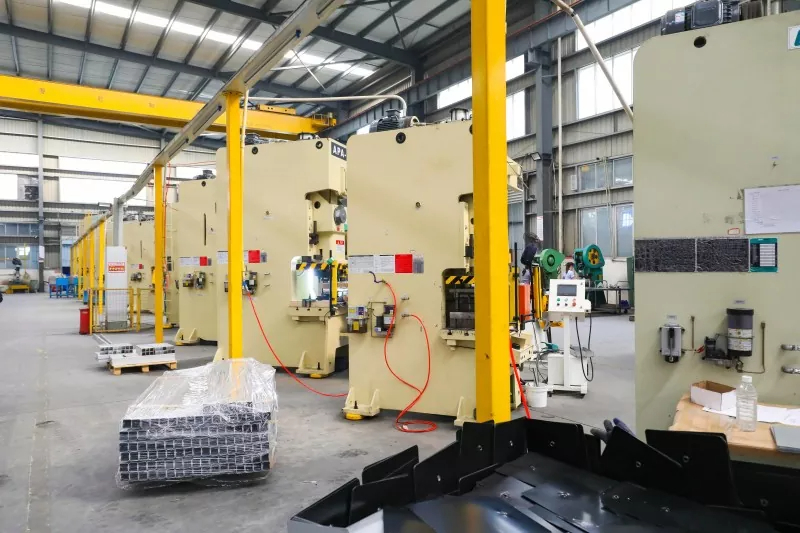
A genuine top supplier rarely needs to boast about quality—it simply shows up in the details. These businesses earn recognition through certifications like ISO 9001 or industry-specific credentials, but what truly separates them is how they weave that rigor into daily operations. You’ll notice it in the way they trace raw materials back to the source, or how they openly share audit results instead of hiding behind jargon. It’s a quiet confidence, backed by evidence you can see.
Beyond paper credentials, leading suppliers embrace third-party verification that goes deeper than a one-time check. They submit to unannounced factory inspections, maintain consistent lot-sampling documentation, and often exceed baseline regulatory demands. For instance, a textile supplier might hold OEKO-TEX certification while also investing in real-time dyeing process monitors—a combination that signals obsession with consistency, not just compliance.
What makes these marks truly valuable is how they protect your business from hidden fragility. When a supplier’s quality system is woven into everything from packaging specs to employee training, you sidestep the firefighting that plagues lower-tier partners. The result? Shipments that match approvals, lower defect rates, and a supply chain that actually sleeps at night—all because you paid attention to the signals that matter.
Comparing Structural Integrity Across Manufacturers
When you start digging into how different manufacturers build their frames, you notice the differences aren't just cosmetic. One brand might use thicker gauge steel in high-stress areas, while another relies on advanced welding techniques to spread load. It's not enough to look at specs on paper—actual fatigue testing often tells a more honest story about which design will hold up over time.
Some companies invest heavily in corrosion-resistant alloys or proprietary reinforcements that add strength without piling on weight. Others cut corners with lighter materials that pass initial stress tests but degrade faster under repeated use. The real-world difference becomes obvious when you examine frames that have seen five years of heavy duty: the best engineered ones show minimal wear at critical joints, while cheaper builds might already have micro-fractures spreading from weld points.
Beyond the materials and methods, manufacturing consistency is a huge factor. A top-tier manufacturer will have tight quality control that catches defects before products ship, whereas budget producers might let variation slip through. That's why comparing failure rates from industry audits or long-term fleet reports can be more revealing than any lab test. In the end, structural integrity is a blend of smart design, honest materials, and disciplined production—and not every manufacturer balances those equally.
Cost Drivers Beyond the Price Tag
The sticker price of a product or service rarely tells the whole story. Beyond that initial figure, a host of less obvious expenses can quietly reshape the total cost of ownership. Factors like ongoing maintenance, the need for specialized training, and integration with existing systems often go unnoticed during the budgeting phase, yet they can substantially inflate the long-term financial commitment. Ignoring these hidden drivers means making decisions based on a mirage of savings, only to discover later that the true costs are far higher than anticipated.
Consider, for instance, a piece of industrial equipment marketed as being competitively priced. Once installed, the real outlay begins to surface: compatibility issues force retrofits or custom interfaces, energy consumption proves higher than expected, and the manufacturer mandates a subscription for critical software updates. Even the human element—the time and resources needed to bring staff up to speed—can erode any upfront discount. These ancillary costs don't just nibble at margins; they can dictate whether the purchase ultimately pays for itself or becomes a drain on resources.
A smarter approach involves looking past the headline number and scrutinizing the lifecycle costs. Ask not just what it costs to buy, but what it costs to operate, support, and eventually phase out. Reliable vendors will often be transparent about these figures, whereas those who dodge the conversation may be masking a less favorable total cost profile. By weighing these often-invisible drivers from the start, organizations can avoid the trap of false economies and make choices that truly align with their long-term operational goals.
Installation Networks That Speed Up Projects
A well-orchestrated installation network removes the friction that often bogs down large-scale projects. Pre-assembled cable trays, labeled fiber trunks, and pre-terminated copper links arrive on site in clearly organized kits, turning chaotic deployment into a predictable sequence. This kind of forethought slashes onsite termination time and minimizes rework caused by mislabeled or mismatched components. By treating the physical layer as a plug-and-play system rather than a bespoke construction effort, teams consistently meet aggressive milestones without sacrificing signal integrity or pathway standards.
Standardization is the engine behind these accelerated rollouts. When every rack, patch panel, and consolidation point follows a repeatable design template, technicians move through floors or buildings with muscle memory instead of deciphering custom drawings for each room. Pre-configured switch stacks and infrastructure that arrives with MAC addresses already documented further compress the schedule, eliminating days of manual provisioning. The hidden benefit is in how easily these networks absorb change orders—adding extra drops or wireless access points becomes a matter of snapping in additional modular components, not redesigning an entire IDF.
Resilience is built in from the start, not bolted on after deadlines slip. Smart installation networks incorporate redundant pathways and failover workspaces that let crews continue work even when a zone is obstructed. Material staging is aligned with project phases so that critical-path hardware never sits waiting for a delayed shipment. This approach transforms the network backbone into a project accelerator: instead of being the phase that holds up furniture moves and AV commissioning, it becomes the quiet framework that lets other trades start early, compressing the overall timeline in ways that Gantt charts rarely capture.
After-Sales Support: The Often Overlooked Decider
After-sales support often exists in the background of a purchase decision, rarely grabbing the spotlight until something goes wrong. Yet it’s precisely in those moments of stress that it reveals its true weight. A product might dazzle with features, but a brand’s willingness to stand behind it long after the sale can quietly shift a one-time buyer into a vocal advocate—or a disappointed detractor.
Consider the subtle difference between a company that offers a basic warranty and one that provides proactive follow-ups, easy access to knowledgeable staff, and swift, empathetic resolutions. The former treats support as a cost center; the latter sees it as an extension of the product experience. This contrast often escapes side-by-side spec comparisons, yet it defines how a customer feels months down the line when a glitch appears or a simple question needs answering.
In a marketplace brimming with similar offerings, after-sales support can be the quiet decider that tips the scales. It doesn’t boast on a spec sheet, but it leaves an imprint on loyalty that flashy marketing can’t replicate. The brands that get this right don’t just fix problems—they build trust that outlasts any single transaction.
FAQ
Several companies have built strong reputations, including Arctech Solar, known for tracking and fixed-tilt systems, Chiko Solar with extensive global reach, Kseng Solar for customizable solutions, and Xiamen Panda Solar for cost-effective designs. Others like Mibet Energy and Powerway also frequently appear in major project portfolios.
For utility-scale installations, Arctech Solar often stands out due to its in-house tracking technology and a massive portfolio of multi-hundred-megawatt projects. However, Kseng Solar and Mibet also deliver competitive large-scale structures with strong local support and fast delivery times.
Chinese suppliers typically offer a compelling balance—structures use high-strength steel like Q235 or Q345 with hot-dip galvanizing, meeting international standards at prices often 20-30% lower than European counterparts. Longevity in harsh environments can match premium brands if post-installation maintenance is adequate.
Look beyond generic ISO certificates. TÜV, UL, or SGS certifications for structural integrity and wind tunnel tests are strong indicators. A supplier with a proven track record in markets with strict regulations (like Australia or Japan) usually ensures compliance with design codes such as AS/NZS 1170 or JIS C 8955.
Yes, but it often depends on volume and negotiation. Many tier-one suppliers have MOQs ranging from 50 kW to 1 MW, yet some, like Xiamen Panda Solar or Chiko, offer flexible packages for smaller orders. Joint purchasing or partnering with local distributors can improve bargaining power.
Reliability hinges on detailed wind and snow load calculations, proper corrosion protection (typically 80 microns or more of galvanizing), and robust component engineering. Top suppliers provide site-specific designs and can include features like reinforced beams for typhoon zones or high-snow areas, backed by full-scale testing.
Yes, agrivoltaics is a growing focus. Companies like Mibet Energy and Arctech have developed elevated structures that allow farming underneath, with adjustable heights and spacing. These systems often integrate light-diffusing panels and can be tailored for different crops, making them popular in markets like Europe and Japan.
Conclusion
The landscape of solar ground mount supply in China has evolved well beyond simple price competition. A growing demand for project-specific customization means leading suppliers now offer tailored designs that optimize land use and tilt angles, rather than pushing one-size-fits-all rails. Quality marks such as IEC certifications and rigorous corrosion testing have become baseline differentiators, but the real separation lies in structural integrity—how well a mounting system withstands wind uplift, snow loads, and decades of environmental exposure without deformation. Buyers increasingly look past the upfront price to total cost drivers: transport logistics, local fabrication partnerships, and the availability of pre-assembled components that slash on-site labor. The fastest installations come from suppliers with validated networks of trained installation crews, a factor that can trim weeks from project timelines.
Yet what often decides the best system is after-sales support. The ability to provide technical guidance during the construction phase, swift replacement of faulty parts, and a responsive engineering team for design changes turns a transactional purchase into a long-term partnership. Some Chinese suppliers have built regional service hubs in key export markets, offering local-language support and spare parts inventory. When comparing bids, developers now weigh the cost of downtime and rework risks against promises of low prices. Ultimately, the best solar ground mount suppliers in China are not the cheapest, but those that deliver a cohesive package: robust engineering, fast deployment, and a genuine commitment to backing their product long after the shipment leaves the factory.
Contact Us
Contact Person: Nancy
Email: [email protected]
Tel/WhatsApp: +86-13365923720
Website: https://www.topfencesolar.com/