

Stainless Steel Hex Bolts Company Reveals Key Factors for Long-Lasting Industrial Fasteners
2026-11-02
When it comes to industrial fasteners, the difference between a reliable connection and a costly failure often comes down to the smallest details—material grade, thread design, and surface treatment. Wanluo, a leading stainless steel hex bolts manufacturer, recently shared insights into what truly makes these components last in demanding environments. From corrosion resistance to precise torque tolerances, the factors are more nuanced than most engineers realize. If you've ever wondered why some bolts hold up for decades while others degrade prematurely, the answer lies in a combination of metallurgy and manufacturing discipline that few suppliers get right.
Why 316 stainless beats 304 near saltwater
The biggest difference comes down to molybdenum. Grade 316 includes roughly 2–3% molybdenum, while standard 304 has none. That addition makes the passive oxide layer on 316 considerably more stable when exposed to chloride ions, which are abundant in salt spray, brackish water, and coastal humidity. In practice, 304 often develops small rust spots or shallow pits around welds, crevices, and areas where salty moisture lingers, whereas 316 holds up far longer in the same conditions.
It is not just about visible rust. Saltwater promotes crevice corrosion in tight gaps—under washers, between overlapping panels, or inside unsealed threads—and 304 is notably vulnerable there. 316 resists this type of attack better because molybdenum helps the surface repair itself after chloride exposure. Even small design flaws that trap salt residue become less damaging when the base metal is 316.
That said, 316 is not invincible. In warm, shallow seawater or continuously submerged applications, even 316 can pit, which is why higher alloys or alternative materials are sometimes used. But for dockside hardware, coastal handrails, boat fittings, and exterior fasteners where occasional washing by rain is expected, 316 usually outlasts 304 by a wide enough margin to justify the higher upfront cost.
What really creates the corrosion-resistant oxide layer
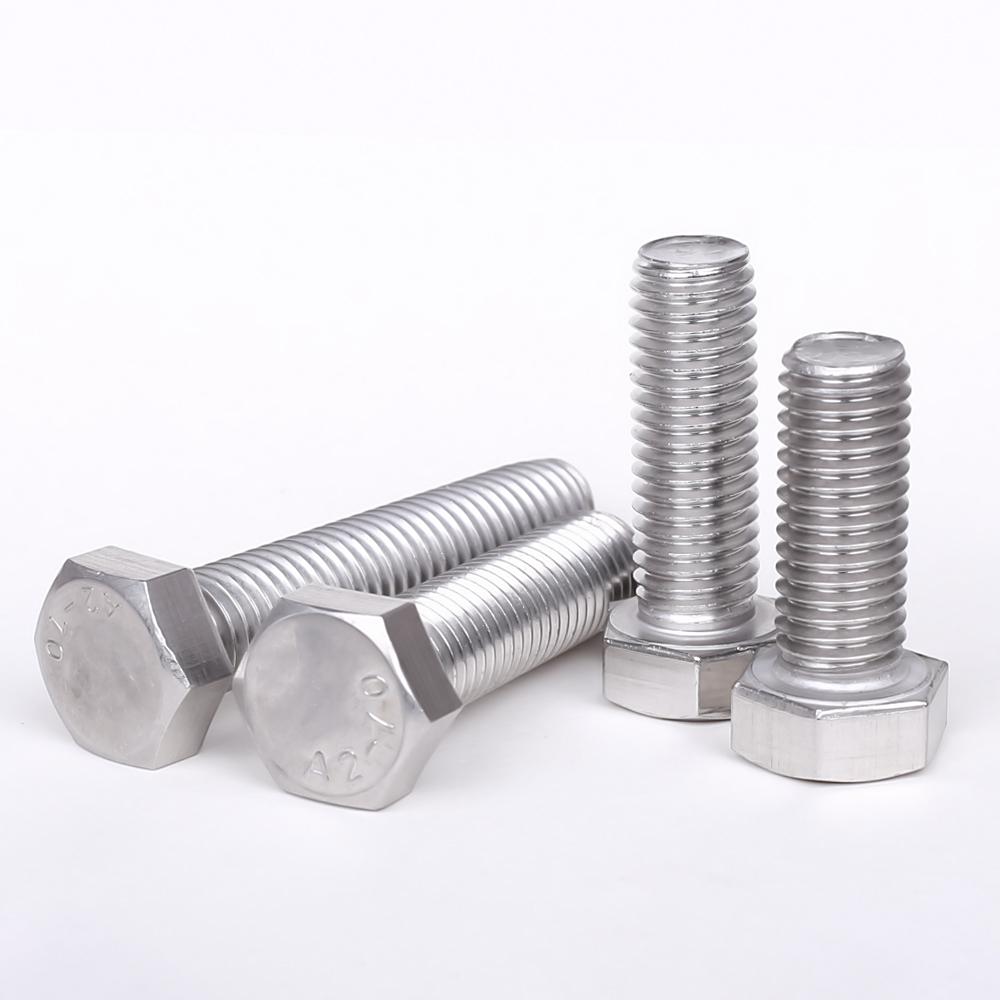
The protective film on stainless steel isn't a passive coating that happens to appear. It forms because chromium atoms inside the alloy react with oxygen faster than iron does. As soon as the surface is exposed to air or water, chromium diffuses outward and bonds with oxygen to create a layer only a few nanometers thick. That layer blocks further oxygen penetration and gives the metal its self-healing character.
What often gets overlooked is the role of the surrounding environment. In dry, clean air the oxide layer stabilizes almost instantly. In chloride-rich conditions, like seawater or road salt, the film can break down locally unless molybdenum or nitrogen is present to help rebuild it. So the real answer isn't just the chromium itself, but the balance of alloying elements and the chemical conditions at the surface.
Surface preparation also decides whether the layer can form properly. Grinding, pickling, or passivation treatments remove embedded iron particles and expose a clean chromium-rich surface. Without that step, the oxide layer may be irregular and far less protective, even if the base alloy has the right chemistry.
How thread pitch and tolerance stop bolts from shaking loose
Thread pitch plays a quiet but decisive role in keeping a bolted joint tight under vibration. Fine threads, with their smaller helix angle, convert less of the axial preload into a rotational force when the joint experiences lateral or cyclic loads. That shallow ramp effect means the bolt has a weaker tendency to back off compared to a coarse thread, where the larger pitch angle can act like a tiny inclined plane urging the nut to unwind. Engineers often lean on fine pitch in high-vibration settings for exactly this reason, though it comes with trade-offs in thread engagement and galling risk.
Tolerance does the grunt work of making that pitch geometry behave predictably. When the thread flanks fit tightly within a narrow tolerance band, the contact area between male and female threads becomes more uniform, which spreads the load and reduces localized slip. Loose tolerances let the flanks rock microscopically under vibration, gradually eroding the friction that holds everything in place. A precise fit, on the other hand, preserves that friction longer, because the mating surfaces stay in more consistent contact instead of hammering against each other during each vibration cycle.
What really stops a bolt from shaking loose is the combination of that pitch geometry and a controlled interference or near-interference fit. The helical ramp of a fine thread lowers the mechanical advantage that vibration can exploit, while a tight tolerance prevents the small movements that would otherwise break the static friction. Neither factor works alone: a fine pitch with sloppy tolerances will still fret and loosen, and a coarse pitch with perfect tolerances still has a steeper ramp to climb. It is the pairing of the two that keeps a joint from rattling apart on a vibrating machine or a vehicle bouncing down a rough road.
The overlooked threat of hydrogen embrittlement in high-strength bolts
Hydrogen embrittlement in high-strength bolts rarely announces itself. A fastener torqued to specification can sit under load for hours or even weeks, then snap with almost no plastic deformation—often at a stress far below what the steel should normally withstand. The mechanism is deceptively simple: atomic hydrogen, absorbed into the steel during manufacturing or service, diffuses to regions of high tensile stress and weakens the grain boundaries or lattice cohesion. Because the fracture surface may look brittle and granular, it is frequently mistaken for a material defect or an isolated overload, but the true culprit is the hydrogen already inside the metal.
What makes this threat particularly insidious is the narrow window of conditions that invite it. High-strength bolts—typically those with a hardness above about 32 HRC or an ultimate tensile strength exceeding 1000 MPa—are far more vulnerable than their lower-strength counterparts. The hydrogen can enter from acid pickling, electroplating, or even from corrosion reactions after installation. Residual stresses from tightening, combined with the applied service load, create the necessary tensile field. A few parts per million of hydrogen is often enough to trigger failure, and there is no reliable field inspection method to predict when a specific bolt will fail.
Because many design standards focus on overtightening, fatigue, and stress corrosion, hydrogen embrittlement tends to slip through the cracks. The fix is not always straightforward: baking after electroplating can drive out some hydrogen, but it must be done within a critical time window. Switching to mechanical plating, zinc flake coatings, or replacing the fastener with a lower strength grade can eliminate the risk altogether. Yet until engineers recognize that a bolt which fails with a clean, brittle fracture in a high-strength application may be a victim of hydrogen, the problem will continue to hide in plain sight.
Heat treatment steps that prevent hidden stress fractures
Most hidden stress fractures begin with uneven cooling, so the first move is to slow the temperature drop across the whole part. Bring the piece down from its holding temperature at a controlled rate, usually inside the furnace, and avoid opening doors or moving it to a cold rack too soon. This lets the surface and core contract together instead of fighting each other.
A more dependable sequence starts with a low-temperature stress relief before any hardening or tempering work. Heat the metal to roughly 30–50°F below its critical range, hold it long enough for the entire cross-section to reach the same temperature, then cool it slowly in still air or a furnace. This step removes residual stresses left by machining, welding, or cold forming without changing the microstructure.
The final step—tempering immediately after quenching—is where many shops slip. Hardening creates brittle internal tension, and leaving a quenched part overnight invites hidden cracks. Reheat to the specified tempering temperature while the part is still slightly warm from the quench, then soak and air cool. That single habit prevents most delayed stress fractures before they ever show up.
Getting preload right without over-torquing common hex bolts
Achieving a reliable clamp load in a standard hex bolt is less about hitting a torque number from a chart and more about managing the friction that quietly eats most of your input. A dry zinc-plated bolt might need 30% more torque than a lightly oiled one just to reach the same preload, so blindly trusting a generic spec can leave the joint loose or push the fastener past yield. The practical fix is to calibrate your process on a sample joint: measure actual bolt stretch or use a load-indicating washer, then back into the torque value that gives you 60-70% of proof load for that specific batch of bolts, washers, and tapped holes.
Once you have that baseline, a torque-plus-angle approach works better than a single torque reading for common hex bolts, especially when thread friction varies. Run the bolt to a low snug torque to seat all contact surfaces, then apply a controlled angle of rotation that your testing showed produces the target preload. This prevents the false confidence of a torque wrench clicking at the right number while the joint sits under-clamped. If you must stick with torque only, at least break the torque in two steps and check a few bolts with a dial indicator or ultrasonic bolt meter on a regular basis, because surface finish and plating thickness can shift from one supplier lot to the next.
FAQ
The chromium in stainless steel forms a passive oxide layer that resists rust and chemical attack. Hex bolts also distribute torque more evenly across the head, reducing stress fractures over time.
316 stainless is usually the better choice because the added molybdenum boosts resistance to chlorides and acids. 304 works fine for general industrial use, but it struggles with prolonged salt exposure.
A lot. Over-tightening can stretch the bolt past its yield point, leading to premature fatigue. Under-tightening allows vibration to loosen the joint, which causes wear and eventual failure.
Yes. The chamfered edges on a hex head reduce stress concentration at the corners, and a smooth, burr-free thread profile prevents galling during installation. Both details help avoid early cracks.
Periodic visual checks for crevice corrosion, especially in damp or chloride-heavy areas, plus cleaning off surface deposits with fresh water or mild detergents. Avoid using steel wool or tools that can embed iron particles.
Stainless steels handle a wide temperature range, but rapid thermal cycling can cause the oxide layer to crack and reform unevenly. Choosing a grade with low thermal expansion, like 316L, helps maintain seal integrity.
Definitely. Cold-headed bolts tend to have stronger, more uniform grain flow compared to machined ones. Look for suppliers that use precision thread rolling and passivate the final product to remove free iron.
Conclusion
When specifying hex bolts for harsh environments, material selection often becomes the first line of defense. While 304 stainless is a common default, 316 consistently outperforms it near saltwater because the added molybdenum helps resist chloride-induced pitting. This advantage only holds if the passive oxide layer remains intact—something that forms spontaneously when chromium reacts with oxygen, but can be compromised by surface contamination or mechanical damage. Proper thread pitch and tolerance then determine whether the joint stays tight under vibration; finer threads and controlled fits reduce the risk of loosening without relying solely on locking compounds. In high-strength fasteners, hydrogen embrittlement can silently undermine performance, especially after plating or exposure to corrosive processes, so baking and careful material selection are essential. Heat treatment steps like solution annealing and controlled cooling prevent hidden stress fractures that might otherwise emerge weeks after installation.
Beyond metallurgy, achieving correct preload without over-torquing common hex bolts demands attention to friction, lubrication, and tightening sequence. Many failures trace back not to the bolt itself, but to inconsistent torque-to-preload relationships that leave joints either too loose or stretched beyond yield. Factoring in thread condition, washer type, and even ambient temperature helps maintain clamping force over the service life. By integrating these variables—grade selection, surface chemistry, thread geometry, embrittlement risk, heat treatment, and torque control—manufacturers can deliver hex bolts that hold reliably in demanding industrial applications rather than simply meeting a nominal specification.
Contact Us
Contact Person: Shane
Email: [email protected]
Tel/WhatsApp: 8613357785029
Website: https://www.wanluohardware.com