

Strong Magnet Company Guide to Choosing the Right Magnet for Your Needs
2026-09-19
Choosing the right magnet isn't just about pulling power—it's about matching the magnet to your exact application, environment, and budget. In this guide from DAWA, we skip the jargon and show you exactly what to look for, from coating and temperature resistance to shape and grade. Whether you're prototyping a new product or replacing a worn-out component, you'll find practical tips that save time and prevent costly mistakes.
Pull Force Numbers Can Be Deceiving
A magnet rated at 100 pounds of pull force doesn't mean you can hang a 100-pound object from it. That number comes from ideal lab conditions: a thick, flat, clean steel plate, perfectly aligned contact, and a slow, straight pull. Real-world surfaces are rarely that cooperative. Paint, rust, plating, or even a thin layer of dust can slash the actual holding power by half or more.
The direction of the load matters just as much as the surface. Pull force ratings usually assume the force is applied perpendicular to the magnet face. Tilt the load sideways, and you've shifted into shear territory, where the magnet slides instead of pulls. A magnet that holds 80 pounds vertically might slip away with only 20 pounds of sideways force. This isn't a defect; it's basic physics that spec sheets conveniently leave out.
Temperature also quietly erodes those printed numbers. Neodymium magnets lose strength as they heat up. At 80°C, many drop to 80% of their room-temperature rating; at 150°C, some fall below 50%. So before you trust a pull force label, ask what surface, what direction, and what temperature the test assumed. Otherwise, that impressive number is just a marketing daydream.
Why N52 Isn't Always the Smart Choice
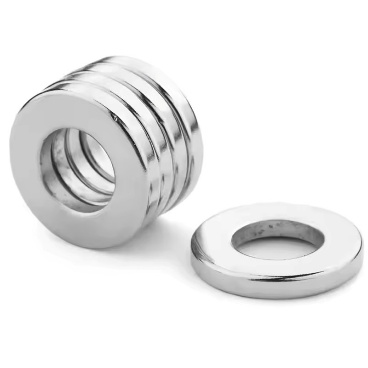
It’s easy to look at the N52 spec sheet and assume the strongest available grade will automatically save space or improve performance. In reality, that extra energy product comes with a fragile side. N52 blocks and discs tend to chip or crack more readily during assembly, and their maximum operating temperature often sits below what many motors, sensors, or industrial fixtures actually reach. Once the magnet heats up past its working point, you can lose a noticeable chunk of the field strength, sometimes permanently.
Cost is another quiet dealbreaker. N52 carries a price premium that rarely shows up in early BOM estimates, especially once you request custom shapes, tight tolerances, or corrosion-resistant coatings. Because the grade is harder to source in odd geometries, procurement can turn into a waiting game. Swapping to an N42 or N45 often keeps the magnetic flux within a few percent while cutting lead times and unit cost enough to matter at scale.
There’s also a practical limit to how much flux you can actually use. A stronger magnet may create excessive pull forces that make manual assembly unsafe or require redesigning housings to prevent cracking. In compact electronic devices, stray fields from N52 can bleed into adjacent circuits and cause more trouble than a slightly lower grade would. When you add temperature drift, brittleness, and procurement friction together, the “best” magnet on paper often stops looking smart on the production floor.
Plating Decisions That Outlast the Honeymoon Phase
Many plating choices look flawless at delivery—uniform gloss, clean adhesion tests, and no visible defects. The real test arrives months later, when edge blistering, micro-crack propagation, and base metal corrosion begin without warning. Too often these failures get blamed on material flaws, yet the root cause is usually short-term thinking during the decision phase.
To push coating life beyond the initial honeymoon, you have to return to the most basic variables. Substrate preparation is not simply degreasing and acid pickling; it demands coordinated control over surface roughness, residual stress, and microscopic contamination. Thickness cannot just meet the minimum specification—it must be derived from the actual service environment: temperature swings, chemical exposure, and mechanical wear. One frequently skipped detail is post-plating baking, which relieves hydrogen embrittlement risk but gets omitted on busy production lines to save time.
Durable plating decisions depend on honest feedback from destructive testing. Hours in a salt spray chamber are only a starting point; cyclic corrosion, thermal shock, and real-world coupon data matter far more. Periodically dissecting service parts to observe interface diffusion and porosity changes reveals failure modes that lab simulations never capture. When selecting a plating supplier, ask whether they are willing to share failure case studies from five years back—not just glossy initial samples.
Hot and Cold: The Real Enemies of Magnetic Strength
Most people imagine magnets as unshakable, but heat tells a different story. When a magnet gets hot enough, the neatly aligned domains inside start vibrating wildly, losing their coordinated orientation. This isn't a gradual fade either—there's a specific threshold called the Curie point where the material abruptly gives up its magnetic personality. For iron, that happens around 770°C, after which the once-strong pull vanishes into a stubborn paramagnetic state.
Cold is often seen as a friend to magnetism, and to a point that's true. Lower temperatures reduce atomic jiggling, letting domains lock into place more firmly, so a magnet actually gets slightly stronger when chilled. But drop the temperature too far, toward absolute zero, and things get strange. Some materials enter a state where magnetic moments freeze in disordered patterns, weakening the net field rather than boosting it. The relationship isn't linear, and surprising reversals can occur.
Engineers designing motors, sensors, or MRI machines must respect this thermal sensitivity. A permanent magnet in a hot engine bay or a cryogenic environment can behave very differently from its room-temperature spec sheet. Practical solutions include using alloys with higher Curie temperatures, adding cooling systems, or accepting reduced performance at extremes. The lesson is simple: if you rely on a magnetic field, keep an eye on the thermometer.
How Geometry Changes the Game for Holding Power
Most people think hold comes down to material or surface texture, but geometry quietly does the heavy lifting. A simple shift in edge radius or wall draft can turn a slippery, hard-to-grip part into something that locks into your hand without adding a single gram of rubber. The way a surface curves toward your palm, the angle of a lip, the depth of a groove — these are the invisible details that decide whether you're fighting the object or it's working with you.
Take a cylindrical handle versus a faceted one. The cylinder gives you a smooth, continuous contact patch, but it relies almost entirely on friction. The faceted version, even with the same diameter, creates discrete pressure points and micro-ledges that your fingers can hook onto. Suddenly, holding power isn't about squeezing harder; it's about the shape doing the job for you.
What's really interesting is how small changes cascade. A taper of just a couple degrees can make a pull direction feel natural, while a slight undercut can trap your thumb in a way that feels almost magnetic. Geometry doesn't just change grip strength — it changes grip confidence. And in the real world, confidence is what keeps things from getting dropped.
Custom vs. Off-the-Shelf: When Standard Parts Cost More
Off-the-shelf parts look appealing because the price tag is low and delivery is quick. But that price doesn’t include the work needed to make a generic part fit your design. You might drill new holes, cut down a flange, or stack spacers where none should be. Each added step consumes labor and introduces another potential failure point. Before long, the “cheap” standard component has cost more in time and extra hardware than a custom-made piece would have.
Then there’s the long-term behavior. A standard part that is close but not ideal may wear unevenly, vibrate, or transfer stress to surrounding components. That translates into more frequent replacements, extra downtime, and the need to keep spares on hand. A custom part built for the actual load, material, and mounting conditions often runs significantly longer between service intervals, offsetting the higher initial quote.
Custom isn’t automatically the right choice. For simple brackets, fasteners, or low-stress positions, off-the-shelf parts usually make sense. The balance shifts when standard parts force compromises in alignment, durability, or serviceability. Once you’re modifying a catalog item more than slightly—or dealing with tight tolerances, unusual geometry, or a critical failure point—it’s worth getting a custom quote. Compare total cost over the equipment’s life, not just the unit price on the order, and the decision often flips.
FAQ
Picking between them usually comes down to heat and budget. Neodymium packs a much stronger pull in a smaller body, but ceramic handles moisture and higher temperatures without adding a coating, and it costs less when you need a lot of magnets.
That number is measured under ideal conditions—direct contact with a flat, clean steel surface and a straight pull. In practice, any air gap, paint, or sliding force cuts it down fast, so treat it as a best-case starting point rather than a guarantee.
Yes, and the threshold depends on the material. Neodymium starts losing strength around 80°C unless it's rated for high heat, while samarium cobalt holds up well past 300°C. If your application gets warm, that should drive your material choice more than pull force.
Neodymium rusts quickly when exposed to moisture, so yes—a nickel, epoxy, or rubber coating is worth it outdoors. Ceramic and most samarium cobalt magnets don't need that extra layer, which makes them simpler to use in wet environments.
A disc or pot magnet with a countersunk hole is usually the most practical, since you can screw it in and control the position. Bar magnets work better for latching or aligning two surfaces, while thin sheets are only useful for lightweight, flexible holds.
Modern phones are generally fine around most consumer magnets, but pacemakers and other implanted devices need serious distance—often at least six inches. If there's any chance someone with a medical implant will be close to the magnet, choose a weaker option or add a clear warning.
Adhesive is convenient for smooth, non-porous surfaces and lighter loads, but it fails in heat or on textured walls. Countersunk holes take a little more work to install, yet they give you a mechanical connection that won't peel off over time.
Most of it comes down to the grade of material and the coating. A high-grade neodymium magnet costs more than a low-grade one, and durable finishes like epoxy or rubber add to the price. You're also paying for consistency—cheaper magnets often have wider tolerance ranges in strength and dimensions.
Conclusion
It’s easy to get caught up in advertised pull force numbers or assume that N52 is the obvious top choice, but those specs rarely tell the full story. Pull force tests happen under ideal lab conditions—perfectly flat, thick steel and clean contact—so real-world grip can drop sharply with rust, paint, or slight air gaps. N52 magnets are strong, but they’re also brittle and often unnecessary for everyday holding tasks; a lower grade like N42 or N35 can deliver the same practical result with better toughness and lower cost. Plating choice matters long after the initial shine wears off. A nickel coating looks great indoors but struggles outdoors, while epoxy or rubberized coatings survive humidity, salt, and rough handling far better.
Temperature is another factor that quietly kills magnetic strength. Most neodymium magnets lose performance above 80°C, and repeated heating or freezing cycles can permanently weaken them. Geometry changes the game too—two magnets with the same grade and size can behave completely differently if one is a flat disc and the other is a cup or pot magnet with a steel housing. That housing focuses the magnetic field, boosting holding power on thin metal. Finally, don’t assume off-the-shelf parts are always cheaper. Standard shapes can force you to add brackets, adhesives, or extra assembly steps. A custom shape may cost more per unit but save time and failure risk in the long run. Choosing well means weighing all these factors rather than chasing a single impressive spec.
Contact Us
Contact Person: Kelvin Lo
Email: [email protected]
Tel/WhatsApp: 0769-88561131
Website: https://dawamagnetic.com/