
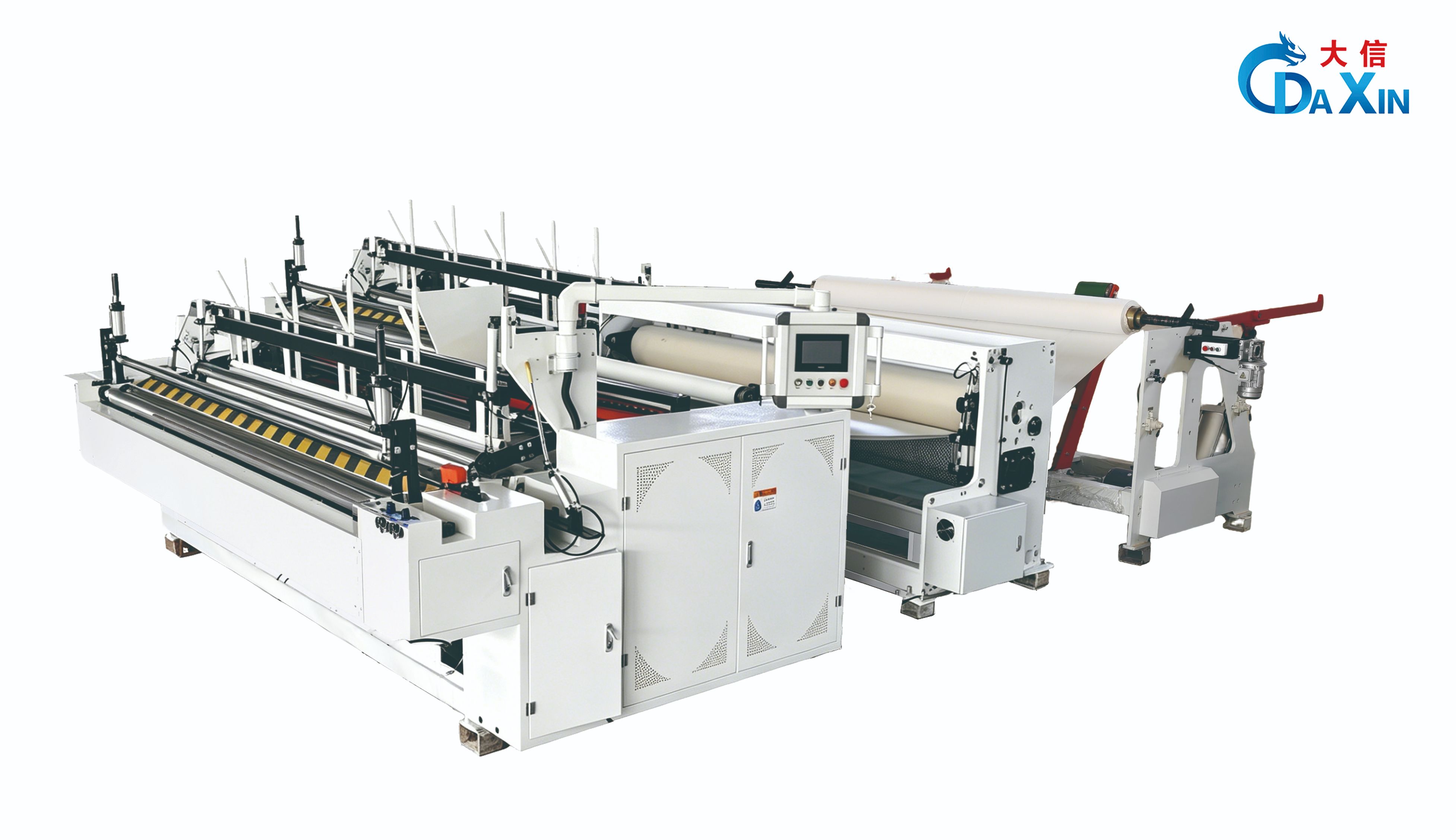
Tissue Rewinding Machine Vendor: Your Comprehensive Guide to Finding the Best Partner
2026-11-02
Choosing a tissue rewinding machine vendor can make or break your production line. It’s not just about price or lead time—it’s about finding a partner who thinks ahead with you, not just sells you a machine. With dozens of manufacturers claiming the same thing, the real challenge is knowing what separates a dependable vendor from a costly gamble. This guide gives you a no-fluff framework for that decision. Along the way, you’ll see why companies like DAXIN have earned a reputation worth your attention—and what to ask any supplier before you commit.
Start With Their Oldest Running Rewinder, Not Their Newest Demo
The newest demo can dazzle with fresh paint and slick motion, but it hasn't earned its keep yet. What you really want to see is a rewinder that's been handling real production for a decade or more, with worn labels and scuffed panels that tell the truth about its build quality. That's the machine that has survived operator mistakes, rushed shift changes, and the occasional roll of questionable material.
A brand-new unit on the showroom floor may run flawlessly for its thirty-minute spotlight, but that tells you little about how the bearings will hold up after 20,000 hours or whether the tension control drifts once the electronics age. The oldest running rewinder on a customer's floor has already answered those questions, day after day, without a salesperson standing nearby.
So when you're evaluating a manufacturer, skip the polished demo and ask for the address of their first installation still in service. Watch it run, listen to its rhythm, and ask the operator what they'd change. That's the kind of evidence no glossy brochure can fake.
Spare Parts Availability Tells You More Than Any Warranty
A warranty might promise five years of coverage, but that promise only matters if the company can actually send you a replacement part when something fails. Spare parts availability is a more honest signal. It shows the manufacturer has invested in inventory, distribution, and model continuity long after the sale.
Many brands treat after-sales support as a cost center. They push new units and quietly let older models become orphans. When you see a brand with shelves stocked for machines that are five or seven years old, you're looking at a company that respects the full product lifecycle. That kind of operational discipline doesn't happen by accident.
So before you get impressed by an extended warranty, ask one simple question: how quickly can a spare part reach your door? That answer often predicts your real downtime. A glossy warranty card can't fix a broken machine; a courier with the right component can.
Why a Trial Run on Your Own Tissue Beats Any Specification Sheet
A specification sheet can list every ingredient, tensile strength, or absorption rate under laboratory conditions, but it cannot account for the unique chemistry of your own tissue. Skin pH, natural oils, micro-abrasions, even the ambient humidity in your bathroom all shift how a product actually behaves once it touches you. Running a small trial on a discreet patch of your own skin gives you data no manufacturer can print, because your body is the only test environment that truly matters.
There is also the matter of sensation, which no numerical spec can capture. A product might meet every stated claim yet feel too tacky, too slick, or too aggressive once it interacts with your tissue's texture and temperature. By doing a short trial run before committing to full use, you learn how it settles after ten minutes, how it reacts with your usual moisturizer, and whether any redness or irritation appears hours later. That kind of feedback turns a purchase decision from a gamble into a quiet, confident choice.
The Vendor Visit That Saves You From a Year of Headaches
A quick tour of a vendor’s facility can reveal what no spec sheet ever will. Walking the floor while a real order moves through assembly lets you spot bottlenecks, sloppy handoffs, and the kind of shortcuts that only show up under time pressure. You’ll notice whether the place runs on chaos or quiet competence within the first ten minutes.
Beyond the tour, sitting down with the people who actually do the work often uncovers details your sales contact glosses over. Ask how they handle rush changes, what happened on their last tricky custom job, or which materials they would never recommend. The answers tend to be blunt and useful, and they can save you from discovering a mismatch after you’ve already paid the deposit.
If you can, time the visit so you arrive mid-shift on a normal working day, not during a scheduled open house. A vendor that resists your request or only offers a scripted walkthrough is giving you a clear signal before you commit.
Hidden Costs in Rewinder Deals Usually Hide in Plain Sight
A rewinder's price tag rarely tells the whole story, yet the clues are printed right on the spec sheet. Drive-motor efficiency ratings, the expected service life of rider roll bearings, and whether the control software requires an annual license fee—these line items sit in the quote's fine print. Most buyers skim past them, then act surprised when the first year's operating costs balloon by twenty percent.
Service contracts are another hiding spot in full view. The warranty clause might exclude all wear parts, and remote diagnostics could be billed per incident rather than bundled into a support plan. These terms aren't buried in legal jargon; they're often laid out in a simple appendix. The problem is that nobody reads them until the machine stops mid-roll and the invoice for a technician's phone call arrives.
Even the operator interface has cost implications that stare you in the face during a demo. Poorly grouped buttons or a touchscreen with non-intuitive menus lead to slower job changeovers and higher scrap rates. The supplier's training manual diagrams every single step, so the inefficiency is documented before you sign. A half-day of simulated production runs would expose it, but most evaluations never go beyond watching a video of the rewinder running perfect material.
A Vendor Worth Keeping Will Push Back on Your Wish List
A vendor who simply nods along with your wish list isn’t doing you any favors. The best partners will tell you when a requested feature is redundant, over-engineered, or quietly working against your actual goals. That pushback might feel inconvenient in the moment, but it’s often the clearest sign you’re dealing with someone who understands the problem from the inside out — not just someone chasing an invoice.
Think about it this way: if every supplier agrees to every custom tweak without question, either your requirements are suspiciously generic or nobody is really paying attention. Good vendors have seen enough failed implementations to know which “must-haves” become shelfware. They’ll challenge assumptions, offer cheaper alternatives, or point out that a simple configuration change already covers what you’re asking to build from scratch.
That tension is healthy. A vendor worth keeping treats your wish list as the start of a conversation, not a checkout cart. When they push back, they’re betting the relationship on being right — and that’s a far stronger signal of long-term value than a yes-man with a polished demo.
FAQ
Look beyond the spec sheet. Ask for references from mills running similar grades and production speeds. A vendor worth considering will share real performance data, not just brochure numbers, and will be honest about limitations like tension control on lightweight sheets.
It's often the difference between a smooth ramp-up and weeks of downtime. You want a vendor with local service engineers, a stocked spare parts inventory, and a track record of responding within 24 hours. Don't settle for vague promises—ask for the average response time in your region.
Yes, automated web guiding and closed-loop tension control make a big difference, especially with low-basis-weight tissue. Some vendors offer edge trim removal systems or splice detection that stops the reel before defects multiply. In practice, these features can cut waste by several percentage points.
Most established vendors will customize roll width, core size, and winding profiles. But be clear about your current and future grades. If you produce both toilet paper and kitchen towels, request a vendor that has experience with dual-purpose lines rather than a one-size-fits-all approach.
Typically 4 to 8 months, depending on customization and vendor backlog. If someone promises delivery in half that time, treat it as a red flag unless they have pre-built modules. Factor in installation, training, and fine-tuning, which can add another 2-4 weeks before full production.
Break down each quote by machine speed, drive system, safety features, and included support. A cheaper vendor might exclude necessary items like a tension controller or safety guards. Create a checklist of must-haves and ask each vendor to confirm line by line. This makes gaps obvious.
Daily checks on blade sharpness, air pressure, and sensor cleanliness prevent most issues. Plan for monthly lubrication of bearings and quarterly calibration of tension sensors. Many vendors offer a maintenance contract that includes remote diagnostics—worth considering if you run multiple shifts.
Usually yes, because they can modify designs when your product changes. A vendor that only assembles third-party parts may struggle with upgrades or unusual technical challenges. Ask about their engineering team size and recent custom projects.
Conclusion
When choosing a tissue rewinding machine vendor, most buyers fixate on shiny demos and spec sheets, but the real evidence often hides in plain sight. Start by asking where their oldest running rewinder is installed—not the newest floor model. A machine that has survived years of daily production, with operators still willing to show it off, tells you more about build quality than any brochure. Pair that with a hard look at spare parts availability: if the vendor keeps critical components on the shelf locally, or can ship within days instead of weeks, that promise means far more than a five-year warranty buried in fine print. And never skip a trial run using your own tissue, your own core sizes, and your own operators. Specification sheets list maximum speeds and theoretical tolerances, but they cannot reveal how the machine handles your particular paper stretch, dust levels, or tension quirks. A vendor who hesitates to run your material is already telling you something.
A plant visit remains the cheapest insurance you will ever buy. Walking through the vendor's assembly floor, watching how they manage cable routing, bearing preload, and control panel labeling can save you from a year of troubleshooting. But do not mistake politeness for partnership. The best vendors push back on your wish list—questioning why you want a certain tension control scheme or why you think you need a larger diameter unwind. That friction is not arrogance; it is the sign of an engineer who has seen what actually fails in the field. Hidden costs also surface during these conversations: installation support, training days, freight terms, and the cost of wearing parts like slitters and rubber rollers often sit outside the quoted price. A trustworthy partner will volunteer that information before you sign, not after the first breakdown. Choose the vendor who treats your production floor as their own, not the one who simply agrees with everything you say.
Contact Us
Contact Person: Sam Xie
Email: [email protected]
Tel/WhatsApp: 86-18938538530
Website: https://www.daxin321.com/