

Top 10 Hollow Wall Winding Pipe Machines for Efficient Manufacturing
2026-11-16
In modern pipe production, choosing the right hollow wall winding machine can make or break your manufacturing efficiency. With so many models flooding the market, separating dependable workhorses from underperformers is a real challenge. That’s why we’ve curated a list of the top 10 hollow wall winding pipe machines built to streamline your workflow and reduce downtime. Among these solutions, COMRISE consistently stands out for its precision engineering and reliable output — exactly the kind of performance you’ll want to explore in detail as we break down each contender.
How Hollow Wall Winding Machines Redefine Production Efficiency
Most manufacturing floors still rely on segmented assembly steps that quietly eat away at uptime. A hollow wall winding machine changes that rhythm entirely. Instead of shifting a partially built wall from station to station, the machine rotates a mandrel while precisely laying reinforcement and concrete in a continuous spiral. That single, uninterrupted pass eliminates the usual stops for curing, joining, or hand finishing. Operators who once juggled multiple work cells now monitor one flowing cycle, watching output climb without the hidden delays that slipped into traditional lines.
True redefinition happens in the numbers that rarely make the brochure. Material waste drops sharply because the winding head applies exactly what the structural calculation demands—no excess overlap, no patchwork corrections. One factory reduced raw concrete loss by nearly a third within the first quarter after installation. Energy consumption follows a similar curve: a motorized winding head drawing steady, predictable current versus the spikes of batch mixers and vibrating tables. And because the hollow core forms as the machine moves, less mass needs to be heated or cooled in curing chambers, trimming energy cost long before the wall reaches the yard.
Efficiency also shows up where it’s hardest to measure—in versatility without penalty. Switching from a straight wall to an arched or tapered profile used to demand new molds and half a day of downtime. The winding machine reads a digital file, adjusts the mandrel angle and layer placement on the fly, and keeps running. That digital backbone means production scheduling bends around project needs rather than the other way around. A batch of ten distinct panels can roll off with the same smooth cadence as a long run of identical units, redefining what ‘efficient’ means when every project asks for something slightly different.
Material Compatibility That Sets Top-Tier Machines Apart
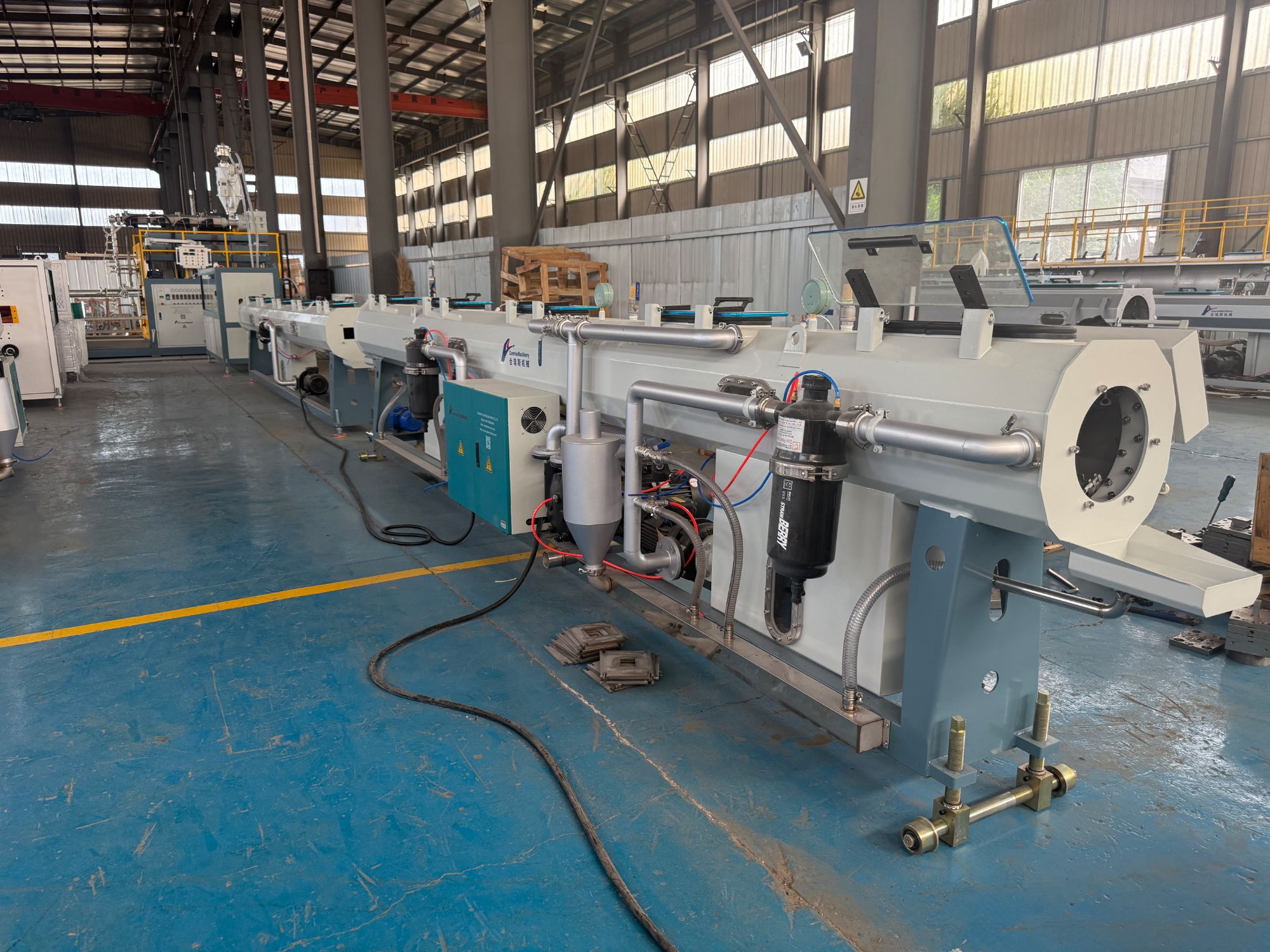
In the realm of high-performance machinery, the difference between reliability and recurring failure often comes down to one overlooked factor: how materials interact under stress. Top-tier systems aren’t built by simply picking the strongest alloys or the most chemical-resistant polymers; they emerge from deep compatibility mapping, where coefficient of thermal expansion, galvanic potential, and contact fatigue are studied in tandem. When every seal, bearing surface, and fastener is deliberately matched to its counterpart, you avoid micro-fretting in titanium interfaces or crevice corrosion in stainless assemblies that degrade lesser machines long before their rated lifespan.
What truly elevates advanced equipment is the anticipation of mixed-material demands rather than mere tolerance of them. Instead of relying on generic gasket materials or off-the-shelf coatings, manufacturers who lead this space develop surface treatments and interfacial layers that neutralize dielectric differences or dampen vibrational wear across material boundaries. This becomes critical in applications where a carbon-fiber housing meets a magnesium gearbox, or where pressurized fluid systems cycle between cryogenic and high-heat states without triggering stress fractures at the joint. The result is a quiet durability that shows no drama, just consistent performance over millions of cycles.
Beyond static compatibility, elite machines handle transient conditions that turn minor mismatches into catastrophic failures elsewhere. Think of a sudden moisture ingress in an electronics bay, or a solvent spill near a polymer manifold—top engineering ensures that materials either reject rapid degradation or sacrificially shield vital components without swelling, cracking, or releasing corrosive byproducts. This level of detail doesn’t appear on standard specification sheets, but it’s precisely what separates machines that are merely assembled from those truly engineered to endure.
Precision Winding Without the Usual Vibration Headaches
Achieving flawless precision in coil winding often means battling persistent vibration that can throw off tension, alignment, and ultimately product quality. Instead of layering on dampening afterthoughts, the smarter approach is to engineer the motion system to actively cancel oscillation at its source. By pairing high-resolution feedback with finely tuned servo loops, the winding spindle and traverse axis move as one integrated unit, leaving no room for the micro-jitter that normally sneaks into the process.
The real headache with vibration isn't just the noise—it's the cumulative effect on layer uniformity and wire insulation. Subtle chatter that goes unnoticed during short runs becomes glaringly obvious over thousands of cycles, causing scrap rates to climb without a clear culprit. Shifting to a design that uses real-time adaptive filtering transforms the machine from a passive holder of wire into an active participant in precision. The drive parameters adjust on the fly, compensating for changes in spool mass and speed without manual intervention.
What looks like a minor structural upgrade often delivers the biggest operational relief. Ditching oversized, loosely coupled mechanical linkages in favor of direct-drive architecture eliminates the play and resonance paths that amplify vibration. The result is a winding cell that runs faster, holds tighter tolerances, and does it so quietly that operators notice the silence before they check the spec sheet. That's the mark of a system built to make precision the effortless standard, not a constant struggle.
Space-Saving Designs That Don’t Compromise Output
Cramped workspaces usually force a choice between floor space and capability, but the latest wave of compact machinery erases that trade-off. By nesting the core assembly vertically and using shared drive systems, manufacturers have managed to shrink footprints without dialing back torque or speed. A lathe that once ate up eighteen square feet now fits against a wall yet still holds tenths on stainless, and a benchtop press brake bends heavy plate like its full-sized cousin—with the same stroke depth and repeatability.
The trick lies in how heat and stress are managed. Instead of bulky external cooling loops, built-in microchannel jackets in the spindle housings pull heat straight out of the bearings, keeping thermal drift low even during long runs. Frame rigidity gets a boost from cast mineral composite sections that damp vibration better than traditional iron, so you get surface finishes that don't scream “small machine.” It's a shift from simply downsizing to rethinking load paths altogether.
Controls have also slimmed down without becoming cryptic. Onboard interfaces now pack conversational programming and real-time tool load graphs onto a single tablet-sized screen that swings out of the way when not needed. That means less ancillary cabinetry cluttering the floor and faster setup changes, all while monitoring things like power draw spikes to prevent tool breakage before it happens. The output stays intact—often better because the operator isn’t fighting the machine’s real estate for clearance.
Operator-Friendly Controls: Fewer Errors, Faster Training
When the interface feels like a natural extension of the task, the learning curve flattens almost immediately. Instead of wrestling with nested menus and cryptic icons, operators glide through workflows with clear, uncluttered touchpoints. The real payoff comes in those first few hours on the job—when muscle memory hasn't formed yet, but the layout already makes sense. Error rates drop not because people are being more careful, but because the right action is simply the easiest one to take. It's the difference between memorizing a procedure and just knowing what to do next.
Training sessions become remarkably short when you don't have to unlearn bad design habits first. We've seen crews go from fumbling through multi-day onboarding to reaching confidence after a single morning walkthrough. The controls themselves reinforce correct usage: color-coded bands that only light up in sequence, tactile detents that confirm a setting before it's committed, and on-screen feedback that mirrors real-world cause and effect. These aren't gimmicks; they're guardrails that let people build competence through use rather than through correction.
Speed follows naturally once the anxiety of making mistakes fades. Operators stop second-guessing knob positions or repeatedly checking a screen when they shouldn't need to. The machine becomes transparent—a tool rather than an obstacle. What used to take a week of supervised practice now takes a shift, and the errors that still occur are caught early because the system doesn't silently accept ambiguous inputs. Long term, this changes the culture around equipment: instead of assigning your most experienced person to babysit a tricky interface, you can rotate crew members freely and maintain consistent output.
Real-World Maintenance Insights Most Brochures Skip
Real-World Maintenance Insights Most Brochures SkipFAQ
It's a specialized piece of extrusion equipment that produces pipes with a corrugated or ribbed structure, creating a rigid yet lightweight profile. These machines are widely used for manufacturing drainage and sewage pipes, cable protection conduits, and ventilation ducting, particularly where high ring stiffness and material savings are crucial.
The process forms a hollow spirally wound profile directly from polyolefin material, which uses significantly less raw polymer than solid wall pipes while maintaining impressive structural integrity. This reduction in material consumption directly lowers production costs. Additionally, in-line socket formation and perforation options eliminate secondary operations, further trimming labor and handling expenses.
Look for a robust modular winding cage design that supports quick size changes, a precise melt pump and extruder combination for consistent material output, and an intelligent cooling air ring system to lock in the profile. Automated cutting and coiling units, along with user-friendly PLC controls with recipe storage, turn a decent machine into a truly efficient production cell.
Yes, most modern machines are modular and can be adapted with interchangeable winding cassettes and mandrels to manufacture a wide range of diameters, from small 50 mm conduits up to large 2500 mm manholes. The flexibility extends to adjusting the rib height and pitch, allowing you to manufacture both single-wall corrugated and double-wall structured profiles on the same base machine with relatively quick changeovers.
Daily checks should focus on cleaning the melt filter, verifying coolant lines are free of blockages, and lubricating chain drives and guide rails on the winding unit. Weekly, inspect the corrugator mold blocks for wear and ensure heating bands are functioning evenly. A quarterly deep-clean of the cooling air channels and a thorough calibration of the cutting unit's saw blade will prevent unexpected downtime and maintain profile accuracy.
Cooling is the bottleneck in most winding lines. Machines using multi-stage vacuum spray cooling tanks or sophisticated internal mandrel cooling can set the molten profile rapidly and uniformly. This not only prevents warping and internal stress but allows the line to run at higher speeds without surface defects. The result is a consistent, dimensionally stable pipe coming off the line far quicker than with basic water baths.
Primarily high-density polyethylene (HDPE) and polypropylene (PP) are used, often with mineral fillers or recycled content in the inner layer to reduce costs. The machine's screw design, barrel temperatures, and winding speed must be adjusted to suit the material's melt flow index and thermal stability. Running a highly filled regrind material, for example, requires a wear-resistant screw and barrel, and a dedicated venting system to remove volatiles, which a standard single-screw extruder might not handle well.
Conclusion
Hollow wall winding pipe machines have quietly reshaped what efficiency actually means on the factory floor. Instead of just chasing higher RPMs, the best designs attack waste from multiple angles—material changeovers that used to eat up half a shift now happen in minutes because the extruder and corrugator speak the same language, accepting everything from brittle recycled PP to high-stiffness HDPE without constant screw swapping. That versatility bleeds directly into uptime. Pair it with a winding unit that ditches the old oscillating carriage for a direct-drive mandrel with active dampening, and the vibration that historically forced operators to run at 70% speed simply disappears. The result is a line that maintains consistent wall thickness at true nameplate capacity, layer after layer, without the micro-cracks that come from resonant chatter.
What rarely makes the brochure is how these machines earn their keep between shifts. The top-tier systems now pack all that capability into a footprint that can be walked around, not just past—compact enough to rethink an entire plant layout, yet stiff enough to hold tolerance without a special foundation. Maintenance, the kind that determines whether a machine ages gracefully or turns into a mechanical nightmare, has shifted from calendar-based guesswork to actually watching screw wear and bearing health in real time through onboard sensors that alert you before a minor misalignment becomes a weekend rebuild. The control interface takes the same practical approach: new hires get productive by lunch, not next month, because the system visualizes the winding recipe rather than exposing raw parameters. It’s a combination of spatial economy, predictive upkeep, and user logic that turns a machine into a reliable production partner, not a temperamental project.
Contact Us
Contact Person: LISA LEE
Email: [email protected]
Tel/WhatsApp: +86 13780696467
Website: https://www.qdpipemachine.com