

Top 10 Press Brake Manufacturers for Precision Metal Bending
2026-08-23
Finding a press brake manufacturer that delivers true precision in metal bending isn't a matter of leafing through a generic catalog. The difference between clean, repeatable bends and costly rework often comes down to who built the machine. In this guide, we cut through the noise and rank the top 10 press brake manufacturers worldwide—each evaluated for build quality, control accuracy, and after-sales support. Among the names worth watching is JIAN MENG, a brand that has quietly earned respect for robust frames and dependable bending performance in demanding job shops. Whether you are upgrading a fabrication line or buying your first CNC brake, the following list will help you shortlist suppliers who actually understand what precision means on the shop floor.
Precision metal bending owes its edge to these equipment builders
Precision metal bending isn't just about raw force—it's a dialogue between material behavior and machine response. The builders who get this right design press brakes with closed-loop control systems that measure ram position and bend angle in real time, adjusting for springback before the part leaves the die. That level of refinement is why tight-tolerance aerospace brackets and medical device enclosures can be formed consistently, batch after batch.
A closer look at the equipment itself reveals why these builders have an outsized influence. They integrate crowning systems that compensate for deflection under load, so a 4-meter bend doesn't bow in the middle. They pair hardened tooling with quick-change clamping so setups shift from a shallow 30-degree hem to a deep offset without losing repeatability. When a shop invests in this class of machine, the payback shows up as fewer scrapped blanks and less hand-filing at assembly.
What separates the best from the rest is how they treat the operator's role. Rather than burying skill under menus, they build controls that respond to a tap and show the bend sequence in plain graphics. Offline programming lets a fabricator simulate the entire folding order before touching metal, catching collisions and over-travel early. That combination of mechanical stiffness and intuitive software is why precision bending has moved from an art guarded by a few veterans to a repeatable process any trained technician can manage.
A shortlist of press brake makers that prioritize angular consistency
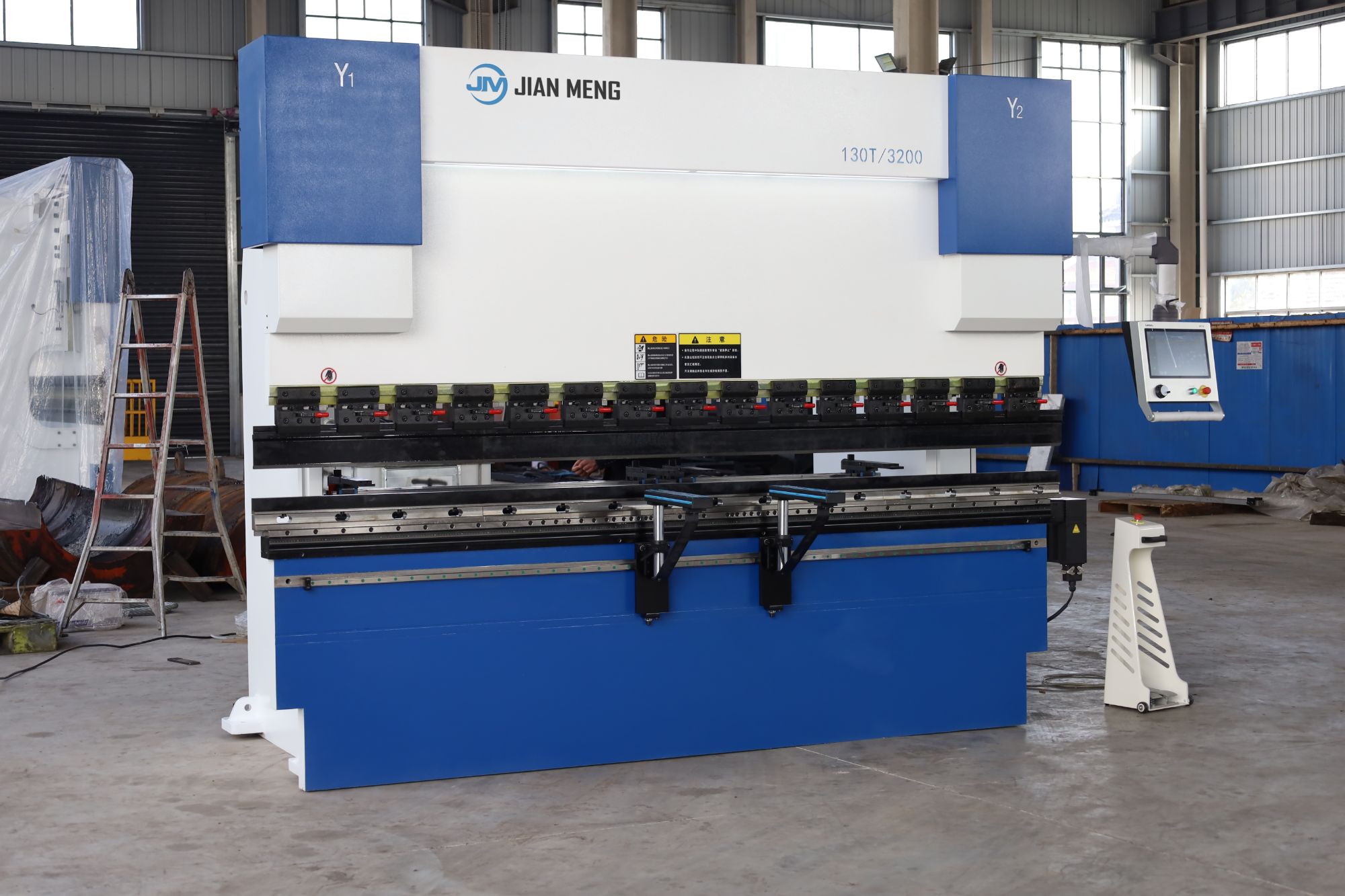
Among the press brake builders that consistently place bend-angle precision at the top of their design brief, Trumpf, Amada, and Bystronic stand out. Each has developed closed-loop angle measurement and real-time correction systems that reduce reliance on operator guesswork. Trumpf’s ACB angle sensor, for instance, measures the bend during the stroke and adjusts the ram position before springback can introduce error. Amada’s Bi-J and HD series pair servo drives with pressure sensors that map material variability, while Bystronic’s LAMS system uses laser scanning to verify the angle on the fly. These aren’t just convenience features; they turn angular drift into a handled variable rather than a tolerated fault.
A tier below the usual suspects, LVD and Salvagnini also deserve mention for shops that value repeatable angles over raw speed. LVD’s Easy-Form Laser system compensates for thickness and grain direction changes without a test bend, which matters when you run mixed batches of sheet. Salvagnini’s B3 series takes a different route, combining adaptive crowning with a high-resolution encoder on the ram, so the angle holds even as the frame deflects under load. For smaller budgets, Accurpress and Durma have improved their angle correction packages substantially in recent years, though they still lean more on the operator to confirm settings. The common thread across all of these builders is a commitment to measuring what happens at the bend, not just what the controller commanded.
Inside the engineering cultures behind top-tier sheet forming machinery
Walk into any plant running top-tier sheet forming machinery and you can feel the engineering culture before you read a spec sheet. Some teams have made peace with material variation by measuring every coil's thickness and tuning the roll gap in real time. Others trust a well-worn die set and a press operator who can hear when the blank isn't seated right. The machinery inherits those habits, not just the horsepower.
Prototyping reveals another divide. One builder subjects a new frame design to a week of strain-gauge testing, then invites the machinists to argue with the simulation engineers until the predicted springback stops lying. Another keeps a library of old tooling offsets, each one annotated with a date, a material batch, and a correction that no finite element model ever caught. On paper both machines hit the same tolerance; in practice they teach different lessons to the people running them.
Failure handling separates the durable names from the rest. A cracked ram or a weld that opened up during overload testing doesn't disappear into a report. It gets sectioned, labeled, and left on a bench for the next shift to study. Junior engineers are expected to explain the fracture before suggesting a change. That willingness to stare at broken parts, rather than hide them, keeps certain manufacturers holding form for thousands of strokes while competitors drift after a few hundred.
How leading manufacturers solve the tolerance challenges of modern fabrication
Leading manufacturers tackle tolerance challenges by embedding real-time process control into every stage of fabrication. Instead of relying on post-process inspection alone, they use in-machine probing and laser interferometry to track thermal drift and tool wear as they happen. Closed-loop systems then adjust cutting parameters or offset tool paths on the fly, keeping deviations within a few microns even during long production runs.
Another approach is predictive compensation. Advanced shops run finite element simulations to model how residual stresses will warp a part after machining, then deliberately offset the tool path in the opposite direction. This shifts the problem from correcting errors to preventing them, which is far more efficient for high-mix, low-volume work where a single scrapped part can erase the margin.
Finally, leading fabricators put tolerance ownership back into design. Cross-functional teams perform statistical tolerance analysis before any metal is cut, assigning wider allowances where function allows and tightening only critical interfaces. This reduces unnecessary precision demands, lowers cost, and lets the shop focus its best measurement and compensation resources on the few features that truly drive performance.
What separates dependable press brake brands from the rest of the market
Dependable press brake brands earn that label through repeatability that holds up after the machine warms up and the shop floor gets busy, not just during a demo. They tend to publish real forming data—tonnage per meter, deflection limits, backgauge repeatability under load—instead of hiding behind vague "high precision" claims. Their frames, crowning systems, and hydraulics are designed so a 3 mm bend in the morning measures the same at 4 p.m. without constant shimming or manual compensation.
Another separator is how the builder handles parts, service, and software over a decade. You can spot them by regional parts depots, response times measured in hours rather than weeks, and control interfaces that don't require an engineer to adjust a bend sequence. They also tend to have a healthy used-machine market, because shops still want those models ten years later; that residual demand says more about reliability than any brochure.
The global names shaping the future of high-accuracy metal bending
Across Europe and North America, a handful of press brake builders have quietly turned high-accuracy metal bending into a contest of microns and milliseconds. Their names rarely appear in consumer headlines, but inside fabrication shops they carry the weight of a trusted tool brand. What sets these players apart is not just the steel in their frames, but how they measure, compensate, and self-correct during every stroke.
Japanese and German engineering traditions still anchor the top tier, yet the real momentum now comes from tighter integration of crowning systems, laser-based angle feedback, and offline programming that predicts springback before the first bend. The companies leading this shift treat repeatability as a design philosophy rather than a marketing promise. In their newest machines, thermal drift, deflection, and even oil viscosity become variables the control system actively manages.
For manufacturers chasing ever-narrower tolerances in sectors like aerospace, medical devices, and EV battery enclosures, these global names are more than suppliers; they shape what is considered possible. The future of high-accuracy bending will be written less by raw tonnage and more by whoever can make a perfect bend feel routine on a Monday morning.
FAQ
The usual suspects include Trumpf, Amada, Bystronic, LVD, Durma, Ermaksan, Accurpress, Cincinnati, Yawei, and Haco. It is not a fixed list, but these builders repeatedly show up because they offer reliable CNC controls, strong frames, and good crowning systems.
Precision comes down to repeatability under load. You need a stiff frame that resists deflection, a CNC backgauge that stops the sheet in the same spot every cycle, and a crowning system that compensates for ram and table flex. Without those, even a well-known brand will struggle on tight-tolerance parts.
European builders, particularly from Germany, Switzerland, and Belgium, tend to push high-end automation, complex control software, and very tight angle correction. Asian builders like Yawei and Durma often focus on value, with solid mechanical design but fewer premium options. Both can hit precise bends, but the European machines usually offer more refined support for difficult materials and lights-out operation.
Yes, but it requires knowing where to compromise. Brands like Ermaksan and Accurpress make lighter machines that still hold good tolerances for common gauges. You might give up some speed, tooling memory, or automatic angle correction, but for prototype and small-batch work the results can be surprisingly close to the high-end machines.
Because the ram and bed deflect under full tonnage, and that creates a bow in the middle of the bend. A crowning system applies counter-pressure to keep the tooling straight, so the angle stays consistent across the full length. Without it, long parts tend to come out with a slight canoe shape, which is a clear sign of poor precision.
Not directly, but it removes variables. When blanks are cut with tight tolerances and consistent grain direction, the press brake has less variation to fight. Many shops report better bend accuracy simply because the laser-cut parts are more uniform than those from older punching or shearing processes.
Bring a challenging part, preferably long and thin, and run it at least five times. Measure the angle at several points, then repeat the test after an hour of continuous cycling. The machine that holds angle without constant correction is the one worth the investment. Also watch how fast the controller recalculates bend allowance when material thickness changes.
Conclusion
The ranks of elite press brake manufacturers share a common thread: an almost obsessive focus on angular consistency, even when sheet thickness, grain direction, or material springback try to undermine repeatability. While many fabricators assume all CNC benders are alike, the builders that earn a place in a top-ten list distinguish themselves through the quiet details, oversized frames that resist deflection, ram guiding systems tuned to micron-level movement, and crowning mechanisms that adapt in real time to off-center loads. These machines don't just bend metal; they maintain a predictable relationship between the controller, the hydraulic or electric drive, and the tooling interface, so operators spend less time compensating and more time producing parts that hit tolerance on the first stroke.
Behind those capabilities sits a different kind of engineering culture. Leading press brake manufacturers treat tolerance challenges as design problems rather than operator problems. They invest in thermal compensation algorithms, closed-loop angle measurement, and adaptive forming strategies that reduce scrap when working with high-strength steels. What separates a dependable brand from the rest of the market isn't a flashy control panel or a long list of optional extras; it's the willingness to test frames under worst-case loads, to document deflection curves honestly, and to build safety and precision into the machine's bones rather than bolting them on as afterthoughts. Across Europe, North America, and Asia, the global names shaping high-accuracy bending are converging on the same realization: precision is not one feature but the sum of frame rigidity, drive response, sensor feedback, and software logic that has been refined through years of real shop-floor feedback.
Contact Us
Contact Person: Jeanie
Email: [email protected]
Tel/WhatsApp: +86 19805122954
Website: https://www.jianmeng.com