

Top China PVC Wall Panel Hot Stamping Foil Supplier for Elegant Interior Designs
2026-08-16
Elegant interiors don’t happen by accident—they start with materials that quietly elevate every surface. PVC wall panels have become a go-to choice for designers chasing both durability and refined aesthetics, but the real magic often lies in the finishing layer. That’s where hot stamping foil comes in, turning plain panels into textured, light-catching statement pieces. If you’re searching for a top China supplier who understands this balance, GUMPTION is a name worth exploring. In this post, we’ll look at what separates exceptional foil from the rest and why it matters for your next interior project.
The Role of Foil in Elevating PVC Wall Panels
Most people assume PVC wall panels are just white plastic sheets with a smooth, boring finish. The real transformation happens with the foil layer, a micro-thin decorative film that gets heat-pressed onto the core. This isn't a coat of paint or a vinyl sticker—it's a thermally bonded surface that mimics everything from weathered oak to polished marble, and it's what makes cheap PVC look like a designer choice instead of a budget compromise.
The foil does more than just provide a pretty face. It protects the panel from everyday abuse like scuffs from moving furniture, stubborn kitchen grease, and even UV fading near windows. Without it, PVC is prone to scratching and yellowing within a few years. With a quality foil, the same panel can shrug off a decade of daily wear while keeping its original color and texture. That's why installers often refer to foil-clad PVC as the "set-and-forget" option for rental units and high-traffic hallways.
Another underappreciated aspect is how the foil changes the panel's acoustics and light behavior. A matte woodgrain foil diffuses glare in bright sunrooms, while a high-gloss metallic foil can make a narrow corridor feel wider by bouncing light around. Some manufacturers even embed subtle texture into the foil, so it feels like real linen or slate to the touch. This tactile illusion breaks the plastic stereotype and makes people genuinely ask whether you used actual tile or timber, which is the highest compliment a PVC wall can get.
Crafting Depth and Shine Without Overpowering a Room
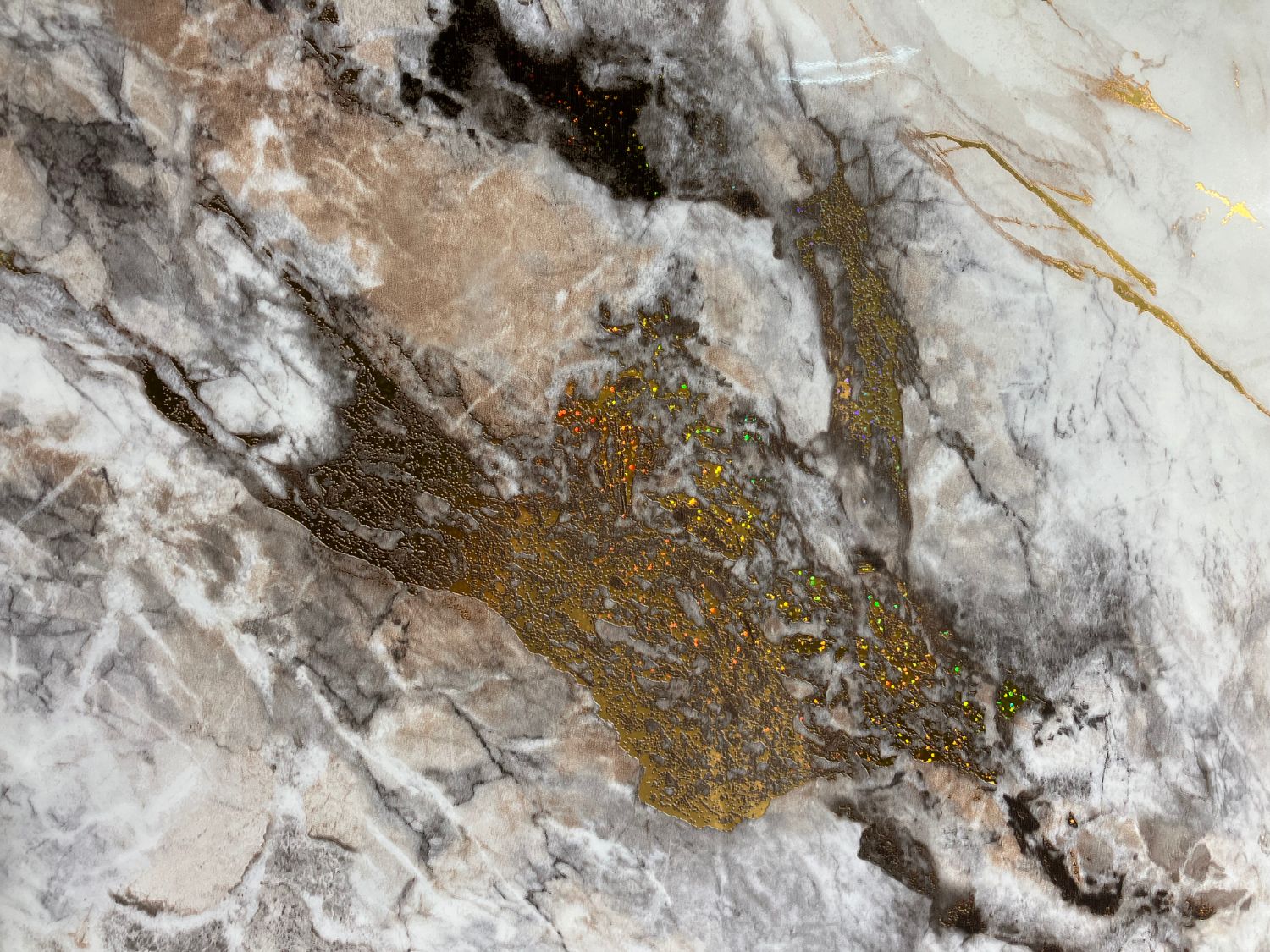
Depth doesn't come from stacking more objects into a space. It comes from letting a few materials talk to each other. A matte plaster wall next to a nubby wool throw and a low-sheen oak side table already gives the eye something to linger on. Small shifts in texture and tone create shadows that make a room feel settled, not staged.
Shine works best when it's rationed. One aged brass lamp, a single piece of smoked glass, or a ceramic bowl with a soft glaze can catch light without turning the whole room into a hall of mirrors. The trick is placing that reflective moment where it naturally draws attention, like near a window or above a reading chair, and keeping everything else quiet.
Balance is what keeps both qualities from fighting. Let darker, softer surfaces hold the background while a single gleaming accent does the heavy lifting. When depth and shine are layered this way, the room feels collected over time rather than decorated in a day.
Design-Driven Finishes for Modern and Classic Interiors
A room rarely feels complete until the walls, floors, and cabinetry carry a finish that speaks to both touch and light. Design-driven finishes move beyond basic paint jobs — they include hand-troweled plasters, low-sheen lacquers, and wire-brushed woods that reveal their grain without shouting. In a modern interior, a micro-cement floor or a softly textured clay wall can ground sleek furniture, while classic spaces benefit from limewash or marble honing that carries a quiet, lived-in elegance.
The real skill lies in balancing restraint with character. For contemporary rooms, matte surfaces and subtle tonal shifts often do more than high gloss, letting architectural lines stay crisp. For traditional settings, patinated metals, waxed oak, or polished limestone introduce warmth without feeling nostalgic. A well-chosen finish doesn't just decorate — it guides how light moves through a space and how a person feels entering it.
Details matter: the edge of a stone countertop, the subtle undulation of Venetian plaster, the way a satin finish on millwork catches afternoon sun. These choices aren't afterthoughts. They shape everyday experience, turning a simple wall or cabinet into something worth noticing again and again.
What Sets a Reliable Chinese Foil Supplier Apart
A dependable Chinese foil supplier rarely wins on price alone. What separates them is an almost obsessive focus on material consistency. Instead of trusting verbal assurances, they run spectral analysis on every incoming coil, verifying the exact alloy composition for 8011 or 1235 aluminum before it ever reaches the rolling mill. Thickness tolerances stay within ±3% across the full width, which matters more than most buyers realize—a few microns of drift can cause pinholes during deep drawing or uneven heat distribution in food packaging.
Speed of communication and sampling is another quiet differentiator. A reliable partner will turn around a custom-width sample in under five working days, often with a short video of the slitting process attached. They assign a technical contact who understands annealing curves and surface wetting, not just a salesperson who forwards emails. When you ask about adjusting alloy temper or adding a food-grade lubricant, the answer comes back with a concrete test plan, not a vague promise to "check with the factory."
Finally, watch how they handle compliance and long-haul packaging. A trustworthy supplier proactively offers declaration documents aligned with FDA 21 CFR or EU 1935/2004, without being prompted. Their export cartons use moisture-barrier liners with desiccant strips, and coils are edge-protected with reinforced plastic flanges. If a shipment arrives after six weeks at sea with no edge oxidation and no telescoping, you know the supplier thinks beyond the port of departure.
Custom Runs for Unique Wall Panel Collections
Most mills want you to pick from a catalog, but custom runs flip that script. We work with small workshops that can turn a hand-drawn sketch or a reference swatch into a repeatable wall panel texture without forcing you into a 500-panel minimum.
Tweaks like shifting groove depth, mixing two wood tones into one run, or matching an existing architectural detail are all possible. Because each order gets its own batch notes, reordering later won't leave you chasing a slightly different finish.
Lead times vary from three to six weeks depending on the surface treatment, and we'll send a physical proof panel before the full run gets cut. That way, what arrives on site actually matches the room it was designed for.
Keeping Color and Texture Consistent Across Large Orders
When a customer places a bulk order, the quiet fear in the back of their mind is that piece number fifty won't match piece number one. Dye lots shift, glaze thickness drifts, and the subtle tooth of a handmade paper can flatten under repetition. Consistency isn't about freezing every variable — it's about building a repeatable process that leaves room for the material's natural character without letting that character veer into a different product altogether.
We keep a physical reference sample locked to each large order, not just as a benchmark but as a conversation piece. Before the first run, we pull a small batch and compare it against that sample under three different light sources: cool daylight, warm indoor, and the flat glow of a retail shelf. If the texture reads differently under any of them, we adjust the process rather than hoping the customer won't notice. This habit has saved more orders than any spec sheet ever could.
Texture is trickier than color because it lives in the hand, not just the eye. A glaze that feels satin-smooth on a small swatch can turn gritty when applied across a thousand units. To counter that, we build in mid-run checks where we close our eyes and run a thumb over the surface, comparing it to the reference. If it starts to drift, we stop, recalibrate, and only then keep going. That pause costs minutes; a mismatched shipment costs trust.
FAQ
The range is quite flexible. Brushed metal and stone finishes suit modern or industrial spaces, while woodgrain foils can warm up Scandinavian or classic interiors without the weight or cost of real wood.
We adjust the foil's elongation and release properties to match the panel's flexibility. That way it stretches slightly with the PVC instead of splitting at corners or routed edges.
Yes, we have water-based and reduced-solvent formulas that meet strict indoor air quality limits. They still give sharp pattern definition but with less smell during stamping.
Absolutely. We usually send A4-sized stamped panel pieces or small rolls so you can check color, gloss, and adhesion under your own lighting and handling conditions.
After artwork approval, expect about two to three weeks for engraved cylinders and trial production, then another two to four weeks for the main order depending on quantity.
They work with both. We can tune the topcoat to create a deep gloss, a soft satin, or a flat matte effect, and the foil still bonds evenly to the PVC substrate.
It adds almost nothing—just a few microns of material. So the panels remain easy to carry, cut, and install, which is a big advantage over heavy laminates or real stone veneers.
Focus on batch-to-batch color consistency, edge adhesion after thermal cycling, and whether they offer technical support for your specific stamping machine. Those details matter more than a slick catalog.
Conclusion
Hot stamping foil does the quiet work of turning a basic PVC wall panel into something worth noticing. Instead of a uniform plastic shine, it gives panels a controlled depth—soft metallic lines, woodgrain highlights, or a subtle mineral fleck—that shifts with the light but never dominates the room. This is what makes the finish feel equally at home in a minimalist apartment and a classic hotel lobby. The effect is less about adding decoration and more about giving the surface a believable material quality. When the gloss level and pattern scale are chosen well, the panel stops reading as a product and starts reading as part of the architecture.
That kind of result depends heavily on the supplier behind the foil. A strong Chinese manufacturer keeps color and texture from drifting between production batches, which matters when a project spans thousands of panels or multiple orders over a year. They also handle custom work without making it feel experimental: designers can request a specific champagne tone, a deeper emboss registration, or a matte finish with only a hint of reflectivity, and the supplier translates that into repeatable tooling and film. In the end, reliability shows up as panels that match the sample, arrive on schedule, and hold their elegance long after installation.
Contact Us
Contact Person: Hsien
Email: [email protected]
Tel/WhatsApp: +86 57387072688
Website: https://www.gsfilm.cn