

Top Fiberglass Geogrid Solutions for Durable Infrastructure
2026-05-21
When roads crack and retaining walls buckle, the real culprit often lies hidden beneath the surface. Traditional reinforcement methods fall short, but a new class of fiberglass geogrids is changing the game for long-lasting infrastructure. Among the leaders driving this shift is WEN FENG STONE, whose advanced solutions tackle soil instability head-on with remarkable tensile strength and chemical resistance. Curious how these unassuming grid-like materials can prevent potholes and extend pavement life by decades? Let’s dig into the top fiberglass geogrid technologies that are quietly reshaping highways, bridges, and embankments worldwide—and why engineers are taking notice.
Fiberglass Geogrids: The Silent Workhorses of Modern Infrastructure
Beneath the asphalt of highways that rarely crack and behind the stability of retaining walls that defy time, fiberglass geogrids perform an invisible but critical role. These high-strength, open-mesh structures are engineered from glass fibers coated with polymer, creating a reinforcement layer that locks aggregate in place and distributes loads across weak soils. Unlike steel, they won’t corrode, and their low elongation means they engage instantly under stress—preventing deformation before it starts. It’s this quiet resilience that makes them indispensable in projects where failure isn’t an option.
What sets them apart is how they achieve more with less. A thin grid of fiberglass can replace thicker layers of granular fill, reducing excavation needs and hauling costs while speeding up construction. Contractors appreciate how easily they roll out and how well they bond with asphalt overlays, creating a monolithic layer that resists reflective cracking. In pavement design, they effectively turn a conventional section into a semi-rigid composite, extending service life by years in high-traffic corridors. The material’s chemistry also shrugs off chemical attacks and UV exposure, holding its strength in environments that would degrade other synthetics.
Yet their impact goes beyond raw performance. By enabling the use of locally available marginal soils and allowing thinner pavement structures, they trim carbon footprints and material consumption. Engineers increasingly specify them not just for roads and railways, but for foundations, parking lots, and even green roofs where soil stabilization is crucial. They remain largely unseen once the asphalt is laid or the backfill compacted, but their contribution echoes in every smooth-riding mile and every standing wall. No fanfare, just a steady uptick in durability—exactly what infrastructure demands.
How Fiberglass Geogrids Defy Time and Traffic
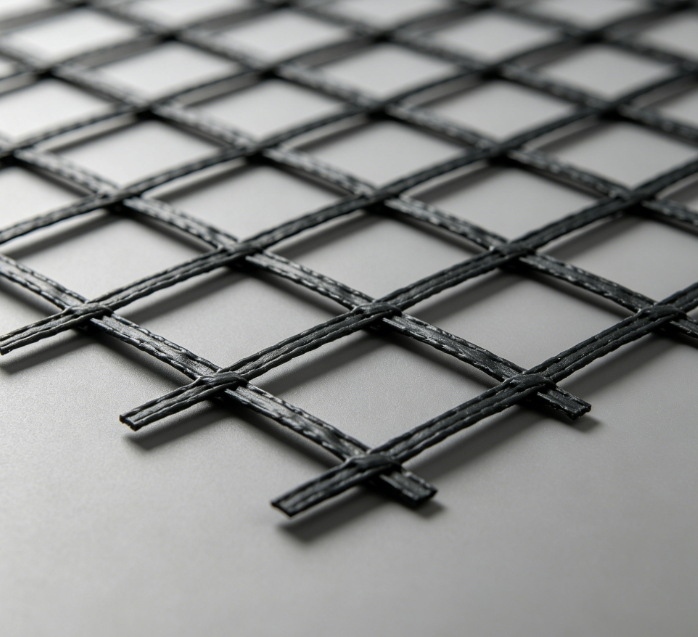
From the moment asphalt meets aggregate, a silent war begins beneath the surface. Temperature swings force pavement to expand and contract, while relentless traffic loads push materials to their limits. Fiberglass geogrids step into this battle with a unique strength—they lock the aggregate in place, distributing stress so evenly that cracks struggle to form. Unlike steel, they never rust; unlike polymers, they shrug off chemical breakdown. It's this inherent stability that keeps roads intact for decades, quietly absorbing punishment that would cripple conventional reinforcement.
The real genius lies in how these grids handle the slow creep of deformation. Under heavy trucks, asphalt can gradually rut and shift, a problem that costs billions in repairs. Fiberglass, with its near-zero elongation under load, refuses to stretch along with the asphalt. Instead, it creates a rigid skeleton that holds the layers together, turning a flexible pavement into a semi-rigid structure. This resistance to deformation doesn't fade with time—UV exposure, moisture, and temperature cycles barely register on its performance curve.
Decades of field data tell a compelling story: roads reinforced with fiberglass geogrids outlast their unreinforced counterparts by a wide margin, often requiring only surface-level maintenance. The secret is simple physics. By intercepting reflective cracking before it migrates upward from the base layers, these grids break the cycle of constant repair. And because they remain chemically inert, buried within the pavement, they continue working year after year without any loss of strength. That's how they defy time and traffic—not by resisting them, but by turning their energy into a force that holds everything together.
When Strength Meets Flexibility: The Science Behind the Mesh
The idea of combining strength and flexibility in a single material often feels like a contradiction—until you look closely at how mesh is engineered. At its core, mesh is a network of interlocking strands that distribute tension evenly across the entire surface. This means it can absorb sudden impacts without tearing, while still bending and stretching with whatever it’s holding or protecting. The secret lies in the geometry: tiny gaps give the structure room to flex, but the interconnected nodes prevent any single point from bearing too much load. It’s a balance that nature has used for millennia, from spider silk to the webbing of leaves, and modern manufacturing has learned to replicate it with remarkable precision.
The science behind mesh goes deeper than just pattern. Material choice plays a huge role—high-tenacity polymers, stainless steel fibers, or even advanced composites can be woven or knitted into forms that feel almost alive. When pulled, the filaments align and tighten, increasing resistance exactly where it’s needed. Release the tension, and they relax back into shape. This dynamic response is what sets mesh apart from rigid sheets or solid fabrics. Engineers call it “anisotropic behavior”—meaning the material behaves differently depending on the direction of force—and it’s precisely this property that allows mesh to be soft to the touch one moment and structurally steadfast the next.
What’s fascinating is how this marriage of strength and flexibility scales from the microscopic to the monumental. In medical implants, mesh supports tissue while letting it move and grow naturally. In architecture, tensioned mesh façades withstand wind and weather while appearing nearly weightless. Even in everyday items like sneakers or backpacks, mesh provides durability without stiffness. It’s not magic—it’s material science pushing the limits of what a surface can do, turning a simple grid into a system that adapts, protects, and endures without ever sacrificing its give.
Underground Reinforcement: The Hidden Backbone of Durable Roads
Beneath every smooth, long-lasting road lies a carefully engineered foundation that rarely gets the attention it deserves. While asphalt and concrete dominate the visible surface, it's the reinforcement buried underneath that truly determines how well a road holds up against time, traffic, and weather. Geogrids, steel mesh, and compacted aggregate layers work silently to distribute loads, prevent cracking, and stop the ground from shifting—essentially forming a hidden skeleton that keeps the pavement intact for decades.
Without this subsurface support, roads would quickly develop potholes, ruts, and alligator cracking, especially in areas with heavy truck traffic or expansive soils. The reinforcement layer acts like a tension membrane, bridging weak spots in the subgrade and reducing the stress that reaches the surface. It's a classic case of what you don't see matters most; a properly reinforced base can double or even triple a road's lifespan, saving millions in maintenance and reconstruction costs over time.
Modern engineering has taken this underground backbone to new levels with advanced materials and design techniques. From polymer geogrids that lock aggregate in place to fiber-reinforced concrete that resists micro-cracking, the innovation happens out of sight. This quiet evolution in road construction ensures that the routes we depend on remain smooth, safe, and durable, proving that true strength often lies beneath the surface.
Smarter Infrastructure Starts with a Single Layer
Infrastructure doesn’t need to be a sprawling puzzle of protocols and patches. Often, the most resilient systems aren’t the ones with the most layers—they’re the ones that got the first layer exactly right. By focusing on a single, well-defined foundation, you strip away the noise and create a base that naturally scales, adapts, and holds up under pressure.
Think of it less as a technical decision and more as a design philosophy. When every dependency, every connection, and every future upgrade hinges on that one clean starting point, complexity doesn’t stand a chance. It becomes simpler to troubleshoot, cheaper to maintain, and faster to evolve—because you’re not constantly untangling a web of inherited decisions.
The magic isn’t in stacking more on top. It’s in making that single layer so intentional, so thoughtfully crafted, that everything else falls into place naturally. That’s where smarter infrastructure begins: not in the cloud or the code, but in the clarity of that one layer that holds everything together.
The Unseen Shield: Protecting Foundations from Nature's Fury
Beneath every home and skyscraper lies a silent guardian, working tirelessly to ward off the relentless forces of nature. This invisible armor isn’t forged from steel alone, but from a deep understanding of soil dynamics, water flow, and structural resilience. It begins with meticulous site preparation—compacting the earth, installing drainage systems that whisper excess water away, and choosing materials that flex rather than fracture when the ground trembles. The real magic happens in the details: a carefully sloped landscape that directs rain away from the structure, a moisture barrier hugging concrete walls, and deep-rooted piers that anchor the building to stable layers hidden far below the surface turmoil.
What makes this protection truly remarkable is its ability to adapt. In flood-prone zones, foundations rise on reinforced piers, breathing with the water’s ebb and flow instead of battling it. In seismic hotspots, base isolators let the ground shake while the structure above sways gently, like a tree bending in the wind. Even the freeze-thaw cycle—a silent destroyer—is tamed through air-entrained concrete and strategic insulation, preventing the slow creep of cracks that could one day split a foundation apart. These aren’t one-size-fits-all fixes; they’re custom-tailored responses, refined through decades of geological observation and engineering evolution.
Yet, the most critical element of this shield isn’t a physical layer at all—it’s vigilance. Routine inspections catch hairline fractures before they become gaping crevices. Smart sensors embedded in concrete now monitor moisture and stress, sending quiet alerts long before the naked eye sees a problem. The unseen shield, after all, is only as strong as the attention we give it. It’s a quiet partnership between human foresight and the stubborn refusal of well-built things to yield to the chaotic beauty of the natural world.
FAQ
They offer a great balance of high tensile strength at low strain, meaning they start working before the asphalt cracks too much. Plus, they're resistant to temperature swings and don't creep under sustained loads.
By acting as a stress-absorbing interlayer, they distribute traffic loads more evenly. This reduces reflective cracking and rutting, so the road stays smoother for longer without expensive overlays.
Absolutely. Their high modulus and compatibility with waterproofing systems make them ideal for bridge deck reinforcement. They help manage thermal stresses and prevent water-related deterioration.
The coating matters a lot. Premium ones have a durable polymer coating that protects the glass fibers from chemical attacks and improves bonding with the asphalt. The manufacturing process also ensures consistent aperture size and tensile properties.
They're primarily designed for asphalt layers, but certain types can be used in granular base courses to stabilize soft subgrades. However, their real strength shines in bound pavement applications.
Usually it's straightforward: prepare the surface, apply a tack coat, unroll the geogrid, and then place the hot mix asphalt on top. No special equipment beyond standard paving gear, though a tractor with a roll holder helps on large jobs.
In concrete, steel is still king for primary reinforcement, but for crack control and secondary reinforcement, fiberglass geogrids can simplify placement and eliminate corrosion concerns, especially in thin overlays or repair work.
Conclusion
Fiberglass geogrids have quietly become essential to long-lasting roads, retaining walls, and foundations. Their secret lies in a simple but powerful combination: high tensile strength and a flexible mesh structure that locks into aggregate layers, distributing loads and resisting deformation under constant traffic. Unlike steel, they don’t corrode, and unlike some polymers, they don’t creep or lose stiffness over decades. This means pavements stay smoother longer, with fewer cracks and potholes, even under extreme weather swings and heavy trucks. By adding just a single layer at the base or within asphalt, engineers dramatically extend service life while cutting down on maintenance.
What often goes unseen is their role underground, where they reinforce subgrades and shield foundations from erosion and settlement. In seismic zones or soft soils, the geogrid’s interlocking mechanism creates a stabilized platform that bridges weak spots. It’s this blend of science and simplicity that makes them a smart investment: less material, lower carbon footprint, and infrastructure that holds up against nature’s tests. Whether beneath a highway or a parking lot, the right geogrid solution turns routine pavement into a resilient, future-proof asset.
Contact Us
Contact Person: Jennifer LEE
Email: [email protected]
Tel/WhatsApp: 8618553418999
Website: https://vip.e-baixing.com/wenfengshitong