

Top Galvanized Tangent Tower Company: What to Look for in a Trusted Partner
2026-08-20
Every transmission project depends on the quality of its towers. For galvanized tangent towers, the stakes are even higher - corrosion resistance, structural integrity, and long-term reliability are non-negotiable. Yet, not every manufacturer can deliver. So how do you separate a true top-tier partner from the rest? That's where Anbang stands out - but don't just take our word for it. Here are the key criteria you should evaluate when choosing a trusted galvanized tangent tower company.
Is Their Galvanizing Process Audited by a Third Party?
Most reputable galvanizers invite independent inspectors to walk their lines at least once or twice a year. These auditors don't just glance at the finished coating—they dig into bath chemistry logs, check zinc temperature curves, and verify that the pre-treatment tanks are actually being maintained at the right concentrations. If a facility hesitates to name its auditor or can't produce a recent report, that's usually a red flag.
The audit typically covers more than just spot thickness readings. A solid third-party review will pull random samples for bend tests or hammer tests, examine adhesion under a microscope, and compare results against ASTM A123 or ISO 1461 requirements. They also look at paperwork: are the crane operators certified? When was the last time the kettle was inspected for dross buildup? These details rarely show up in a sales brochure but matter a lot for long-term corrosion protection.
Don't just ask if they're audited—ask who does it and how often. Some galvanizers rely on an auditor that visits once every three years for a half-day walkthrough, which is almost meaningless. Others bring in a firm every quarter and let customers see the full report without redactions. The difference shows up in the consistency of the zinc layer and in how confidently they stand behind their warranty.
How Do They Handle Non-Standard Terrain or Custom Tower Designs?
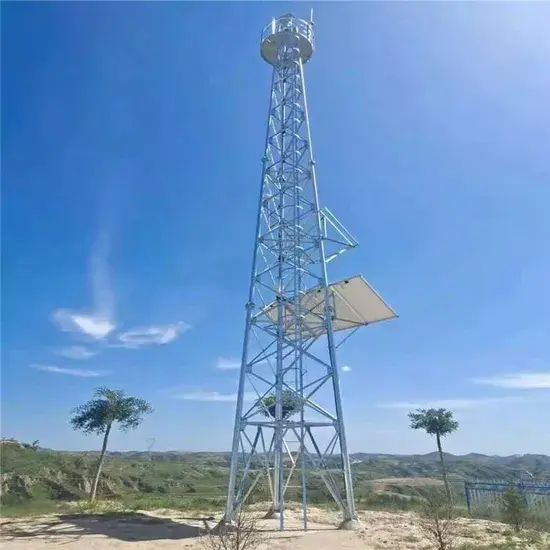
Most modern tower manufacturers start by running a detailed site survey that goes well beyond simple slope measurements. They map out rock formations, soil stability, drainage patterns, and even nearby vegetation that might interfere with guy wires or access roads. For custom tower designs, engineers often use modular base plates and adjustable leg extensions rather than forcing a standard foundation into an uneven footprint. This lets the structure follow the natural contour of the land while keeping the mast perfectly plumb. In rocky or remote areas, they may switch to micropile foundations or rock anchors that drill directly into bedrock, eliminating the need for large concrete pours. The key is treating the terrain as a design input instead of an obstacle to be flattened.
When the request goes beyond terrain and into full custom tower geometry, things get more interesting. Some clients need towers with unusual platform shapes, extra-heavy antenna loads on one side, or integrated equipment cabins that change the wind profile. Rather than reinventing the wheel, fabricators typically adjust the lattice pattern, increase the cross-section in high-stress zones, or add internal bracing that doesn't alter the overall footprint. They also simulate wind loads from multiple directions using computational models, then verify with physical strain tests on a scaled prototype. This back-and-forth between design and validation catches weak points before the first bolt is ever tightened on site.
Finally, the installation process itself has to adapt to whatever the ground throws at it. Crews working on steep slopes often use helicopter assembly or a gin pole system that lifts sections vertically without needing a large crane pad. For swampy or sandy soil, temporary timber mats or helical screw anchors provide a stable working platform that gets removed after commissioning. Custom tower designs may also include pre-installed climbing ladders, service platforms, and cable management trays that match the unique geometry, so future maintenance crews don't have to improvise. The end result is a structure that looks like it belongs where it stands, rather than a generic kit dropped onto unprepared ground.
What Does Their Warranty Actually Cover After Installation?
Warranty language often reads like a promise until you realize it only covers parts that fail on their own, not the labor to replace them or the damage caused when they stop working. After installation, the real question is whether the company stands behind the system as a whole or hides behind fine print that excludes almost everything that can actually go wrong. Many warranties tout a ten-year or lifetime term, but the coverage window shrinks dramatically once you factor in exclusions for environmental wear, power surges, or improper maintenance that they never clearly defined before you signed.
What matters most is how claims are handled when something breaks a year or two after the installers have left. Some companies will ship replacement parts at no charge but expect you to pay for troubleshooting, shipping, and the technician’s time, which can cost more than the part itself. Other providers include labor and diagnostics for the first few years, then drop those protections while the hardware warranty lingers on paper. Ask for a written breakdown of exactly who pays for what if a component fails at month six, month eighteen, or month sixty—because the answer often shifts over time.
A truly useful warranty covers not just the original equipment but also any subsequent repairs that might be needed as a direct result of a covered failure. For example, if a faulty inverter damages connected appliances or a leaking seal ruins surrounding materials, the best contracts include remediation for that secondary damage. Without that, you might find yourself fighting for a refund on a single broken part while shouldering the cost of the mess it left behind. Always ask for a copy of the actual warranty document before installation, not just a marketing summary, and look for phrases like “consequential damages excluded”—those four words can erase most of the protection you thought you were buying.
Can They Show You Examples from Comparable Voltage Projects?
When a contractor or engineer claims high-voltage experience, asking them to show you projects that actually match your voltage level is a straightforward way to cut through vague portfolio talk. A team that has done plenty of 480V commercial work won't necessarily have the same instincts on a 13.8kV distribution system. Request single-line diagrams, protection scheme notes, or as-built reports from jobs at a similar voltage—these reveal the real complexity they've handled, not just a list of past clients.
Beyond the voltage number itself, dig into the load types and fault current levels from those examples. A medium-voltage pump station and a small industrial plant can be worlds apart even if both run at the same voltage. If they can show you examples, see if they can walk you through protection coordination, grounding approaches, and any switching transient issues they hit. That kind of detail tells you whether they truly understand the nuances of comparable work, rather than just having a voltage rating printed in a brochure.
Don't accept examples that are only nominally comparable. A team might show you an outdoor substation project from another state while your job is an underground urban network—the voltage digits may line up, but the installation conditions and code requirements are completely different. Ask directly: "What specific voltage-related faults did you run into on that project, and how did you resolve them?" If they hesitate or fall back on generic answers, it's a sign they may not have gone deep enough at that voltage level.
Do Their Delivery Schedules Survive Contact with Real-World Delays?
Most delivery schedules are crafted in a planning room where every minute counts, but the real world rarely respects that arithmetic. A route that looks tight and efficient on a screen quickly unravels when a single truck hits an unexpected road closure or a warehouse takes forty minutes longer to load than promised. The question isn't whether delays will happen; it's how much slack the original schedule had to absorb them.
Common disruptions stack up fast. Morning traffic in urban corridors eats into the first stops, weather slows highway speeds, and drivers waiting at docks lose the buffer they needed for the next customer. Even a ten-minute stall at one location can push every subsequent delivery past its window, forcing dispatchers to choose between breaking delivery promises or running drivers out of legal hours. Rigid schedules built around average times often have no way to recover once deviations begin.
Schedules that do survive tend to share a few traits: generous buffers, real-time visibility into vehicle locations, and a willingness to reshuffle stops on the fly. But many operations still rely on static plans that look good in a bid but collapse under normal operating noise. By the end of a typical day, the original schedule is less a plan and more a rough sketch of what might have been.
Who Owns the Problem When a Tower Fails Inspection?
The moment a tower inspection comes back with red flags, the natural instinct is to hunt for a single scapegoat. Yet the real answer rarely fits into one job title or company name. Structural failures, corroded anchors, missing bolts, or overloaded mounts each trace back through a chain of decisions — the original engineer who signed off on outdated wind load assumptions, the contractor who swapped in cheaper steel during a rushed build, the owner who deferred maintenance for three budget cycles, and the inspector who flagged minor rust two years ago but never followed up. Ownership, in practice, is a tangle of shared negligence rather than a clean line pointing at one party.
Legal contracts often try to pin this down with impressive specificity: the tower owner is responsible for structural integrity, the tenant for their equipment load, the maintenance vendor for routine checks, and the inspection firm for accurate reporting. But when a tower fails inspection, those neat clauses collide with reality. Maybe the owner never received the previous inspection report because the vendor’s email bounced. Maybe the tenant added antennas without updating the structural analysis. Maybe the inspection itself was conducted under time pressure with a drone that missed hairline cracks at the base. Courts and insurance adjusters end up sorting through emails, purchase orders, and weather logs to see who actually controlled the risk at the moment it matured.
From a field perspective, the problem is owned by whoever is left holding the repair bill and the downtime. That usually falls on the tower owner first, regardless of fault, because regulators and landlords look to the asset holder to restore compliance. Smart owners, though, push accountability outward through service-level agreements, requiring inspectors to recommend corrective actions with deadlines and tenants to provide load documentation before any new equipment goes up. The ones who treat an inspection failure as a wake-up call to redraw those agreements — rather than just patch the immediate defect — are the ones who eventually stop asking who owns the problem, because nobody wants to own it twice.
FAQ
Look for evidence of full traceability from raw angle steel to final assembly. A dependable partner will share heat numbers, galvanizing thickness readings, and bend/test records without hesitation. Ask to see their in-house testing lab or third-party reports for recent projects.
Dig into the details: zinc bath temperature control, minimum coating thickness on edges and welds, and how they handle touch-up for areas damaged after galvanizing. A trusted fabricator will explain their process step by step, not hide behind generic promises.
Tangent towers often anchor long transmission lines, so any delay ripples through the entire project schedule. A partner with a proven loading and logistics plan can save you far more money than a cheaper quote that misses deadlines. Ask for recent shipment references and contingency plans for weather or port congestion.
Request a sample calculation package or a design review call before ordering. Strong partners will challenge unclear load assumptions and suggest practical adjustments to reduce steel weight without compromising safety. If they just say yes to every sketch, that's a red flag.
Ask for projects with similar voltage levels, terrain conditions, and wind/ice loads. Look beyond pretty photos—request contact details for a past client who can discuss how the towers performed during installation and after severe weather. A transparent company will not hesitate.
Very important. Even a well-made tower can face issues during erection, like missing bolts or minor fit-up adjustments. A reliable partner should have a responsive field service team or at least a dedicated engineer on call. Clarify response times and whether they cover remote site visits.
Uneven coating thickness, dull gray patches instead of uniform spangle, and quick quotes that don't mention ASTM or ISO standards. Also be cautious if they refuse to allow a third-party inspection or can't provide recent coating thickness reports.
Yes, if they specialize in tangent towers and maintain tight control over their supply chain. Smaller fabricators often offer more flexible scheduling and direct access to senior engineers. The key is verifying their capacity, not their marketing size.
Conclusion
A trustworthy galvanized tangent tower supplier doesn't hide behind glossy brochures. Ask whether their hot-dip galvanizing line is audited by an independent third party, because zinc thickness and adhesion failures show up long after installation. Then push them on design flexibility. A partner who only works from stock drawings will struggle with rocky terrain, unusual wind spans, or custom voltage requirements. Demand to see completed projects at comparable kV ratings, not just marketing photos, and ask what had to be re-engineered on those jobs. That tells you whether their engineering team actually solves problems or just ships standard configurations.
After the towers leave the yard, the real test begins. Clarify exactly what the warranty covers: coating degradation, structural welds, or just material defects? Many warranties quietly exclude the things that fail first. Delivery promises also need scrutiny. A schedule built on ideal weather and smooth customs is fiction; ask how they handle port delays, truck shortages, or factory bottlenecks and what penalty or recovery plan applies. Finally, define accountability when a tower fails inspection. If the galvanizer blames the fabricator and the fabricator blames the galvanizer, you are left holding the cost. A trusted partner takes ownership from raw steel to final site sign-off, with one throat to choke.
Contact Us
Contact Person: antor khan
Email: [email protected]
Tel/WhatsApp: 8613863903569
Website: https://www.qdabtower.com/