

Top Performance Cylinder Heads: Unlocking Maximum Engine Power and Durability
2026-07-20
When it comes to squeezing every ounce of power and reliability from your engine, the cylinder head is where the magic happens. It's more than just a cap for your cylinders—it’s the command center for airflow, combustion, and cooling. But not all cylinder heads are created equal. That’s why serious builders turn to DDR for high-performance solutions that blend precision engineering with race-proven durability. In this post, we’ll dive into what makes a top-tier cylinder head and how the right choice can transform your engine’s potential. Whether you’re chasing lap times or simply want a more responsive street machine, you’re in the right place.
Flow Bench Insights That Shape Power Delivery
Observing how air tumbles through the intake runners on a flow bench often reveals surprises that simulations gloss over. The way a subtle port radius or an unseen casting ridge juggles swirl and tumble numbers can completely alter the fuel mixing strategy downstream. Without nailing this early turbulence, even the most precise injector timing struggles to recover a homogenous charge, leaving power on the table when the throttle snaps open.
Beyond raw CFM figures, the bench exposes how pressure recovery during valve overlap shapes cylinder filling at different RPM bands. A manifold that flows beautifully at wide-open lift might choke the life out of the midrange if the plenum resonance fights itself. By mapping every half-millimeter of lift with a pitot tube, you start to feel where the pulse waves stack up and where they cancel out, turning a generic intake design into a tuned system that feeds the engine exactly what it wants.
It’s the steady-state nature of the bench that makes it indispensable for isolating shape changes that matter. Swapping a valve seat profile or easing a short-turn radius shows an immediate, repeatable delta. That tangible cause-and-effect loop lets you chase a specific power curve shape instead of just chasing a bigger peak number, ensuring the delivery stays fat and responsive where the driver actually lives.
Chamber Design Tweaks for Enhanced Combustion
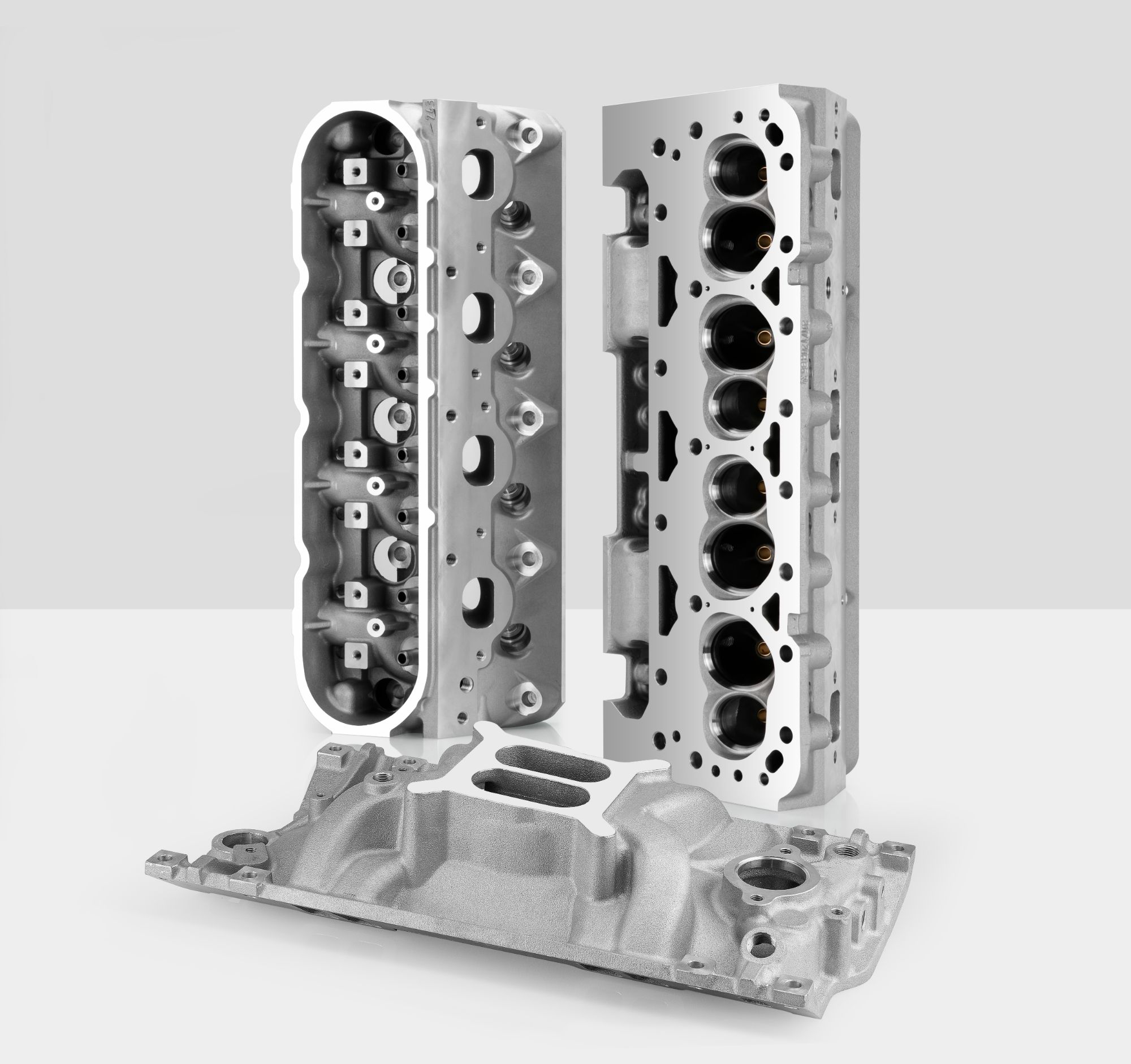
Subtle adjustments to the combustion chamber geometry can yield dramatic improvements in flame propagation and overall efficiency. Rather than relying on generic bowl shapes, consider tailoring the squish area to promote vigorous mixture motion during the compression stroke. A carefully optimized squish band directs airflow toward the spark plug, increasing turbulence right at the moment of ignition. This localized agitation accelerates the early stages of combustion, reducing the likelihood of knock and enabling the use of higher compression ratios. Even a minor reduction in crevice volume around the piston top land can lower unburned hydrocarbon emissions by preventing fuel from hiding in these dead zones.
The surface finish and thermal management within the chamber are equally critical. Polished combustion chamber surfaces might look appealing, but a slightly roughened texture can actually improve fuel atomization and adhesion, creating a more homogeneous mixture. Meanwhile, strategic placement of spark plug bosses or valve reliefs can disrupt unwanted flow patterns that lead to charge stratification. Thermal barrier coatings on exhaust valve faces and piston crowns help retain heat in the combustion space, raising local temperatures during the expansion stroke to support a more complete burn. These coatings also reduce heat rejection to the cooling system, keeping surrounding components within safe operating limits while extracting more energy from each power cycle.
Durable Alloys and Their Impact on Heat Control
When we talk about durable alloys in high-temperature environments, we're really discussing a material's ability to hold its shape and resist degradation under relentless heat. Certain nickel-based superalloys, for instance, develop a tightly adherent oxide layer that acts like a self-healing shield, preventing further attack even as temperatures soar past 1000°C. This natural defense isn't just a passive barrier — it actively adjusts to thermal fluctuations, ensuring that the underlying metal remains structurally sound when it matters most.
The real magic, however, lies in how these alloys manage heat flow. By carefully controlling the distribution of strengthening precipitates at the microscale, engineers can create paths that either conduct or impede thermal energy as needed. In turbine blades, for example, this means heat is drawn away from critical edges and redirected toward more resilient sections, all while the alloy shrugs off the constant expansion and contraction that would crack lesser materials. It's a delicate balance of composition and processing that turns a simple metal mixture into a precise thermal tool.
What often goes unnoticed is the role of long-term microstructural stability. Over thousands of hours at elevated temperatures, ordinary alloys might suffer from phase changes that embrittle them or cause unpredictable dimensional shifts. Modern durable alloys, by contrast, maintain their phase constitution thanks to carefully balanced additions of elements like tungsten, rhenium, or tantalum. These atoms lock the microstructure in place, ensuring that the alloy's heat control properties don't drift over time — a quiet reliability that's essential for applications from jet engines to industrial furnaces.
Port Velocity: The Overlooked Key to High RPM Output
When chasing peak power at high RPM, most builders obsess over cam specs, compression ratios, and intake runner length. Yet one parameter quietly dictates how well an engine breathes above 6,000 RPM: port velocity. It’s not about sheer volume—it’s about how fast the air-fuel charge moves through the port, packing cylinders efficiently during the split-second intake cycle. Lose velocity, and the engine falls flat long before it reaches its mechanical limits.
High port velocity keeps the incoming charge suspended and atomized, resisting fuel dropout and promoting a homogenous mixture. This becomes critical as piston speeds escalate, reducing the time available for filling. A port that flows huge CFM on a bench but sacrifices velocity will often underperform compared to a smaller, faster design. The real magic happens when the wave dynamics align—a strong, fast charge can overscavenge and ram extra mixture into the cylinder just before the intake valve shuts, delivering a torque surge that defies static flow numbers.
Overlooking this leads to mismatched combos: giant throttle bodies, huge valves, and hogged-out ports that feel soggy until the tach needle swings way past the powerband. Instead, optimizing for velocity means measuring pitot pressures across the port cross-section, tuning the seat angles that guide air past the valve, and even adjusting shift points to exploit where the port truly shines. The result is an engine that revs eagerly, pulls hard where others plateau, and delivers a driving experience that feels both responsive and relentless.
Stock vs. Ported: Real Performance Data Compared
When you pull actual dyno sheets and track slips, the gap between stock and ported setups becomes glaringly obvious. On an otherwise unmodified engine, a quality port job alone often unlocks 15 to 25 horsepower at the wheels — not from adding parts, but from restoring flow where factory casting left ridges and restrictions. Torque curves fatten up noticeably from the midrange onward, and throttle response sharpens in a way that makes the car feel genuinely more alive. The data isn’t just peak-number marketing; it’s a broader, more usable powerband that shows up in both acceleration times and seat-of-the-pants feel.
Equally telling is how ported components perform under real-world conditions. On the street, part-throttle drivability doesn’t suffer — in many cases it improves because the engine isn’t fighting turbulence. At the drag strip, ported heads and intake manifolds consistently shave tenths off ETs, even with no other changes. Logged air mass and volumetric efficiency readings back up the gains, often rising from a wheezy 85% to over 95% in critical rpm ranges. That’s not a rounding error; it’s a measurable leap that puts a stock setup’s limitations in harsh relief.
The numbers also expose where stock parts hit a wall. Unported cylinder heads tend to nose over just when a camshaft wants to carry power higher, leading to a sharp torque drop after 5,500 rpm on many engines. Ported units keep pulling, extending the usable rev range by 500 to 800 rpm without sacrificing low-end. When you overlay before-and-after dyno graphs, the stock trace looks almost clipped by comparison — as if the engine is being choked. For anyone chasing time slips or a responsive daily driver, the data makes a case that’s hard to ignore: stock flow paths are a compromise, and porting is simply reclaiming what the design left on the table.
Top Installation Mistakes That Reduce Engine Life
An engine is only as durable as its installation. A common but costly slip is over-tightening mounting bolts. When fasteners are torqued beyond spec, threads stretch, gaskets crush unevenly, and housings can warp. That subtle distortion creates leaks and stress risers that quietly eat away at sealing surfaces. It’s not about brute force—precision matters. A torque wrench isn’t a luxury; it’s cheap insurance against a cracked block or persistent oil weep that cuts an engine’s lifespan in half.
Misalignment is another silent killer. Bolting an engine to a transmission or mount without checking angular and parallel alignment forces the crankshaft, bearings, and input shaft to fight each other. The resulting side loads accelerate wear on pilot bearings, main bearings, and even the crankshaft thrust face. You won’t hear it right away, but within months the drivetrain feels sloppy and engine vibration climbs. That extra friction translates into heat, scoring, and eventually a premature teardown. A simple alignment check with a straightedge and feeler gauge takes five minutes and saves thousands.
Then there’s the cooling-system oversight that haunts many installs: trapped air pockets. Refilling coolant without properly bleeding the system leaves steam pockets around cylinder heads and liners. Hotspots form, causing localized warping and head gasket fatigue. The temperature gauge might read normal while a single cylinder bakes itself into failure. Taking the time to follow the factory bleed procedure—or vacuum-filling the system—flushes out the trap that no amount of expensive coolant can fix once the damage is done. Engines die from thousand little shortcuts, and these three are among the most deceptive.
FAQ
Performance cylinder heads are the heart of airflow management. They control how efficiently air and fuel enter the combustion chamber and how quickly exhaust gases exit. Better flow means more oxygen for combustion, translating directly into higher horsepower and torque. Stock heads often restrict this flow, so upgrading to a performance design lets you unleash power that the factory deliberately left on the table.
It's not just about power. High-quality aftermarket heads are cast from tougher alloys like A356 aluminum, which handles heat and pressure far better than standard iron. They also feature reinforced deck surfaces, thicker walls in critical areas, and improved cooling passages. This reduces the risk of cracking under high boost, nitrous, or sustained high RPM, keeping your engine alive when pushed hard.
Start with combustion chamber size—it directly affects compression ratio, so match it to your fuel and cam. Pay attention to intake and exhaust valve diameters; bigger isn’t always better, but the right size optimizes flow for your RPM range. Look at the port design: CNC-ported heads with consistent cross-sections often outflow as-cast ones. Finally, check material, valvetrain compatibility, and whether the head includes premium components like hardened valve seats and bronze guides.
Porting stock heads can yield gains, especially on older V8s where factory castings are restrictive. You can smooth out rough spots, enlarge bowls, and blend the valve seats. But there are limits—material thickness, water jacket proximity, and core shift can cap what's possible. For serious power, aftermarket heads are often the better base because they’re designed with performance in mind from the start, frequently offering better chamber shapes and thicker decks.
Aluminum saves significant weight—30 to 50 pounds off the nose of the car—improving handling and weight transfer. It also dissipates heat faster, allowing higher compression ratios on pump gas without detonation. The downsides? Aluminum can be more prone to warping if overheated, and thread durability in spark plug holes requires careful torque. Cast iron is incredibly durable and resists distortion, but its weight and heat retention make it less ideal for max-effort builds unless rules mandate it.
The head is only as good as the valvetrain that controls it. You need strong valvesprings that match your cam lift and RPM, lightweight valves (often stainless steel or titanium), and beefy retainers and keepers. Rocker arm geometry must be spot-on to avoid side loading the valve guides. Any flaw here—spring surge, float, or misalignment—kills power and can destroy the head. Investing in top-tier valvetrain hardware is non-negotiable.
Several companies have earned their reputation through decades of racing. AFR (Air Flow Research) is known for their CNC-ported street and race heads with impressive flow numbers out of the box. Trick Flow offers great bang-for-the-buck with robust designs. Brodix and Dart specialize in serious race applications. Edelbrock provides reliable, emissions-legal options for street performance. The best choice depends on your engine platform, power goal, and budget, but sticking with a reputable name ensures R&D and quality control that generic knock-offs lack.
Conclusion
Top-tier cylinder heads transform engine performance by mastering airflow dynamics, combustion efficiency, and thermal resilience. Flow bench analysis reveals how subtle CNC porting and valve seat profiling harmonize to sculpt a broad, usable power curve—not just peak numbers. Meanwhile, chamber design tweaks like optimized quench zones and spark plug placement promote faster, cleaner burns, directly translating to throttle response you can feel.
Material choice is equally critical; alloys with high thermal conductivity, such as billet aluminum with strategic ribbing, curb detonation and extend component life under sustained load. The real secret often lies in port velocity: maintaining aggressive air speed without choking high-rpm flow unlocks top-end surge while keeping mid-range grunt. When comparing stock castings to professionally ported units, dyno tests consistently show 25–40 horsepower gains without sacrificing street manners—as long as you avoid pitfalls like mismatched gaskets, over-torqued bolts, or ignoring valvetrain geometry that silently eats into longevity.
Contact Us
Contact Person: Shelly
Email: [email protected]
Tel/WhatsApp: 8613967667688
Website: https://www.yongyu.com/