

Vibration Motor Factory Selection Guide for Product Teams and Engineers
2026-11-17
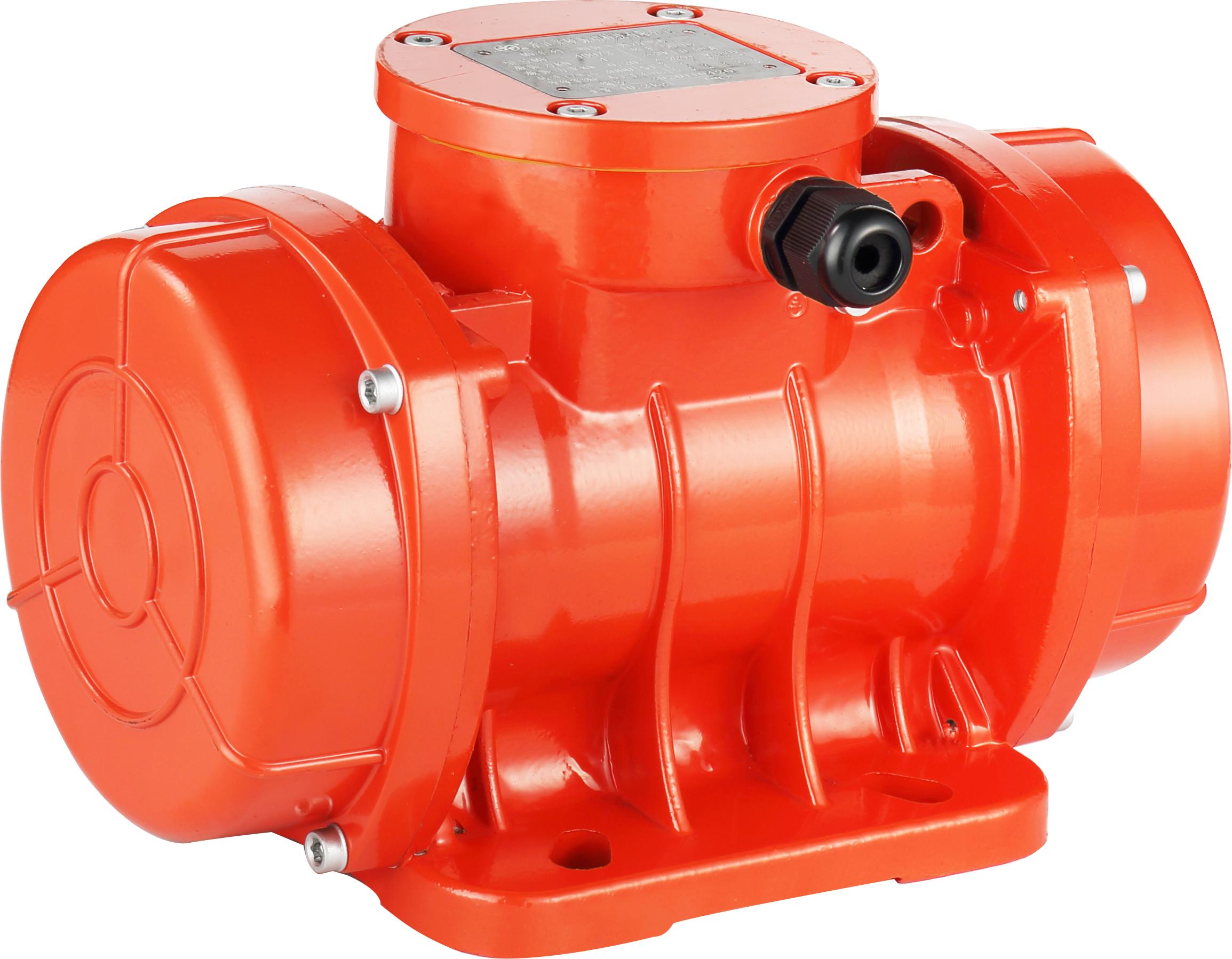
Most sourcing guides bury you in motor types and torque curves before you have even defined what a bad supplier looks like. This one is different. Product teams and engineers need a practical way to compare vibration motor factories without wasting weeks on mismatched samples and vague lead times. That means looking beyond the datasheet and asking sharper questions about customization, consistency, and communication. With real production lessons in mind, this guide maps out the evaluation process and highlights how Guangling fits into the picture for teams that need a dependable manufacturing partner.
Reading a Factory Floor Before Signing Anything
A clean floor can be a warning, not a promise. I walk past the workstations and watch how people move around a half-finished order. If boxes are stacked in front of an emergency exit or a tool cart blocks the main aisle, that usually tells me more than any production chart on the wall. The best plants I have visited were not spotless in a showroom way; they were organized in a way that matched the actual rhythm of the work. One place had a small dent in the floor near a press brake, worn smooth from years of the same turn. That kind of detail does not appear in a brochure.
Before I sign, I also listen. A maintenance crew that greases a chain while the line slows for lunch, a supervisor who can answer a quality question without looking at a clipboard, and operators who point out where a fixture should be replaced all signal that problems are handled close to the floor. If the manager spends the entire tour talking about capacity and deadlines but never once touches a part, I start asking harder questions about what happens when something goes wrong.
When Torque Specs Hide the Real Story
The click of a torque wrench at 22 ft-lb sounds certain, but that number assumes clean threads and a fresh bolt. Add a little residual oil, a slightly deformed washer, or a hole that has ovaled from years of vibration, and the same reading can produce a very different clamp load.
Some torque charts are built around laboratory conditions, not a hot engine bay or a corroded chassis rail. Once a fastener has been through heat cycles and retorqued a few times, its stretch characteristics change, and the printed spec may push it closer to failure than anyone realizes.
What often matters more is whether the joint draws down evenly, whether the fastener reaches a point where resistance climbs smoothly, and whether it holds after the first real load. The number is a starting point, but the assembly tells you when it is actually seated.
Questions That Separate Build Partners From Vendors
A vendor will ask what you need and when you need it. A build partner tends to open with harder questions: what is this supposed to change for the people using it, and which part of the existing workflow are we not allowed to break? That difference shows up before a contract is signed. One side is collecting requirements. The other is testing whether the requirements are worth building as written.
The questions worth listening for are rarely about stack or schedule. They sound more like: where will this hurt in six months if we cut the wrong corner? If we remove this feature, what actually breaks? Who is going to maintain the parts we do not talk about today? Those are not interview questions. They are signs that the team plans to own the outcome after handoff instead of disappearing once the last invoice clears.
Suppliers wait for answers. Partners bring questions you had not thought to ask. The difference is not friendliness or responsiveness; it is whether the conversation starts with delivery or with consequence.
Audit Trails Your Engineering Team Will Actually Use
Most audit trails fail because they capture too much and answer too little. A trail engineers actually use records the changes that matter—config updates, feature flag flips, access grants, schema migrations—and keeps the actor, action, timestamp, and before/after values close together. If someone has to jump across six services to reconstruct a single change, it is not an audit trail; it is a scavenger hunt.
Naming is where most systems lose their usefulness. Events like feature.flag.updated or service_account.role_changed tell the next person what to look for, while generic entries like update_performed create more questions than answers. Attach a request ID, affected environment, and a link to the related runbook or commit so the on-call engineer can move from “something happened” to “here is the impact” without asking around.
Practical access and retention decide whether the trail becomes part of the workflow or a box nobody opens. Keep recent records fast and queryable for the window your team actually investigates incidents, then archive older data somewhere cheap and secure. If reviewing the trail means filing a ticket or using a separate clunky interface, engineers will route around it, and you will be left with the same unwritten knowledge the system was supposed to replace.
How Small Batch Runs Reveal Production Gaps
Low-volume runs have a way of turning hidden assumptions into obvious problems. A part that fits fine when tolerance drift is masked by high output suddenly refuses to assemble, and the missing inspection note that never mattered at full speed becomes the reason a batch stalls.
Setup work gets the same harsh spotlight. On a long run, an extra forty minutes of changeover can disappear into the shift. Trim the order to a handful of units, and that time becomes a visible tax on every piece. Teams quickly learn which adjustments lack clear standards or rely on one person's memory.
The real value is that these gaps show up while they are still cheap to address. Scrap counts are small, operators can speak to exactly where the handoff broke down, and engineers can rewrite the process before it scales into a much larger problem.
Cost Models That Survive Second Sourcing
Most procurement cost models fall apart the moment a second supplier enters the conversation because they are anchored to a negotiated price instead of the underlying economics. A model that survives second sourcing treats the incumbent quote as one reference point, not the baseline. It breaks down raw material, conversion, tooling amortization, logistics, scrap and overhead into separate drivers, then tests each one against outside benchmarks. When a challenger comes in lower, the team can see whether the gap is real, whether it depends on a thinner margin, or whether it rests on assumptions that will not survive full production.
The stronger test is how the model ages. Second sourcing usually begins with a few high-spend parts and gradually spreads across the category. Cost models that remain useful are designed for routine refresh rather than a single negotiation. They carry regional wage data, exchange-rate ranges, energy cost curves and yield assumptions that can be updated quarterly. That makes it possible to reprice the incumbent and the alternative on the same page instead of leaning on blanket percentage demands. It also shifts the discussion from pressure to evidence: a supplier can challenge a rate or an assumption, but not the arithmetic.
FAQ
Make sure their core lineup covers what you actually need—eccentric rotating mass, linear resonant actuators, brushless or coin types. If they mostly assemble one style and claim they can add yours, ask for existing production data rather than a promise to tool up later.
A factory with CNC machining, winding, and assembly under one roof can turn around weight or housing changes in days. That matters when you are chasing a resonance shift or need a quick A/B test with different eccentric masses.
Ask for frequency response curves, current draw under load, acceleration versus input voltage, and endurance data at your expected duty cycle. If they cannot provide these for a similar project, their experience may be thin.
Order a pilot batch from the standard production line and require documentation: torque, speed, current, noise, vibration amplitude, and lot-level traceability. Hand-picked samples hide real process variation.
Low unit price does not help if you pay for sorting, rework, or delayed shipments. Put tooling, NRE, MOQ, warranty claims, and yield expectations into one comparison. Often the factory with better process control costs less overall.
If your device needs a custom weight, lead wire length, connector, or enclosure, ask to see past custom jobs. A shop that only sells standard parts will struggle when your project needs a tighter mechanical envelope or different resonant frequency.
Yes, during fast development cycles or when you need quick design reviews and regulatory paperwork. Shorter shipping and easy visits can outweigh cheaper overseas pricing, especially before the design is frozen.
Watch for vague answers on magnet grade, wire gauge, or bearing life, sudden changes from sample to sample, and certification claims without audit reports. Also be careful when a factory accepts every requirement without pushing back—that often means they do not understand the constraints yet.
Conclusion
Walking a prospective factory floor before committing often reveals more than any datasheet. Look for whether operators have quick access to calibrated torque drivers, whether rejected parts are visibly separated, and how line changes are handled for different motor frames. A clean floor matters less than consistent handling: if a shift supervisor cannot explain how torque limits are recorded for a specific housing screw, the printed spec is probably not the one being followed. The same applies to relationships. Build partners ask about your product's start-up current and mounting tolerance before quoting; vendors mostly talk about capacity and lead time. Push the conversation toward how they would handle a batch with slightly oversized bearing seats, and the answers will show whether engineering judgment exists or only sales scripts.
Audit trails should be written for the engineer who needs to resolve a field return six months later, not just for a certification wall. Ask for the actual paper or digital record from a recent lot: date, operator, tool ID, measured values, and any deviations. If the trail stops at pass/fail, it has limited diagnostic value. Small batch runs are equally useful because they expose production gaps that high-volume audits miss. A five-hundred-unit trial can show whether fixtures drift after warm-up or whether component lots are mixed at the feeder. Finally, cost models need enough granularity to survive second sourcing. Break down magnet, coil, bearing, and bracket costs with yield assumptions and tooling amortization, so a second source can be compared line by line instead of against a single bundled price. This is how product teams avoid being trapped by a low initial quote that quietly shifts once volumes increase.
Contact Us
Contact Person: ZHUO
Email: [email protected]
Tel/WhatsApp: 86-576-86320988
Website: https://www.cnguangling.com