

Wafer Cleaning System Company Selection: Key Factors for Semiconductor Fabs
2026-10-21
Wafer cleaning might be the least glamorous step in semiconductor manufacturing, but it's also where yields are quietly won or lost. Choosing the right wafer cleaning system company isn't just about specs on a datasheet—it's about uptime, process control, and support when a batch goes sideways. With so many vendors claiming the same capabilities, how do fabs separate substance from marketing? This guide breaks down the key factors that actually matter, from cleaning performance to long-term serviceability—and why a partner like Siansonic is worth a close look before you commit.
Particle Defects Start Before the Cleaning Recipe
Many process engineers treat particle removal as a cleaning recipe problem, but that assumption often misses where the damage actually begins. Particles that show up after wet cleaning are frequently already present on the wafer before it ever reaches the bath. They come from upstream steps: etch polymers that flake off chamber walls, residue from previous deposition cycles, abrasion debris from wafer handling, or even condensation droplets inside a load lock. By the time the cleaning chemistry is introduced, the contamination has already had time to settle, adhere, or embed into the surface.
Once a particle sits on a wafer for even a few minutes, its removal becomes far more difficult. Small inorganic particles can form van der Waals bonds or electrostatic attachments with the substrate, while organic residues may cross-link under ambient light or heat. Waiting too long between process steps—especially after CMP or dry etch—turns a simple rinse into a battle against a particle that is now mechanically or chemically anchored. A stronger cleaning recipe may seem like the fix, but it rarely compensates for the delay that let the particle attach in the first place.
The more practical approach is to stop particles at their source rather than relying on the cleaning recipe to undo the damage. That means monitoring chamber particle counts before wafer processing, maintaining robotic handling components to avoid generating debris, and shortening queue times between deposition, etch, polish, and clean. Cleaning remains important, but it should be seen as a verification step that confirms upstream particle control is working—not as the primary defense. If particle defects keep recurring, the answer is usually found before the cleaning bench, not inside the chemical bath.
Chemical Compatibility With Your Fab's Film Stack
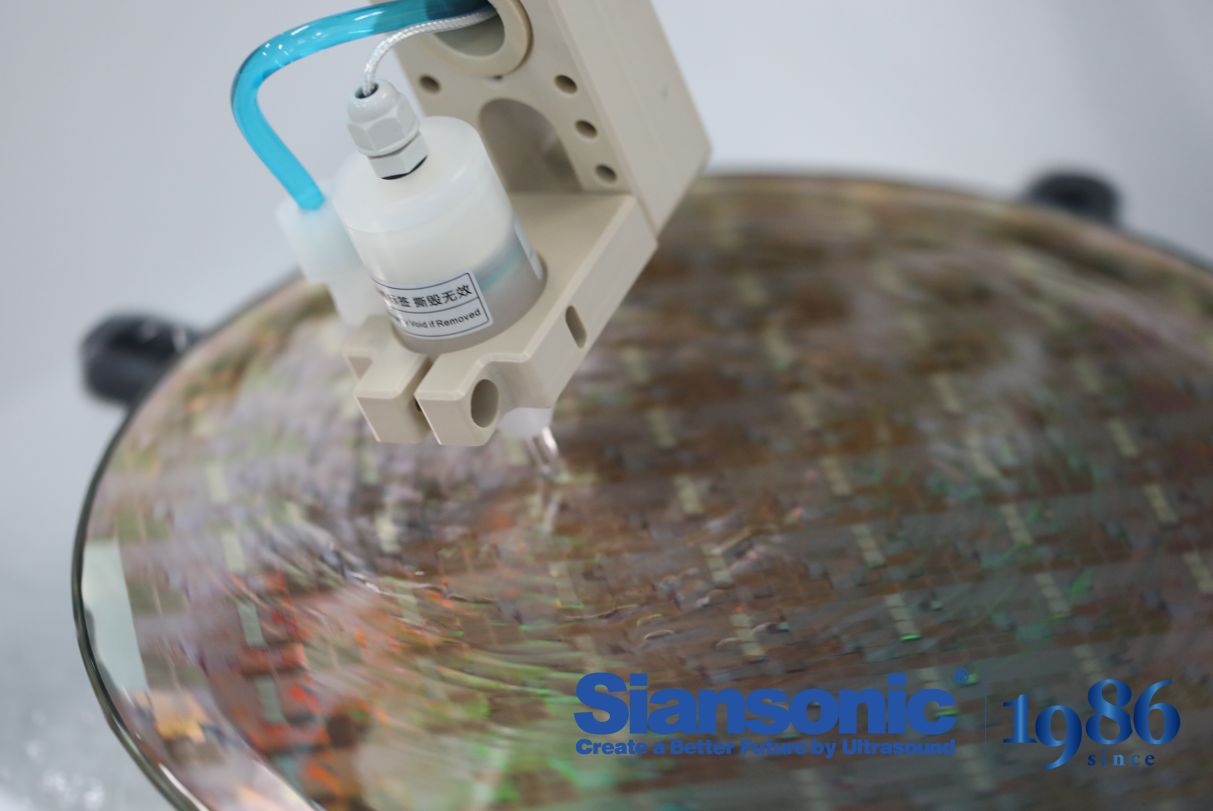
Compatibility testing that only looks at one film at a time misses how your actual stack behaves. A solvent that is harmless on bare silicon can swell a planarizing polymer just enough to buckle an overlying hardmask, or an acidic clean can find a pinhole in a barrier layer and start galvanic corrosion underneath. Before you qualify any new wet chemistry—developer, etchant, solvent strip, or post-etch residue remover—run it on a full blanketed stack, including the adhesion promoter and any anti-reflective coating. Interfacial failures often need both layers present to show up.
For production, set stack-specific exposure limits instead of relying on a supplier's generic compatibility chart. Track time, temperature, concentration, and rinse delay for every wet step. Residue removers in particular deserve scrutiny: a formulation that is fine on dense thermal oxide may craze a porous low-k or leave halide salts on aluminum pads. If your stack includes polymers or organic dielectrics, check for swelling and adhesion loss 24 to 48 hours after exposure, not just immediately after rinse. And when you change film vendor, curing conditions, or thickness, re-run the compatibility window—small shifts in porosity or residual stress can push a previously safe chemistry over the edge.
Uptime Claims Rarely Survive First Contact
Uptime numbers look bulletproof in a slide deck. A vendor promises 99.99% availability, and that extra "9" feels like a safety net. But the moment real traffic starts hitting your stack, the gap between that printed figure and actual behavior becomes impossible to ignore. The claim was built on laboratory conditions, not on a Tuesday afternoon when a misconfigured load balancer decides to route half your requests into a black hole.
Most outages don't announce themselves. They hide in dependencies you didn't fully map, in timeouts that only trigger under peak load, or in a database connection pool that quietly exhausts itself after a routine deploy. The first contact with reality often comes as a pager alert at 3 a.m., and by then the uptime percentage is just a number on a contract. You start to realize that 99.99% doesn't mean "never down" — it means roughly 52 minutes of acceptable failure per year, if everything else cooperates. Nothing else cooperates.
What survives first contact isn't the claim; it's the resilience you built around it. Teams that treat uptime as a marketing metric end up firefighting. Teams that run chaos experiments, practice failovers, and assume every component will eventually break are the ones who keep the lights on. The number on the SLA might get you through procurement, but it won't hold up the first time a cloud region disappears or a bad config ships to production.
Throughput Specs vs. Actual Process Flexibility
When a machine is rated for a certain throughput, that number usually assumes ideal conditions: consistent material feed, minimal changeovers, and a steady stream of identical jobs. But real production floors rarely work that way. A line that runs 200 units per hour on paper can easily drop to 140 when it has to handle short runs, frequent tool swaps, or parts that don't quite match the fixture design. The spec tells you the ceiling, not the everyday reality.
Actual process flexibility is about how gracefully the system handles variation without collapsing into downtime. Some equipment hits its rated speed only when everything is dialed in perfectly, but the moment you introduce a different material thickness or a slightly off-spec component, operators end up babysitting the machine. Others may trade a bit of raw speed for quick adjustments, better error recovery, or the ability to switch between product types without recalibrating half the station. In many shops, that second kind of machine ends up producing more finished goods by Friday, even though its top speed looks lower on the datasheet.
The gap between throughput specs and real flexibility becomes obvious when you track non-productive time: waiting for tools, clearing jams, reworking parts that slipped through, or manually feeding odd shapes. A high-throughput rating doesn't compensate for a rigid process that stalls every time the mix changes. Before committing to a purchase, it's worth walking the line with a few worst-case scenarios and asking how long recovery actually takes, not just how fast the conveyor moves under perfect lighting.
The Service Team's Fab Experience Matters More Than the Manual
A well-thumbed manual can tell you the steps, but it can't read the room. When a customer walks in frustrated after a long day, the real differentiator isn't a scripted greeting or a checklist of troubleshooting questions. It's the service team member who notices the tension, cracks a well-timed joke, and adapts the process on the fly. That human judgment—knowing when to skip the formalities and just fix the problem—beats any page of instructions.
Think about the last time you left a shop feeling genuinely cared for. Chances are, you don't remember the exact steps the technician followed. You remember how they listened, how they explained things without jargon, and how they made the whole interaction feel effortless. That's the fab experience: a blend of empathy, timing, and personal flair that no manual can replicate. It's the difference between a transaction and a relationship.
Of course, manuals have their place—they keep things consistent and safe. But they should be a starting point, not a straightjacket. The best service teams treat the manual as a baseline, then layer on their own instincts to handle the messy, unpredictable reality of real customers. Training for that kind of judgment is harder than memorizing procedures, but it's what turns a routine fix into an experience people actually want to talk about.
Total Cost of Ownership Hides in Consumables and Downtime
Most buyers fixate on the sticker price of a machine, but that number rarely reflects what the equipment actually costs over its lifespan. Consumables like filters, blades, belts, and specialized lubricants quietly drain budgets month after month. A cheaper unit might require proprietary cartridges that cost twice as much as generic alternatives, or burn through cutting edges three times faster under normal load. Meanwhile, downtime—often triggered by those same cheap consumables failing early—forces operators to stand idle, delays production schedules, and sometimes triggers penalty clauses in delivery contracts.
The real trap is that these hidden costs compound in ways that aren't visible on a purchase order. A pump that saves $400 upfront but uses a nonstandard seal might cause eight hours of unplanned maintenance every quarter. At typical shop rates, that single recurring failure wipes out the initial savings within the first year. Smart buyers calculate the cost per operating hour, not just the invoice total, and they demand wear-part pricing and typical failure intervals before signing anything.
To avoid the trap, ask suppliers for total cost breakdowns that include consumable replacement schedules, average downtime per failure, and labor required for routine upkeep. Compare machines based on the cost to run them for 5,000 hours, not the cost to buy them on day one. The cheapest equipment on paper often becomes the most expensive asset on the floor once the first unplanned stoppage hits.
FAQ
It's often the first metric fabs scrutinize because even a marginal drop in removal efficiency can translate into yield loss at advanced nodes. Suppliers need to demonstrate consistent performance across varied wafer sizes and film stacks, not just under ideal test conditions.
That decision usually hinges on the fab's product mix and volume. Single-wafer systems offer tighter process control for high-mix, low-volume or critical layers, while batch tools can deliver lower cost per wafer for high-volume mature processes. The right supplier should be able to articulate where each architecture fits your specific roadmap.
As fabs adopt new materials like cobalt, ruthenium, and high-k dielectrics, older cleaning chemistries can cause galvanic corrosion or surface damage. A supplier with a strong applications lab can help validate that cleaning steps won't degrade these sensitive films before you commit to a tool.
Beyond preventive maintenance, look for vendors who offer remote diagnostics, fast spare parts depots near your fab, and process engineers who can troubleshoot cross-contamination or defect excursions. A supplier that treats your line as a partnership rather than a transaction tends to reduce unplanned downtime.
It's becoming critical for fabs that run both standard silicon wafers and specialty substrates like SiC or GaN. The cleaning system should minimize backside contact and support thin-wafer handling without warpage or breakage. Ask for demonstrated results on your actual substrate stack before finalizing a vendor.
Consumables, chemical usage, energy consumption, and maintenance labor often dominate total cost of ownership. A cheaper tool can become expensive if it requires frequent recalibration or uses higher volumes of ultrapure water and specialty chemicals. Request a detailed cost-per-wafer model from each candidate.
Yes, especially if your roadmap includes new device architectures or materials. In-house process development lets the vendor co-optimize cleaning recipes with your integration team, reducing the time to qualify a new tool. Without that, you may be left adapting generic recipes that don't address your specific defect challenges.
Ask for references from fabs running similar process nodes and device types, and request data from long-term reliability tests. Site visits to existing installations can reveal details like how the system handles particle shedding, chemical reuse, and exhaust management that brochures rarely cover.
Conclusion
Wafer cleaning system selection is rarely decided by a single spec sheet number. The most telling predictor of performance often shows up before a recipe even runs: particle defects trace back to wafer handling, chamber materials, and transport path design, not just the cleaning chemistry. If the platform’s mechanical contact points or load port environment add particles during transfer, no amount of downstream rinsing will recover the yield loss. On top of that, chemical compatibility with your specific film stack must be validated early—wet clean tools that work flawlessly on one integration scheme can etch or corrode adjacent layers on another, especially with new metal gates or ultra-low-k dielectrics. Many fabs discover this only after first silicon, when the damage is already done.
Beyond the bench data, uptime claims and throughput figures need to be challenged with real process flexibility in mind. A tool that hits its rated wafers per hour on a single baseline recipe may lose half its throughput once you add multiple queue times, bevel cleans, or hot DIW steps. Service expertise is just as critical: a field team that has actually worked inside your fab, understands your contamination history, and can tune recipes on the fly will outperform a generic manual every time. Finally, total cost of ownership hides in consumables and unscheduled downtime—filter changes, quartz bath replacement, and extended requalification after maintenance can quietly erase the apparent capex savings. The right cleaning system partner is the one who speaks your process language, not just the one with the lowest sticker price.
Contact Us
Contact Person: Ivy Zhang
Email: [email protected]
Tel/WhatsApp: +86 1081502288
Website: https://www.siansonic.com/