

Wholesale Abrasive Sponge: Smart Buying Strategies for Superior Finishes
2026-10-14
If you're still buying abrasive sponges by the case without asking about foam density, grit anchoring, or edge wear, you're leaving finish quality on the table. Wholesale purchasing isn't just a price game—it's a specification game. A well-chosen sponge can cut hand sanding time in half and eliminate swirl marks, while a poorly chosen one eats into your margins and your reputation. At SHENZHEN SUN ABRASIVES, we've helped workshops replace guesswork with a simple buying framework. Here's how to source smarter and finish superior.
Grit Selection Mistakes That Ruin Finishes (and How to Avoid Them)
One of the fastest ways to wreck a finish is starting with too coarse a grit and then jumping too far between stages. Deep scratches from 60 or 80 grit won't vanish under 220; they just get polished at the bottom of the groove. Move up gradually—no more than about 50 percent increase in grit number at each step—and spend enough time with each grade to erase the previous scratch pattern before moving on.
Worn-out abrasive is another silent finish killer. Dull grains generate heat and burnish the surface instead of cutting, which can seal wood pores unevenly and cause blotchy stain absorption. Swap paper or discs as soon as they stop biting, and match the backing to the shape: a hard block for flat panels, a soft interface pad for curved work. This keeps pressure even and prevents rounding over edges or creating shallow valleys.
Finally, the finest grit isn't always the right call. Going past 220 on many woods can polish the surface so much that it refuses to accept stain or topcoat evenly. On metal, ultra-fine grits may leave a surface too slick for primer to anchor. Test on an offcut or hidden area first, and stop at the grit that gives the look and mechanical bond you actually need—not the highest number on the shelf.
Reading Between the Lines of Bulk Sponge Listings
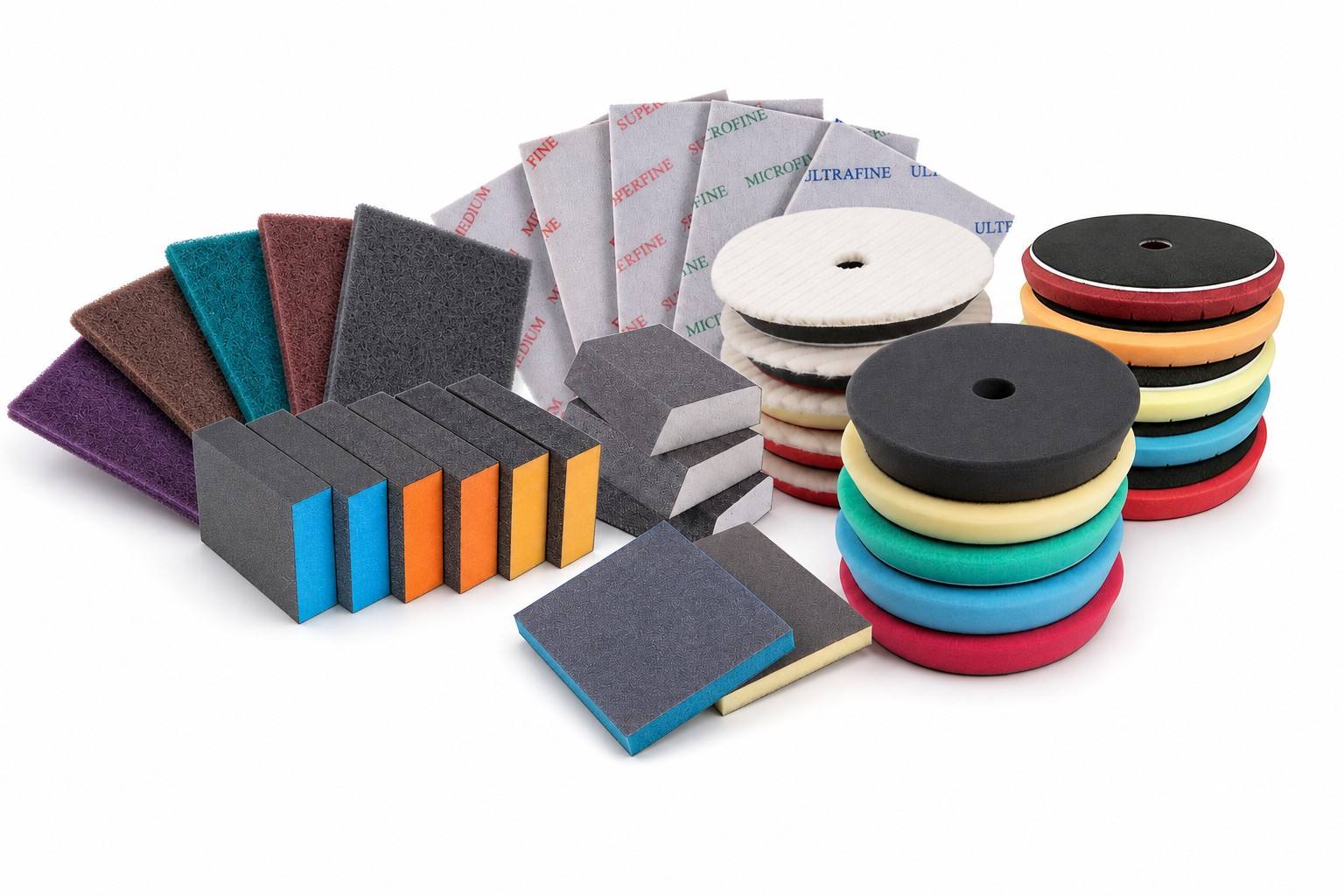
When scanning bulk sponge listings, the obvious specs like density and material only tell part of the story. Experienced buyers look for what's left out—the absence of pore-size distribution data or compression recovery rates often says more than the bullet points. A listing that shouts "high absorbency" without citing the ASTM test method is usually hiding inconsistent quality.
Another tell is the wording around origin and certifications. Phrases like "imported" or "comparable to" without naming the actual factory suggest a middleman who's never touched the product. Real manufacturers typically mention line speed, foam mixing stats, or even the cutting tolerance. Those small operational details are a sign the seller knows how the sponge behaves on a production line, not just in a stock photo.
Price breaks can also reveal inventory problems. A steep discount at 1,000 units but no scaling beyond that often means the seller is clearing out a batch that failed a key client's incoming inspection. Reading between the lines means questioning every assumption the listing makes—if they don't say "dust-free," assume it's not. If they omit a durometer range, it probably crumbles under load.
The Hidden Costs of Cheap Abrasive Sponges
At first glance, a bargain pack of abrasive sponges seems like a smart way to trim the supply budget. But those savings evaporate quickly once the sponges hit the workbench. The grit sheds after just a few passes, leaving you pressing harder and sanding longer for the same result. What felt like a deal at the checkout turns into a repetitive loop of grabbing a fresh sponge, wearing it down, and tossing it aside halfway through the job.
There's also a quieter toll on the surfaces themselves. Low-grade abrasives rarely have a consistent particle distribution, so some spots grind too aggressively while others barely scuff. That uneven bite forces extra finishing steps to smooth out new scratches or dull patches. Before long, the supposedly cheap sponge has added extra hours of labor and consumed a backup stack of finer pads just to fix what it damaged.
Then consider the waste trail. Cheap sponges clog fast, disintegrate under pressure, and end up in the bin after a single session. Buying three or four packs to equal the endurance of one quality sponge means more packaging, more shipping, and more trips to the store. The real cost isn't printed on the price tag—it's hidden in lost time, rework, and the steady rhythm of replacing something that was never built to last.
Matching Sponge Density to Your Surface Work
Sponge density isn't a one-size-fits-all spec—it's a dial you turn depending on what the surface actually demands. A high-density sponge brings stiffness and scrubbing power to tough jobs like grout lines or baked-on residue, while a low-density sponge soaks up more water and glides gently over delicate finishes. Getting this wrong means either leaving scratches on a soft clear coat or wasting effort on a stain that needs aggressive texture.
Think about how the pores behave under pressure. Tight, compact cells on a firm sponge hold their shape and concentrate abrasion exactly where you push. Open, airy cells on a soft sponge collapse easily, letting the material wrap around curves without digging in. Matching that behavior to your surface means asking one question: does this area need to be cleaned, or does it need to be protected while cleaning?
There's no universal "medium density" that works everywhere. Instead, keep two or three densities on hand and switch based on feedback from the surface itself. Run a test patch in an inconspicuous spot. If the sponge skips or drags, it's too soft for the texture. If it leaves fine scratches or removes finish, it's too hard. Your hands will tell you the right match faster than any chart.
Storage Habits That Extend Sponge Life
After each use, squeeze out as much water as you can and set the sponge somewhere air can reach it—a wire rack, a sink caddy with holes, or even clipped to a dish drainer. Leaving it wet in a flat dish or at the bottom of the sink traps moisture against the surface, which speeds up bacteria growth and makes the sponge fall apart faster. If you can, give it a quick rinse in hot water first; the heat loosens oils and food bits that would otherwise cling and turn sour later.
For longer stretches between uses, keep the sponge dry and out of direct sunlight. Sunlight breaks down the fibers over time, and constant humidity softens the glue or stitching that holds some sponges together. A cabinet shelf with good airflow works fine, but avoid sealing it in a plastic bag or container unless it's completely dry—trapped moisture is the quickest way to end up with a musty, crumbling sponge.
If you rotate between two sponges, you'll notice both last longer. Letting one dry completely for a day or two while the other is in use interrupts the damp cycle that breaks down the material. Just mark them or keep them in separate spots so you don't accidentally grab the wet one.
Negotiating with Suppliers Without Sacrificing Quality
Most buyers enter supplier negotiations expecting to squeeze unit prices, only to watch quality quietly slip after the contract is signed. A better starting point is to define what “quality” means for each material or component before you ever talk numbers. Write down the non-negotiables—tolerances, lead times, defect rates, replacement terms—and send that brief to suppliers ahead of the meeting. When both sides know the floor, the conversation shifts from haggling to problem-solving, and you can offer flexibility on delivery schedules or payment terms instead of asking for risky price cuts.
Cost pressure is real, but chasing the lowest bid often hides expenses like rework, late shipments, or higher inspection overhead. Try calculating the total cost of ownership for each supplier, including logistics, scrap, and warranty claims. Then use that number in negotiations. You might say, ‘Your unit price is 8% higher, but your defect rate is half the industry average—how can we lock in that performance for two years?’ This reframes the discussion around value rather than discounts, and suppliers usually respond with better terms on the parts that actually affect your production line.
One practical lever is to negotiate for process improvements instead of price reductions. Ask the supplier to suggest one change—packaging, batch size, or delivery frequency—that would lower their cost without touching materials or labor quality. In exchange, you commit to a longer purchase order or faster payment. A packaging engineer once cut our inbound damage by a third simply by switching to reusable dunnage; the supplier saved money on corrugated, and we kept the same premium materials. Deals built on shared efficiency tend to last longer and protect the quality you originally approved.
FAQ
Focus on grit consistency, foam density, and whether the abrasive is bonded well. A batch with uneven grit will leave inconsistent scratches no matter how careful your technique is. Ask for a sample from the actual production run, not a pre-made demo piece.
Break down cost per usable square inch rather than per sheet. Some cheaper sponges shed abrasive early or load up faster, so they cost more in labor and rework. Request abrasion-resistance data and test under your own pressure and speed settings.
For superior finishes, match the grit progression to the materials you handle most. A single universal grit often means extra steps later. If your workload varies, buy a lower volume of a wider grit range from a supplier that allows mixed-case orders.
Watch for vague specs like premium grit without micron ratings, frequent batch-to-batch color changes that don't match documentation, and no clear return policy for defective rolls. A supplier that hesitates to share test reports or batch samples rarely delivers consistent finishes.
Keep them flat in a dry, temperature-stable area away from direct sunlight. Humidity can weaken the foam backing, and stacked heavy items can warp edges. Rotate stock using first-in, first-out so older sponges don't sit past their bond shelf life.
Yes, tie the deal to measurable outcomes. Ask for a guaranteed grit tolerance, a replacement clause for defective batches, and volume discounts based on annual usage projections. Suppliers often accept slightly lower margins when you offer predictable ordering and fewer rush shipments.
Run a side-by-side comparison on your most difficult surface with your usual finish target. Check scratch depth, edge wear after a set number of strokes, and clogging rate. Log the results with photos so you have objective evidence if later batches underperform.
Conclusion
Ordering abrasive sponges in bulk isn't just about grabbing the lowest price per sheet—it's about knowing how each variable changes the way a surface ends up. One of the quickest ways to ruin a finish is picking the wrong grit progression, either starting too coarse and leaving deep scratches or jumping too fine and wasting time without cutting properly. Smart buyers map out the full sequence from rough shaping to final polish before committing to a carton, and they also read past the bold headlines in bulk listings, checking for details like backing material, abrasive type, and whether the grit is consistently applied across the entire sponge. Cheap sponges often hide their true cost in faster loading, uneven wear, and the extra labor needed to redo work, so it pays to compare not just unit price but cost per finished square foot.
Density is another factor that gets overlooked until it's too late—softer, more flexible sponges conform to curved or contoured surfaces, while firmer ones hold a flatter profile for edge work and crisp lines. Storing them properly, away from moisture and extreme heat, keeps the bonding agents intact and prevents the sponge from breaking down between jobs. And when it comes time to negotiate with a supplier, the goal isn't to squeeze every last cent out of the deal; it's to lock in consistent grit quality, reliable density, and packaging that protects the product in transit. A supplier who understands your finishing workflow can often suggest alternatives that save money without cutting corners, which is far more valuable than a one-time discount on a subpar batch.
Contact Us
Contact Person: Amanda Wang
Email: [email protected]
Tel/WhatsApp: +86-13602569854
Website: https://www.sunabrasives.com.cn