

Yoga & Pilates Socks from the Original Manufacturer: Why Quality Matters for Your Practice
2026-05-30
When it comes to yoga and Pilates, the right accessories can transform your practice. The foundation begins with your feet, making grip, comfort, and durability non-negotiable. Yet, many socks on the market fall short—literally and figuratively. That’s where Mingjun, the original manufacturer, steps in. Why settle for imitations when you can have socks engineered for stability and longevity? In this post, we’ll explore why quality directly from the source matters more than you might think—and how it can enhance every pose and movement.
The Foundation of Every Pose Starts Here
Before you even think about striking a perfect Warrior II or a graceful Tree pose, there’s a quieter, more intimate alignment happening—one that’s often overlooked. It’s the relationship you build with the ground beneath you, the way your weight settles, and the subtle shifts that radiate upward. This isn’t just about planting your feet; it’s about waking up the soles, spreading the toes, and feeling the earth push back. That first conscious connection is the silent teacher of balance, and without it, even the most advanced asana becomes an act of instability.
From this rooted place, everything else blooms. Your spine finds its natural length, your core engages without force, and your breath can travel freely. Think of it as laying the first brick of a house—if it’s slightly off, the whole structure compensates in ways you’ll feel later. Many practitioners rush past this moment, eager to get into the shape of a pose, but the shape is the least interesting part. The real depth comes from how you arrive, how you listen, and how you build from the ground up, one mindful layer at a time.
The beauty is that this foundation isn’t a fixed state—it’s a conversation that continues throughout your entire practice. Every micro-adjustment, every rebalancing of weight, is a chance to come home to that initial grounding. When you return to it, you’re not starting over; you’re deepening, recalibrating, and remembering that true stability isn’t about holding perfectly still. It’s about being so attuned to the ground that you can move from it with confidence, fluidity, and a sense of effortless power.
Grip That Stays Put, Wash After Wash
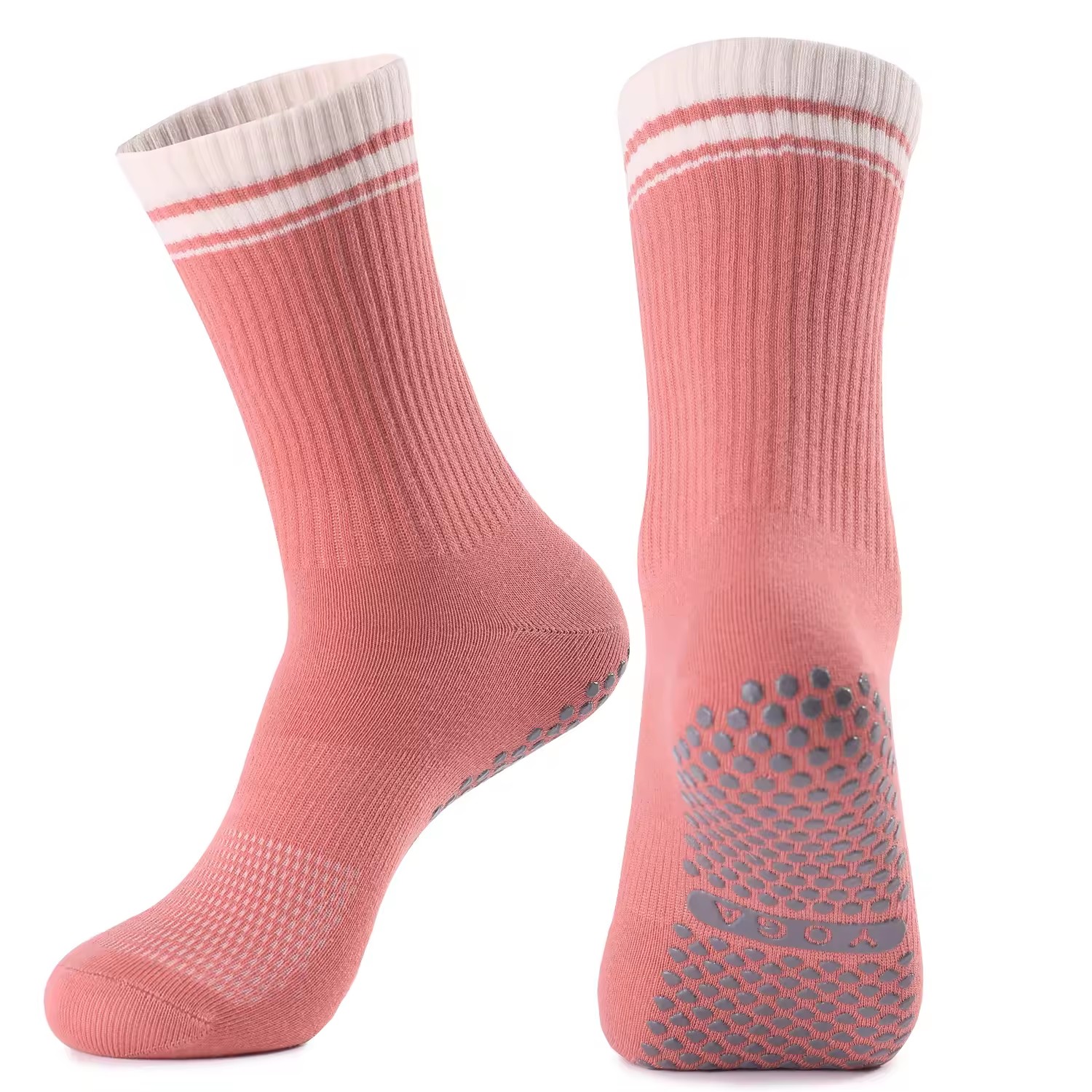
You know the frustration—socks that slide down mid-stride, leaving you yanking them up while you’re just trying to get through the day. That’s where our no-slip grip makes all the difference. Engineered with a silicone-infused band that hugs your calf without pinching, these socks lock in place from the moment you pull them on. The secret lies in the graduated compression that holds firmly yet flexes with every move, so you stay focused on your run, your workout, or your commute, not on lost socks.
But a grip that only works when new is no grip at all. We’ve designed these socks to take repeated laundering in stride. The silicone composite is bonded directly into the fibers, not simply coated on top, which means it won’t peel, crack, or wash away after a few cycles. Through dozens of washes—even in hard water or with aggressive detergents—the stay-put feel remains. You’ll notice the band keeps its elasticity without turning brittle, so you don’t have to baby your laundry routine.
What truly sets this grip apart is how invisibly it integrates. There’s no bulky seam or sticky residue on your skin, just a smooth, seamless interior that eliminates irritation. And because it’s integrated into the knit, it breathes right along with the rest of the sock, preventing that damp, rubbery feeling you get from lesser grips. Pull them on fresh out of the drawer or after the fiftieth wash, and you’ll feel the same secure, second-skin hold.
Materials That Move With You, Not Against You
There’s a quiet frustration in wearing something that fights you—a stiff seam that digs in when you twist, a fabric that clings when you need it to glide. The right materials feel like a second thought, a subtle extension of your own rhythm. They don’t dictate how you move; they simply follow, almost as if they’ve been paying attention.
It’s the difference between a jacket that bunches at the shoulder when you reach, and one that barely registers the motion. Fabrics with a bit of give, carefully placed stretch panels, or a weave that knows when to breathe—these aren’t just technical perks. They’re the quiet enablers of a day spent leaning, lifting, and twisting without a second thought about what you’re wearing.
When you stop noticing what’s on your body, that’s when the material is doing its job. No constant adjusting, no tugging at sleeves. Just a steady, unspoken agreement between you and what you’re in. That’s what it means for something to move with you, not against you.
When Durability Meets Design Intention
Durability often gets reduced to a material spec, but it lives or dies in the quieter decisions. When design intention is clear, every curve and connection already anticipates years of use—not as a bullet point, but as a natural consequence of making something that simply works.
There’s a kind of honesty that surfaces over time. Fading, smoothing, the way a handle fits your hand more comfortably after a decade—these aren’t defects. They’re evidence that the object was never just a static idea, but a living piece shaped around real habits.
Blending the two isn’t about making things unbreakable. It’s about giving them a presence that deepens with age, so that what lasts isn’t just the object itself, but the feeling of rightness it carries.
The True Cost of Cutting Corners
When a business decides to take shortcuts, the immediate savings can feel like a win. A cheaper material here, a skipped step there — on paper, the numbers look great. But what often gets overlooked is how those small compromises compound over time. That slightly inferior component that saved 5% on production costs? It might fail three times faster in the field, triggering a wave of warranty claims, angry customer calls, and damage to your reputation that no spreadsheet can capture. The real price of cutting corners isn’t just the replacement part — it’s the trust you lost and the hours your team will spend putting out fires instead of building something new.
Then there’s the hidden internal cost. A culture of “good enough” creeps in quietly. Once one deadline gets met by rushing and lowering standards, it sets a precedent. Your best people start to wonder why they’re working so hard if the bar just keeps dropping. Morale dips, turnover ticks up, and suddenly you’re not just paying for rework — you’re paying to recruit and train replacements who might not even stick around. The irony is stark: in trying to save a little time or money up front, you pour resources into a cycle of mediocrity that eats away at your ability to compete.
Eventually, the consequences break out into the open. Customers who once raved about your dependability switch to a competitor after one too many glitches. Former employees share stories online that make talented candidates think twice. Regulators might get involved if those corners cut were in safety or compliance. By then, the original “savings” are a distant memory, dwarfed by the legal fees, lost contracts, and the quiet exodus of loyal clients. The true cost of cutting corners isn’t a line item on a budget. It’s the erosion of everything that kept your business standing in the first place.
Built by Experts, Worn by Practitioners
Every stitch, every material choice, every design curve is informed by decades of hands-on experience in the field. Our team of engineers and podiatrists has spent years analyzing biomechanics, stress points, and real-world wear patterns. They don't just sketch concepts—they test prototypes in grueling environments, from marathon asphalt to rocky trails, refusing to settle until every pair meets their exacting standards.
But expertise alone isn't enough. The true litmus test comes from the people who lace them up every morning. Firefighters, nurses, warehouse workers, and ultrarunners put our gear through paces no lab can simulate. Their feedback drives incremental refinements—a reinforced toecap here, a more breathable mesh there—creating a feedback loop that turns good design into indispensable tools of the trade.
The result is gear that bridges two worlds: the scientific rigor of the lab and the unfiltered reality of the job site. When you wear our shoes, you're not just putting on footwear; you're stepping into a solution tested by those who built it and validated by those who truly rely on it. This convergence of expert craft and practitioner-driven evolution is what makes comfort, durability, and trust something you feel with every step.
FAQ
Original manufacturers often have direct control over materials and production, which means they can focus on the specific needs of yoga and Pilates. Unlike generic socks, theirs are designed with grip, fit, and durability in mind, made by people who understand the demands of these practices.
High-quality socks stay in place and have well-placed silicone grips that prevent slipping, even during sweaty sessions. This stability lets you focus on alignment and breath instead of worrying about sliding. Good seams and fabric also reduce irritation, so you can stay present in your flow.
If you practice regularly, absolutely. Cheap socks often lose grip quickly or wear out at the toes. Socks from the original manufacturer use better materials that last longer and maintain grip wash after wash. In the long run, you buy fewer pairs and enjoy a safer, more comfortable practice.
When they come directly from the manufacturer, there is no middleman cutting corners. You often get a product that has been refined through feedback from actual instructors and studios. Plus, you support a supply chain that usually has more transparency and ethical standards.
Definitely. Socks that bunch up or slip can throw off your balance and make it harder to engage the right muscles. Worse, you might subconsciously tense up or adjust your feet, breaking your concentration. Quality socks fade into the background so you can move freely.
Look for targeted grip coverage—not too much or too little. The fabric should be breathable and moisture-wicking, with a comfortable toe seam. A snug but not tight fit matters, along with durability in high-friction areas. Original manufacturers often test these details extensively.
Check for consistent branding, detailed product descriptions about materials and construction, and real reviews from long-term users. Original manufacturers usually have strong relationships with studios and may offer customization or bulk options that copycats just don't provide.
It makes a huge difference. Cotton blends feel soft but hold moisture, while synthetics like nylon and polyester wick sweat better. Many premium socks use a mix for comfort and performance. The key is finding a material that keeps your feet dry and resists pilling, which original manufacturers often engineer specifically for studio use.
Conclusion
When you step onto the mat, your connection to the ground begins with your feet. Socks from the original manufacturer are engineered to provide that unshakable foundation, giving you proprioceptive feedback that helps refine alignment in every pose. The grip is meant to endure—not just for a few weeks, but through countless practices and washes. Original manufacturers use silicone patterns that are heat-set into the fabric rather than simply glued on, so they stay put and won’t peel away, ensuring your downward dog feels as secure as day one.
Beyond grip, the materials are chosen to move with your body’s subtle shifts, offering a second-skin feel without bunching or slipping. This comes from expertise in knitting technology and rigorous wear-testing by actual yogis and Pilates instructors. When durability is baked into the design from the start, socks resist fraying and thinning, holding their shape and support. Cutting corners—with generic alternatives—often leads to irritation, loss of grip, and frequent replacements, which adds up in waste and cost. Socks built by those who understand the practice become an invisible partner, allowing you to forget about your feet and sink deeper into your flow.
Contact Us
Contact Person: Tiga
Email: [email protected]
Tel/WhatsApp: 8613058331729
Website: https://www.china-socksfactory.com/